Why Africa’s Maritime Future May Depend on Turning Long-Term Savings into Investable Assets
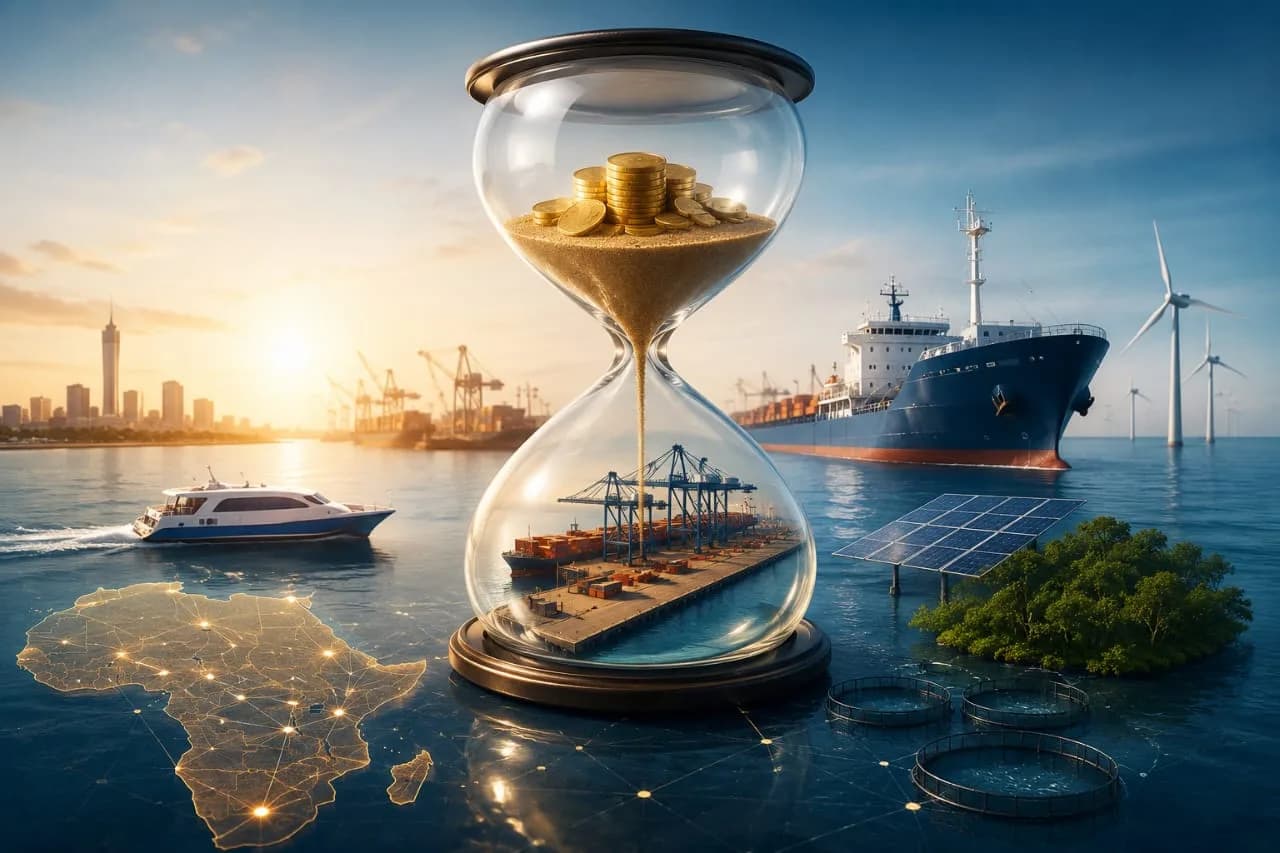
Shipping will grow.
Fisheries will become more productive.
Aquaculture will feed growing populations.
Coastal infrastructure will become more resilient.
Marine energy will create new opportunities.
But behind almost every one of these ambitions sits the same
question:
Who will finance it?
Commercial banks are often constrained by the size, tenor
and risk profile of maritime projects.
Development finance institutions cannot provide all the capital Africa requires.
Foreign investment remains important, but it can be
expensive, volatile and often denominated in currencies that introduce another
layer of risk.
Then there is a largely underused source of patient domestic
capital:
pension money.
Africa is not without savings.
The continent has built substantial pools of domestic
institutional capital across pension funds, insurance companies, sovereign
wealth funds and other financial institutions. Yet at the same time, Africa faces
an infrastructure financing gap running into hundreds of billions of dollars
annually.
The problem, therefore, is not simply that Africa lacks
capital.
It is that capital and opportunity are not connecting at the
scale required.
That puts pension funds at the centre of a much bigger
conversation about Africa’s maritime future.
And it raises a question that governments, regulators,
pension trustees, development financiers and maritime investors should be
asking together:
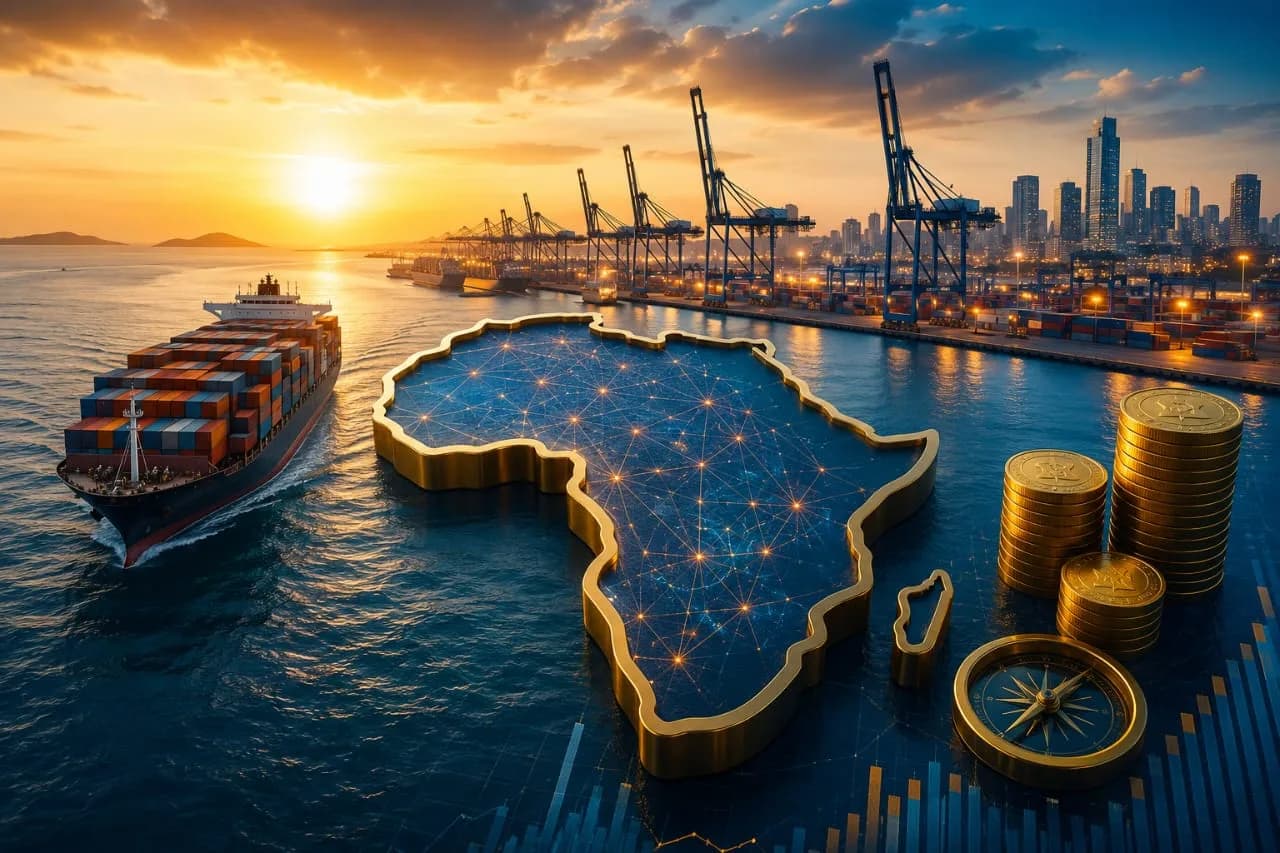
Can Africa turn its long term savings into one of the
financial foundations of its blue economy?
The answer could be yes.
But not by asking pension funds to finance development
because Africa needs money.
The real challenge is more fundamental:
Can Africa build maritime assets that pension funds can actually invest in?
THE MONEY EXISTS. THE INVESTABLE ASSETS ARE THE PROBLEM.
Africa’s infrastructure financing challenge is enormous.
The African Development Bank has estimated that the continent requires hundreds of billions of dollars annually to accelerate structural transformation, leaving a financing gap of more than $400 billion a year.
Transport infrastructure accounts for a significant share of
that requirement.
Maritime infrastructure sits directly inside this challenge.
Ports.
Inland waterways.
Logistics corridors.
Ship repair.
Cold-chain infrastructure.
Fisheries.
Coastal protection.
Digital maritime systems
Marine energy.
Yet at the same time, African economies are building
increasingly significant pools of domestic institutional capital.
Nigeria provides a useful illustration.
By May 2026, Nigeria’s pension assets had reached a record ₦31.32 trillion, according to PenCom’s unaudited monthly data. The figure represented another increase from the approximately ₦30.94 trillion recorded in April.
There is nothing inherently wrong with the concentration of
pension assets in relatively conventional instruments.
Pension funds have a responsibility that governments do not:
protect contributors’ retirement savings while generating appropriate risk adjusted returns.
That makes liquidity, security, transparency and predictable
income particularly important.
But it also exposes a structural question.
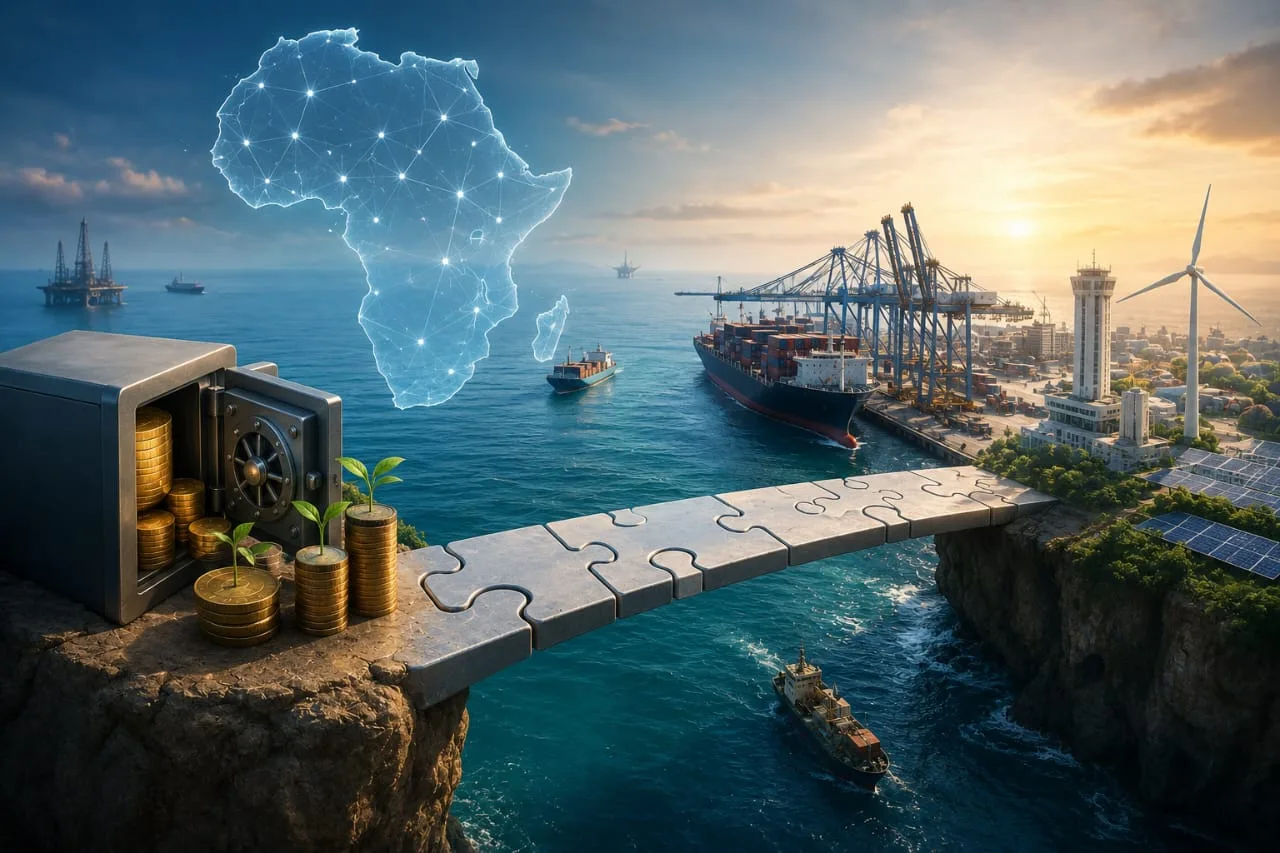
If African economies need long term capital to build productive
infrastructure, while large pools of domestic savings remain concentrated in
conventional financial assets, how do we build the bridge between the two?
Not politically.
Financially.
A BLUE ECONOMY OPPORTUNITY IS NOT AUTOMATICALLY AN INVESTMENT
This distinction is at the heart of the entire debate.
A government may look at a port and see strategic
infrastructure.
A development agency may see jobs.
A coastal community may see protection from erosion.
A maritime ministry may see trade competitiveness.
An investor sees something else.
Risk.
Who owns the asset?
Who operates it?
Where does the revenue come from?
How predictable is that revenue?
Who carries construction risk?
What happens if the project is delayed?
What happens if traffic projections fail?
What happens when the currency moves sharply?
What happens if government policy changes?
Who maintains the asset?
What happens when the concession expires?
And ultimately:
Can this investment be defended to the people whose
retirement savings are at stake?
That is why Africa cannot unlock pension capital simply by
producing more lists of blue economy opportunities.
It has to produce bankable assets.
The difference is enormous.
A proposed ferry network is an opportunity.
A ferry network supported by credible passenger demand
analysis, transparent tariffs, reliable maintenance arrangements, insurance,
sound governance and predictable cash flows is an investment proposition.
A port expansion is an opportunity.
A properly structured port project with defined revenue
streams, enforceable contracts, credible risk allocation and transparent
governance is an investment proposition.
A ship repair facility is an opportunity.
A ship repair facility supported by credible demand, long
term commercial agreements and a viable operating model begins to look like an
asset.
That is the transformation Africa needs.
From development projects to investable infrastructure.
THE BLUE ECONOMY IS BIGGER THAN PORTS
Africa’s blue economy is still too often discussed through
the language of ports and shipping.
It is much larger.
The blue economy encompasses fisheries, aquaculture, coastal
tourism, maritime transport, ports, logistics, marine energy, coastal
resilience, marine biotechnology and other economic activities connected to
oceans, seas, rivers and coastal resources.
That creates a wide investment universe.
Commercial aquaculture.
Fish processing.
Cold chain infrastructure.
Inland and coastal water transport.
Shipbuilding and ship repair.
Marine logistics.
Coastal tourism.
Desalination.
Marine renewable energy.
Coastal resilience.
Digital maritime infrastructure.
Blue-carbon projects.
But these opportunities do not all have the same economics.
A port may generate user charges.
A vessel-leasing structure may generate relatively
predictable lease income.
A cold-chain facility may generate storage and logistics
revenue.
An aquaculture platform may generate operating cash flow but
carry biological and market risks.
A coastal resilience project may deliver enormous economic
value while generating little direct revenue.
That matters.
Because the question is not:
How do we put pension money into the blue economy?
The better question is:
Which parts of the blue economy can be structured into
financial products that match the risk, return and liability requirements of
pension capital?
That is where the conversation becomes serious.
PENSION FUNDS DO NOT INVEST IN DREAMS
They invest in structures.
This may be the most important missing link in Africa’s blue
economy conversation.
Pension funds do not invest in “Africa’s maritime future” as
an abstract proposition.
They invest through financial instruments.
Infrastructure bonds.
Project bonds.
Infrastructure funds.
Private equity vehicles.
Asset backed structures.
Long term concessions.
Public private partnerships.
Credit enhanced debt
Blended finance vehicles.
The investment vehicle matters because a pension fund is not
buying the blue economy.
It is buying a financial claim on a specific asset, cash flow
or portfolio.
That is why capital market development may ultimately be as
important to Africa’s blue economy as dredging, shipbuilding or port expansion.
The ocean creates the opportunity.
Finance determines whether the opportunity becomes an asset.
THE SEYCHELLES LESSON
Seychelles provides one of Africa’s clearest demonstrations
of what financial engineering can achieve.
In 2018, the country issued the world’s first sovereign blue
bond.
The $15 million transaction was supported by a $5 million
World Bank partial guarantee and concessional financing, helping the country
raise capital for marine conservation and sustainable fisheries.
The significance was not the size of the transaction.
It was the structure.
A marine development objective was translated into a
financial instrument investors could understand.
That is the lesson worth carrying forward.
Africa does not need to reproduce the Seychelles model
mechanically.
It needs to understand the principle:
If a maritime development objective can be translated into a
credible, transparent and appropriately risked financial instrument,
institutional capital becomes much easier to reach.
The financial architecture becomes the bridge.
DEVELOPMENT FINANCE SHOULD ABSORB WHAT PENSION FUNDS SHOULD NOT
There is also a limit to how much risk pension funds should
be expected to carry.
The earliest stage of an infrastructure project is often the
riskiest.
Land.
Permits.
Feasibility studies.
Construction.
Environmental approvals.
Political risk.
Currency exposure.
Demand uncertainty.
These are precisely the risks that pension capital should
not automatically be expected to absorb.
This is where development finance institutions become
critical.
The African Development Bank, Africa Finance Corporation,
World Bank and other development financiers can help move projects through the
risk spectrum.
They can support project preparation.
Provide guarantees.
Offer concessional financing.
Provide political risk protection.
Take subordinated or first loss positions where appropriate.
Strengthen governance.
Standardise project structures.
Build technical capacity.
Then institutional investors can enter at a different point
in the risk curve.
This is the logic of blended finance.
The objective is not to make risky projects magically safe.
It is to ensure that each type of capital takes the risk it
is best positioned to absorb.
That is how institutional capital can enter sectors it might
otherwise avoid.
Africa therefore needs to stop viewing development finance
simply as another source of money.
Its greater value may be its ability to reshape risk.
A project that is too risky for a pension fund today may
become investable tomorrow if the right guarantees, governance structures,
subordinated capital and project preparation are put in place.
That is a very different role for development finance.
It is not replacing private capital.
It is helping create the conditions under which private and institutional capital can enter.
REGULATION CAN OPEN THE DOOR. IT CANNOT CREATE INVESTMENT.
Pension regulation matters enormously.
South Africa offers an instructive case.
Its amended Regulation 28 framework created greater room for
retirement funds to invest in infrastructure and private equity, “while
retaining strong risk management requirements and responsibilities to protect
contributors’ retirement savings.”
The lesson, however, is not simply that regulators should
increase investment limits.
It is more nuanced.
Permission is not deployment.
A pension fund may legally be permitted to invest more in
infrastructure and still decide not to do so if available projects are poorly
structured, too risky, insufficiently transparent or commercially unattractive.
This is where African policy conversations sometimes go
wrong.
Regulators can create space.
They cannot manufacture bankability.
That requires governments, project developers, financiers,
technical advisers, insurers and capital markets to work together.
Nigeria is already evolving its own framework.
The country has revised its pension investment regulations
and expanded the conversation around infrastructure, alternative investments
and other asset classes while retaining strong risk management requirements and
responsibilities to protect contributors’ retirement savings.
That evolution matters.
But the next challenge is not simply regulatory permission.
It is investment readiness.
NIGERIA’S QUESTION IS PARTICULARLY IMPORTANT
Nigeria sits at the centre of this conversation.
It has one of Africa’s largest pension pools.
It also has one of the continent’s most strategically
important maritime economies.
The country needs investment in ports.
It needs stronger inland waterway connectivity.
It needs ship financing.
It needs ship repair and maintenance capacity.
It needs modern fisheries and aquaculture value chains.
It needs coastal infrastructure.
It needs maritime digitalisation.
And it needs logistics systems capable of supporting AfCFTA.
The obvious question is:
Why shouldn’t some of this long-term infrastructure be
financed by long-term domestic capital?
But there is a better question.
Which Nigerian maritime assets can actually be structured to
meet pension-fund investment requirements?
That question changes everything.
It moves the conversation away from lobbying pension funds
and towards designing investable opportunities.
Not:
“Pension funds have money. Government needs money.”
But:
“What assets can we build that make commercial sense for
pension capital?”
That is a fundamentally different proposition.
IMAGINE IF MARITIME INFRASTRUCTURE WERE DESIGNED FOR THE BALANCE SHEET
Imagine a Nigerian maritime infrastructure pipeline where
institutional investors are considered from the beginning not as financiers to
be approached after the project has been designed, but as part of the financial
architecture around the project.
A port logistics project comes with a clearly defined
revenue model.
A vessel financing programme has predictable lease
structures.
An inland waterway network is supported by credible demand
analysis.
A cold chain project has contracted users.
A coastal resilience programme combines public funding and
private capital where appropriate.
A ship repair facility is supported by long term commercial
agreements.
A portfolio of smaller maritime assets is aggregated into a
professionally managed infrastructure vehicle.
Suddenly, the conversation changes.
Pension funds are no longer being asked to support the blue
economy.
They are being presented with investment opportunities.
That is the point at which maritime policy and capital
market policy begin to converge.
And this convergence could be far more important than simply
increasing the percentage of pension assets permitted to enter alternative
investments.
Because the real question is not how much capital is allowed
to move.
It is:
How much capital can move productively, safely and repeatedly?
THE BIGGEST OBSTACLE MAY BE PROJECT PREPARATION
Africa’s problem may not ultimately be a shortage of
capital.
It may be a shortage of projects that are ready for capital.
There is a difference.
A project can be politically approved and still be
financially immature.
It can have land and still lack a viable concession.
It can have a feasibility study and still lack a bankable
revenue model.
It can have a financing announcement and still lack the
governance required for institutional investment.
This is why project preparation deserves far more attention.
Before asking:
“Where will the money come from?”
Africa should increasingly ask:
“Is the project ready for money?”
That means technical feasibility.
Commercial feasibility.
Environmental assessment.
Legal due diligence.
Demand analysis.
Revenue modelling.
Risk allocation.
Governance.
Procurement.
Insurance.
Maintenance.
And a credible answer to one of the most neglected
infrastructure questions:
Who keeps the asset working after the financier and
contractor have left?
Too many infrastructure conversations end at financial
close.
Institutional investors cannot.
They must think about the entire life of the asset.
Twenty years.
Thirty years.
Sometimes longer.
That is why pension capital can be powerful.
But it is also why pension capital must be selective.
THE 1% QUESTION
There is an intriguing thought experiment here.
What if African pension funds allocated only a small,
carefully structured portion of their assets to a diversified pool of
productive infrastructure?
Not politically directed investment.
Not speculative bets.
Not a blank cheque for government projects.
A professionally managed vehicle containing properly
prepared, risk assessed infrastructure assets.
Even a modest allocation at continental scale could
represent substantial domestic capital.
More importantly, it could send a signal to international
investors:
African institutional capital is willing to invest in
African infrastructure when the structure is right.
That signal could attract additional development and private
capital.
The multiplier effect may therefore matter more than the
initial allocation.
The point is not that 1% is a magic number.
It is that a relatively small institutional commitment could
demonstrate something much larger:
African capital can help de-risk African opportunity for
global capital.
That could be the beginning of a much larger financing ecosystem.
BUT PENSION MONEY MUST NEVER BECOME DEVELOPMENT MONEY BY FORCE
This is where the debate requires discipline.
There will always be pressure on governments to unlock
domestic savings for national development.
That pressure is understandable.
But pension funds cannot be turned into vehicles for financing government priorities.
The moment investment decisions are driven primarily by
political objectives rather than risk-adjusted returns, the entire proposition
becomes dangerous.
Retirement savings are not free development capital.
They belong to contributors.
The strongest argument for pension investment in the blue
economy is therefore not patriotic.
It is financial.
If maritime infrastructure can produce competitive, long
duration, properly risked returns, pension funds should be able to participate.
If it cannot, governments must improve the project rather
than pressure the pension fund.
That is the discipline Africa needs.
It is also what protects the long-term credibility of the
idea.
Because if one poorly structured maritime investment damages
pensioners’ savings, the consequences extend beyond that single project.
It could make institutional investors even more reluctant to
finance the sector.
The objective, therefore, is not to force capital into the
blue economy.
It is to make the blue economy worthy of capital.
THE BLUE ECONOMY NEEDS A FINANCIAL ARCHITECTURE
The future of Africa’s blue economy will not be determined
by one institution.
It will require an ecosystem.
Governments create policy certainty.
Regulators create investment space.
Project developers create bankable assets.
Banks provide complementary financing.
Development finance institutions absorb selected risks.
Capital markets create appropriate instruments.
Pension funds provide patient institutional capital.
Insurance companies transfer risk.
Technology improves transparency.
Research institutions provide evidence.
And local communities provide knowledge that no financial
model can fully capture.
When these pieces connect, something important happens.
The blue economy stops being discussed primarily as a
collection of natural resources.
It begins to look like an investment ecosystem.
And eventually, potentially, an asset class.
That transition could be transformative.
AFRICA’S OCEANS ARE NOT THE ASSET.
THE SYSTEM IS.
There is a tendency to talk about Africa’s coastline,
rivers, fisheries and oceans as though their economic value is self evident.
It is not.
A river is not automatically a transport corridor.
A port is not automatically a logistics hub.
A fishery is not automatically a sustainable industry.
A coastline is not automatically a tourism economy.
A maritime opportunity is not automatically an investment.
Economic value is created when infrastructure, institutions,
technology, people and capital connect.
The same principle applies to pension money.
Capital sitting in a fund is not infrastructure.
A government allocation is not infrastructure.
A project announcement is not infrastructure.
The value emerges when capital becomes a productive asset
that operates efficiently, generates revenue, manages risk and serves a real
economy.
That is the bridge Africa has yet to fully build.
FROM SAVINGS TO MARITIME CAPABILITY
Africa’s pension funds may represent one of the continent’s
most important sources of patient capital.
But unlocking them will require more than regulatory reform.
It will require a different approach to infrastructure
development.
Projects must be conceived with commercial viability in
mind.
Risk must be allocated deliberately.
Revenue models must be credible.
Governance must be transparent.
Data must be reliable.
Capital markets must deepen.
Development finance must be used strategically.
And institutional investors must remain uncompromising about
protecting the retirement savings entrusted to them.
For Nigeria, the opportunity is particularly significant.
The country does not need to choose between pension security
and maritime development.
It needs to build the structures that allow the two
objectives to coexist.
That means asking harder questions before capital is
committed.
Not:
How much money do we need?
But:
What asset are we financing?
Not:
Who can fund it?
But:
What risks are they being asked to take?
Not:
How important is this project?
But:
What makes it investable?
And perhaps the most important question of all:
What happens after the money arrives?
Because Africa’s problem has never been simply getting
projects financed.
It is building projects that continue to create economic value long after the financing announcement has disappeared from the headlines.
THE PRIMEAXIS INSIGHT
Africa’s blue economy has no shortage of promise.
What it lacks is a sufficiently developed financial bridge
between that promise and institutional capital.
Pension funds could become part of that bridge.
But they should not be asked to rescue poorly prepared
projects.
They should not be pressured to finance government
priorities.
And they should not be treated as a substitute for development
finance.
Their potential role is more powerful than that.
They can provide patient, domestic, long term capital to
maritime assets that are properly structured, professionally governed and
capable of generating appropriate risk adjusted returns.
That requires Africa to change the question.
For too long, the conversation has been:
How do we get more money into the blue economy?
The more important question is:
How do we make the blue economy investable?
Once that happens, pension funds no longer need to be
persuaded to save Africa’s maritime future.
They can become investors in it.
And that may be the point where Africa’s blue economy stops being an enormous promise and starts becoming an investable economic system.