
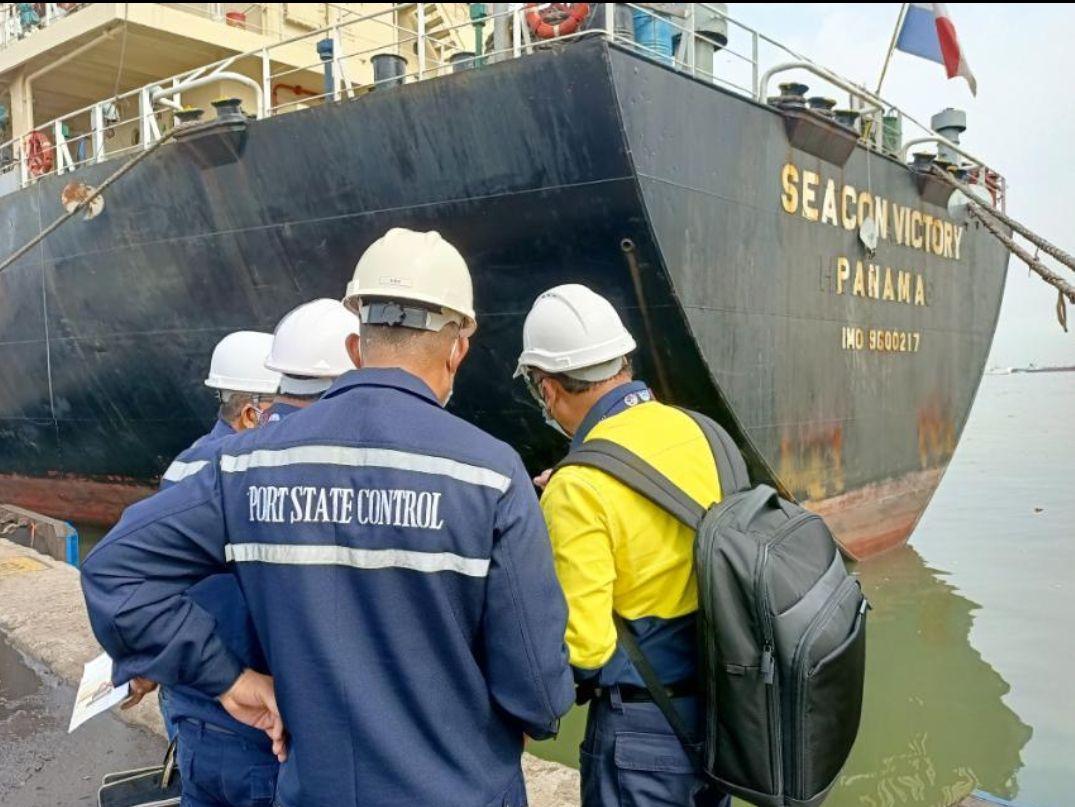
Ships move between ports across West and Central Africa, carrying the region’s imports and exports and connecting its economies to global trade. But the safety of those operations depends not only on the vessels themselves. It also depends on the ability of coastal States to inspect ships, identify deficiencies and enforce international maritime standards consistently.
That responsibility lies at the heart of Port State Control (PSC), through which maritime authorities inspect foreign vessels calling at their ports to verify compliance with international safety, security and environmental requirements.
For the Abuja Memorandum of Understanding on Port State Control for West and Central African Region, the challenge is no longer simply expanding membership. It is building the institutional capacity, technical competence and consistency required to make inspections effective across the region.
The question is whether the region can move from a shared framework to a genuinely coordinated inspection system.
THE 15 PER CENT BENCHMARK AND THE COMPLIANCE GAP
Under the Abuja MoU framework, member States are expected to inspect at least 15 per cent of eligible foreign ship calls. The benchmark is intended to ensure that inspections are sufficiently frequent to identify substandard vessels and discourage operators from seeking ports where enforcement is weaker.
The region’s historical performance shows why this remains a significant challenge.
The Abuja MoU’s 2023 Annual Report recorded regional inspection coverage of 3.98 percent among 14 administrations that submitted data.
Gabon, at 15.88 percent, was the only reporting administration to meet the 15 percent benchmark that year.
In a public statement in July 2026, the Secretary General of the Abuja MoU, Capt. Sunday Umoren, indicated that slightly more than one third of member States were meeting the minimum inspection requirement.
The figures point to a persistent implementation gap. Membership of a regional agreement does not automatically translate into effective enforcement. Inspection performance depends on the availability of qualified Port State Control Officers, operational resources, reliable information systems and the institutional authority to act on findings.
WHAT THE INSPECTION FIGURES REVEAL
The 2025 Annual Port State Inspection Data provides a more recent picture of regional activity.
Sixteen member authorities reported 3,948 vessel inspections, identifying 1,571 deficiencies.
The data also recorded 303 inspections in which deficiencies were found, 93 detainable deficiencies and 24 vessel detentions.
Nigeria accounted for 917 inspections and 11 detentions, the highest number of detentions recorded among the reporting authorities.
These figures demonstrate that inspections are taking place and that enforcement action is being taken where necessary. But the number of inspections alone does not establish the effectiveness of a Port State Control regime.
The quality of inspections, the ability to identify serious deficiencies, the consistency of detention decisions and the follow through on corrective action are equally important. A system that records high inspection numbers but applies standards inconsistently may still leave weaknesses that undermine regional maritime safety.
This is why harmonisation matters. Ships operating across neighbouring jurisdictions should encounter a broadly consistent application of international standards, rather than different levels of scrutiny depending on the port they enter.
BUILDING CAPACITY BEYOND THE NUMBERS
The Abuja MoU’s five year regional capacity building programme, supported by the Lloyd’s Register Foundation, represents an important intervention.
The programme was formally launched with an inaugural workshop held from 29 June to 1 July 2026 at Eko Hotel and Suites in Lagos. It brings attention to some of the structural issues affecting inspection performance, including uneven coverage, differences in inspector capability, gaps in regulatory implementation, transparency and the quality of inspection data.
The intervention recognises that effective Port State Control requires more than training individual officers. It requires a system that can sustain professional standards, share expertise and strengthen the capacity of maritime administrations to carry out their responsibilities.
In PrimeAxis Executive Conversations, Capt. Umoren identified the eradication of substandard ships as a central objective of the Abuja MoU. He also emphasised the importance of applying internationally accepted standards consistently across member States.
The regional framework covers all 22 eligible coastal States in West and Central Africa. Its strategic objective is to have fully functional Port State Control regimes across the membership by 2030.
That ambition will require sustained commitment from governments and maritime administrations. Inspectors must have the technical competence, equipment and institutional backing to perform their duties.
Their work must also be supported by credible reporting systems and access to reliable vessel information.
FROM REGIONAL COMMITMENTS TO MINISTERIAL DECISIONS
The 16th Port State Control Committee Meeting and the Sixth Ministerial Conference of the Abuja MoU, held in Libreville, Gabon, in September 2026, moved the discussion towards implementation.
The meetings produced decisions on the region’s 2025 to 2029 Action Plan and approved amendments to the Abuja MoU framework.
Among the priorities were a harmonised regional training framework for Port State Control Officers, a register of certified inspectors, an expanded Mentor Mentee Scheme and a database of subject matter experts.
The meetings also addressed the need for more targeted inspections, drawing on vessel detention histories, deficiency records and performance data. This approach is important because inspection resources are limited. They must be directed towards vessels and operators presenting the greatest risks.
Another significant development was the proposed roadmap for Port State Control inspections of fishing vessels, including legal review and capacity building. The sector has particular relevance to West and Central Africa, where illegal, unreported and unregulated fishing remains a concern for coastal economies and maritime governance.
The conference also approved a 2027 Concentrated Inspection Campaign on enclosed spaces, while identifying data governance, cybersecurity and the accuracy and timeliness of information on the Abuja MoU Information System as important priorities.
Emerging operational risks, including alternative fuels, autonomous shipping, dark fleets, fraudulent vessels and the use of digital evidence, further underline the need for an inspection regime capable of adapting to changes in global shipping.
THE IMPLEMENTATION TEST
The Abuja MoU has established a regional framework, developed partnerships and placed capacity building at the centre of its next phase.
The September ministerial decisions provide a clearer direction for harmonising inspection standards and strengthening institutional cooperation.
But the real measure of progress will be what happens within individual maritime administrations.
Will member States provide inspectors with the resources and authority required to enforce international standards? Will inspection data become more complete and reliable? Will the proposed certification and mentoring arrangements translate into measurable improvements in professional competence? And will the region be able to reduce the gaps that allow substandard vessels to operate with less scrutiny in some ports than others?
These are not merely administrative questions. They concern the safety of seafarers, protection of the marine environment, reliability of shipping services and credibility of the region as a destination for maritime investment.
PRIMEAXIS INSIGHT
West and Central Africa does not need another regional declaration of intent. It needs an inspection system that works consistently across national boundaries.
The 15 per cent benchmark is a useful measure of inspection coverage, but meeting it should not become the ultimate definition of success. The deeper objective is to ensure that inspections are technically sound, enforcement decisions are consistent and deficiencies are addressed.
The Abuja MoU’s 2030 ambition is achievable only if governments treat Port State Control as an essential maritime governance responsibility, rather than a compliance exercise delegated to under resourced administrations.
For a region seeking greater participation in global shipping, stronger ports and a more competitive blue economy, the ability to enforce maritime standards is part of its economic credibility.
The test is no longer whether West and Central Africa can agree on common standards. It is whether those standards will be applied with equal seriousness in every port.