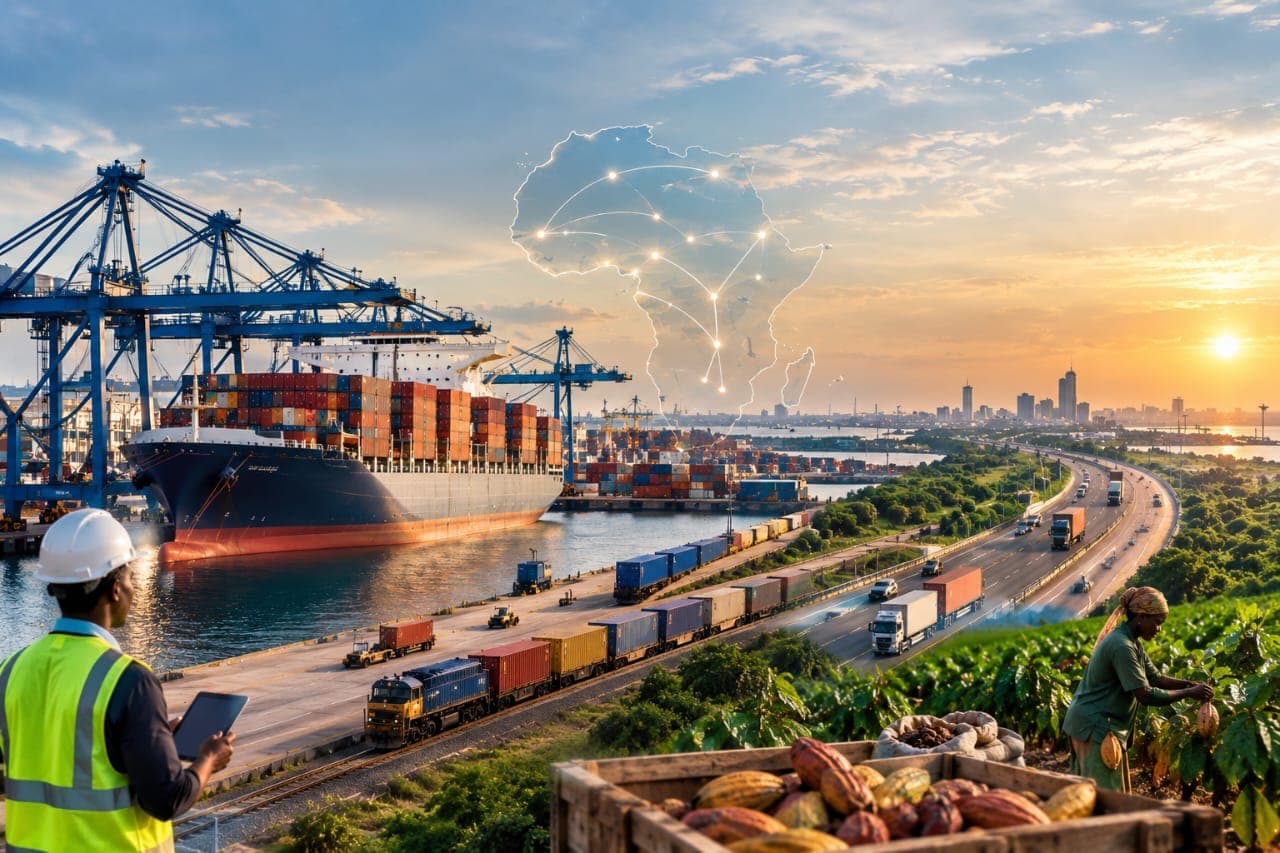
Nigeria’s ambition to expand non-oil exports faces a practical test: whether its ports, shipping services and trade procedures can move goods to international markets efficiently, reliably and at competitive cost.
A BusinessDay report published on October 27, 2026, highlighted port congestion and average border crossing delays of nearly 53 hours along the Abidjan-Lagos corridor. The delays expose a challenge that extends beyond the immediate disruption. As Nigeria seeks to grow export earnings and strengthen its position in African trade, its ability to deliver goods efficiently will be as important as its ability to produce them.
Exporters compete on more than price and product quality. They must also meet delivery schedules, manage inventory and fulfil contractual commitments. When cargo movement becomes unpredictable, businesses face higher logistics costs, tied up working capital and the risk of losing buyers to more dependable suppliers.
The question is therefore not simply whether Nigeria can produce more for export. It is whether the country can move those goods from production centres through ports and transport corridors to international buyers without avoidable delays and costs.
WHEN EXPORT CARGO CANNOT SECURE A RELIABLE PASSAGE
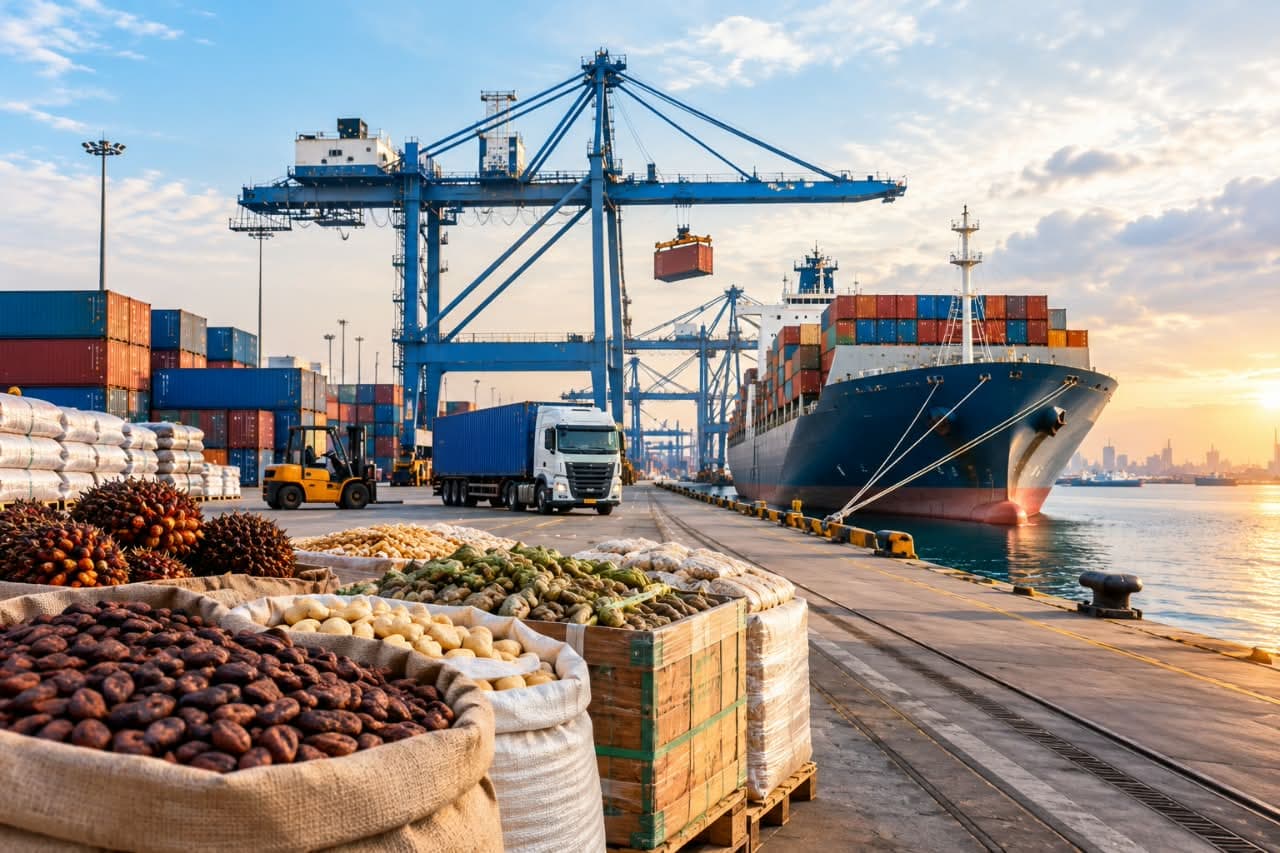
Nigeria’s export logistics challenges were evident in July 2026, when BusinessDay reported that at least 1,800 export containers were awaiting shipment at APM Terminals Apapa amid limited vessel availability, shipping disruptions and repeated schedule changes. The Nigerian Shippers’ Council, which was responsible for port economic regulation at the time, engaged shipping operators following complaints about delayed cargo evacuation.
The episode exposed a critical weakness in the export chain. Having goods ready for international markets does not guarantee that they will leave the country when expected.
Exporters also depend on available vessel space, terminal operations and shipping schedules that allow them to plan deliveries with confidence.
Data from the Nigerian Ports Authority showed that Nigerian ports handled 102,803 twenty foot equivalent units (TEUs) of export-laden container traffic in the first quarter of 2026. That volume underlines the commercial importance of ensuring that export cargo moves efficiently through the system.
Diverting cargo through alternative ports may offer some businesses an option during disruptions, but it can also introduce additional haulage costs and operational complications. A solution to congestion at one gateway may simply shift the burden elsewhere if the wider transport network is not efficient.
The implications extend beyond the port itself. A delayed shipment can disrupt production planning, increase storage and handling expenses, complicate payment arrangements and weaken an exporter’s credibility with international customers. For agricultural and other time sensitive products, delays can also affect quality and market value.
The causes of the specific delays reported in October need to be established, but the wider lesson is clear: export performance depends on the reliability of the entire logistics chain, not just the physical capacity of port terminals.
WHY A CORRIDOR IS MORE THAN A ROAD
In a PrimeAxis Executive Conversation published on August 25, 2026, Dr Obiora Madu, Chairman of Multimix Group and a trade, logistics and supply chain expert, offered a useful way to understand the challenge.
“A road is infrastructure. A corridor is an economic system.”
The distinction is central to Nigeria’s export ambitions. A corridor connects production centres, warehouses, transport services, ports, border posts and destination markets. Its performance depends on how well these components work together, including the flow of information and the coordination of the institutions responsible for moving goods.
A good road cannot compensate for a shortage of trucks, inefficient cargo handling, repeated documentation requirements or unreliable shipping connections. Equally, an efficient port cannot deliver its full economic value if exporters struggle to move cargo from inland production centres or encounter prolonged delays at border crossings.
The reported delays along the Abidjan-Lagos corridor illustrate the regional dimension of the problem. For goods moving between West African markets, border procedures and transport coordination influence both the cost and time of delivery. These constraints can undermine regional trade even where demand exists and businesses are ready to supply it.
Madu’s analysis points to a broader principle: infrastructure investment must translate into logistics performance. The relevant test is not simply whether roads, terminals or digital platforms exist, but whether they reduce the time, uncertainty and cost involved in moving goods.
For exporters, predictability is a commercial advantage. It enables businesses to coordinate production with shipping schedules, control inventory, plan cash flow and give buyers credible delivery commitments. Without it, even competitive products can become more expensive and less attractive.
FIVE PRIORITIES FOR EXPORT EFFICIENCY
At the National Export Efficiency Stakeholders’ Roundtable in Lagos on May 2, 2026, the Nigerian Shippers’ Council identified practical areas requiring stronger coordination across the export value chain.
Madu highlighted five priorities: corridor efficiency, port productivity, shipping connectivity, trade documentation and access to export finance. He also advocated a National Export Logistics Coordination Platform to improve collaboration among institutions and operators.
Each priority addresses a different part of the same commercial problem.
Port productivity determines how efficiently cargo is handled and evacuated. Shipping connectivity affects the availability and reliability of services to destination markets.
Trade documentation and coordinated border procedures influence the time required to process consignments. Corridor efficiency links producers to ports and markets, while access to finance helps exporters sustain operations and manage the cash flow pressures created by long transit times and delayed shipments.
These priorities are interdependent. Faster documentation will have limited impact if cargo cannot secure vessel space. Additional port capacity will not resolve delays caused by poor inland transport or fragmented border procedures. Better roads alone will not guarantee competitive exports if shipping services remain unreliable.
Digitalisation can improve information sharing, transparency and processing times, but technology is not a substitute for operational reform. If procedures are unnecessarily complicated, automating them may simply reproduce existing inefficiencies on a digital platform. Processes must be examined and improved alongside the systems designed to support them.
The proposed coordination platform also raises an important implementation question: how will the institutions involved identify bottlenecks, share information and take responsibility for resolving them? Coordination must produce operational decisions and measurable improvements, not become another layer of meetings and announcements.
MEASURING WHATS EXPORTERS ACTUALLY EXPERIENCE
Nigeria’s export logistics performance should be judged by the experience of businesses moving goods through the system.
How long does cargo spend waiting for clearance, terminal handling or evacuation? Can exporters obtain vessel space when required?
How often do shipping schedules change, and how much do those disruptions cost businesses?
Are border procedures becoming faster and more predictable? Are the total costs of getting Nigerian goods to international buyers becoming more competitive?
Answering these questions requires reliable data across the logistics chain. Authorities and operators need to establish where delays occur, what causes them, who is responsible for addressing them and whether corrective measures are working.
The objective is not to attribute every disruption to a single institution. It is to distinguish between problems arising from port operations, shipping capacity, documentation, inland transport and border procedures, then coordinate solutions around the actual causes.
That accountability matters because export facilitation is a shared responsibility. Port authorities, terminal operators, shipping lines, Customs, other regulatory agencies, transport providers, freight forwarders and exporters each influence the movement of cargo. Their efforts must align around the common objective of getting goods to market efficiently.
PRIMEAXIS INSIGHT
Nigeria’s export drive will ultimately be tested by the performance of its logistics system.
Expanding production and opening new markets are important, but neither guarantees export competitiveness. Goods must move reliably from producers to ports, across borders and into the hands of buyers at a cost that allows Nigerian businesses to compete.
Dr Obiora Madu’s analysis provides the essential perspective: a corridor is an interconnected economic system, not merely a stretch of road or a collection of infrastructure projects. The export efficiency priorities identified by the Nigerian Shippers’ Council reinforce the same point. Ports, shipping services, documentation, finance and inland transport must work together.
The immediate task is to establish the causes of reported delays and address the specific operational failures behind them. The longer term task is to build a logistics system that can accommodate growing trade volumes without allowing avoidable bottlenecks to erode the value of Nigerian production.
Nigeria wants to export more. Its success will depend on whether it can deliver more efficiently, more predictably and more competitively.