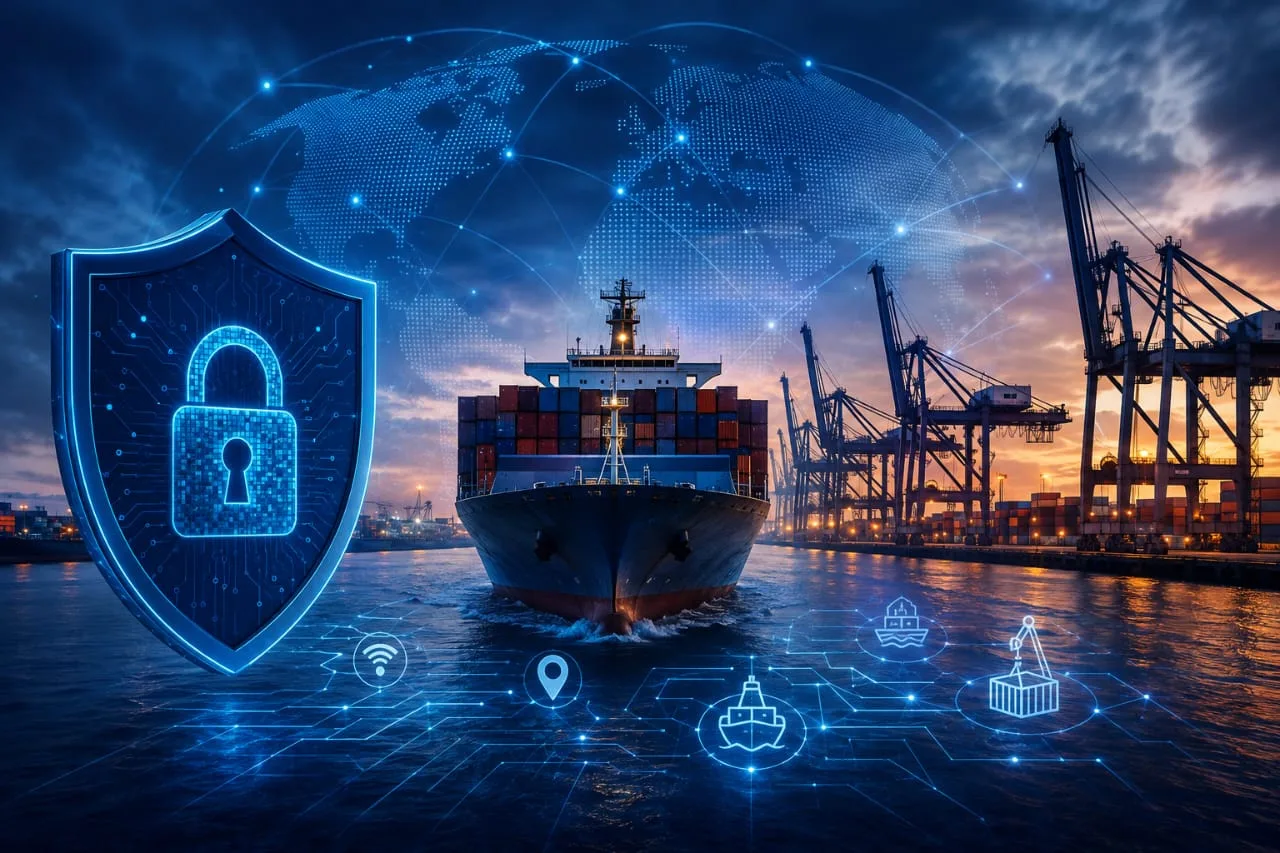
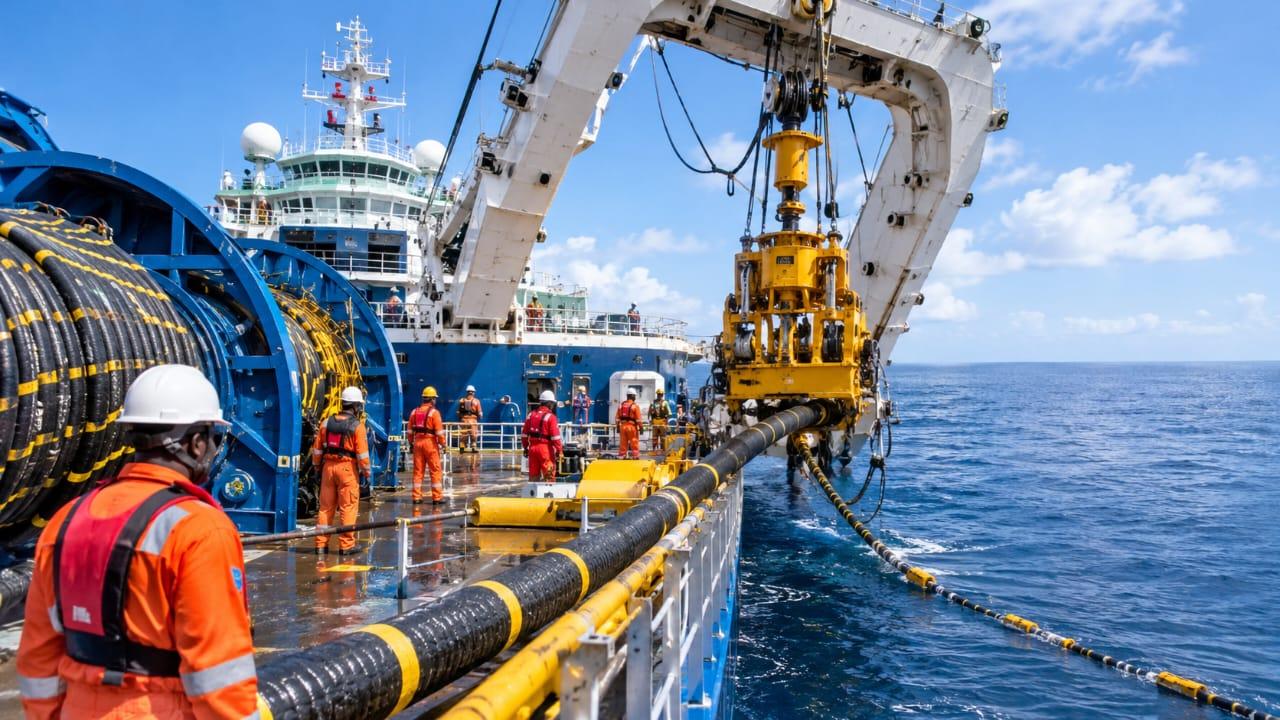
Beneath the Atlantic Ocean, submarine fibre optic cables carry the international data traffic supporting banking, financial transactions, telecommunications, cloud services, international business and government operations.
These cables are not simply telecommunications assets. They are critical economic infrastructure, connecting Nigeria to international markets and the digital systems on which its economy increasingly depends.
Yet the physical infrastructure carrying this traffic lies beneath waters shared by commercial shipping, fishing activities and other maritime operations. Damage to a cable can disrupt services across several countries. Restoring connectivity can require specialist vessels, technical expertise and coordination across national jurisdictions.
Nigeria has invested in expanding its digital connectivity. But who protects the physical infrastructure beneath its waters, and how prepared is the country when that infrastructure is damaged?
THE INFRASTRUCTURE BENEATH THE CONNECTION
Nigeria has become an important landing destination for international submarine cable systems serving West Africa.
The ECOWAS Digital Observatory identifies eight systems connected to Nigeria: Africa Coast to Europe, Glo 1, MainOne, SAT 3/WASC, West Africa Cable System, Equiano, the Nigeria Cameroon Submarine Cable System and 2Africa. Its inventory identifies nine landing points, including locations in Lagos, Bonny and Akwa Ibom.
There is, however, a difference between this inventory and some Nigerian industry reports.
The Guardian, in January 2026, identified eight major systems but included Glo 2, Globacom’s domestic coastal cable, instead of NCSCS. This distinction matters because international cable systems and domestic coastal infrastructure are not necessarily classified in the same way.
Ownership arrangements also differ. MainOne is now part of Equinix following its acquisition.
Equiano is Google's cable, Glo 1 belongs to Globacom, while NCSCS is owned by Cameroon Telecommunications. The 2Africa system is a consortium project involving Meta, Bayobab, China Mobile and other partners. SAT 3/WASC, ACE and WACS also involve multiple consortium participants.
A cable owner, a consortium participant and a company responsible for landing infrastructure in Nigeria are not necessarily the same entity.
Understanding these arrangements is essential when identifying who is responsible for maintenance, investment and operational decisions.
The Nigerian Communications Commission licenses companies involved in international cable infrastructure and landing station services. Its register includes MainOne, MTN Nigeria, Dolphin Telecommunications, WIOCC Nigeria and Globacom.
The scale of Nigeria’s dependence is significant.
Industry reporting by The Guardian in January 2026 estimated that submarine cables carry more than 95 per cent of the country's international internet and communications traffic. This is an estimate of international traffic, not all domestic internet activity. It nevertheless illustrates the strategic importance of protecting the infrastructure that connects Nigeria to the global digital network.
WHEN DAMAGE BENEATH THE SEA REACHES THE ECONOMY
The consequences of cable failure became clear on 14 March 2024, when multiple submarine cable systems serving West Africa experienced disruption.
The affected systems included ACE, SAT 3, WACS and MainOne. The Internet Society's investigation linked the outage to a suspected underwater rock slide off Côte d’Ivoire. Thirteen African countries experienced degraded services or near total internet outages, including Nigeria.
The incident exposed a weakness in international connectivity. Even where several cable systems exist, damage affecting multiple routes can produce widespread disruption. The presence of several cables does not automatically guarantee resilience if their routes share geographical vulnerabilities.
Physical damage is not always deliberate. In February 2026, the International Telecommunication Union reported that more than 80 per cent of submarine cable faults globally are associated with fishing and ship anchoring. Natural hazards, including earthquakes, storms and powerful seabed currents, as well as equipment failures, account for other incidents.
This makes maritime activity central to cable protection. Fishing gear, vessel anchors and seabed operations can damage infrastructure when cable routes are not properly identified, understood or respected.
Repair is a specialised operation. It may require identifying the fault, mobilising a cable repair vessel, deploying technical crews and equipment, and obtaining access and approvals from the relevant authorities. The availability of suitable repair vessels and the time required to secure permissions can influence how quickly connectivity is restored.
For a country heavily dependent on international connectivity, repair delays are not merely technical inconveniences. They can prolong disruption to businesses, financial services and public communication.
WHO IS RESPONSIBLE FOR PROTECTION?
The protection of submarine cables cuts across telecommunications regulation, maritime safety and national security. No single Nigerian institution can address the challenge in isolation.
The Nigerian Communications Commission regulates the telecommunications sector and licenses companies involved in international cable infrastructure and landing stations. Its responsibilities are essential to the regulatory environment within which these systems operate.
NIMASA has responsibilities within the maritime sector, including maritime safety and the regulation of relevant activities within its statutory mandate. The Nigerian Navy contributes to maritime security and the protection of Nigeria’s maritime domain.
Cable operators also have responsibilities for the technical integrity, monitoring and maintenance of their systems. Shipping companies and fishing communities must understand the risks associated with anchoring and fishing around protected cable routes.
However, the existence of these institutions does not automatically establish that Nigeria has a fully coordinated national framework for submarine cable protection.
Are cable routes adequately incorporated into maritime planning? Do relevant agencies have access to reliable information about critical cable locations? Are fishing and shipping operators sufficiently informed? Is there a clear procedure for reporting suspected damage? Can specialist repair vessels obtain the necessary access without avoidable delays?
These are operational questions that require more than general assurances of institutional cooperation.
NIGERIA'S INTERNATIONAL RESPONSIBILITY
Nigeria is not absent from the international effort to strengthen submarine cable protection. In fact, it occupies a leadership position.
The International Telecommunication Union and the International Cable Protection Committee established the International Advisory Body for Submarine Cable Resilience in 2024. Nigeria's Minister of Communications, Innovation and Digital Economy, Dr Bosun Tijani, co chairs the body alongside Portugal's Professor Sandra Maximiano.
The body brings together representatives from governments, telecommunications companies, cable operators and other organisations. Its work focuses on protecting submarine infrastructure, improving repair times, identifying risks and strengthening geographical diversity.
Its final report, approved on 10 July 2026, identified physical exposure, repair delays, geographical concentration and dependence on limited cable systems as major resilience challenges. It recommended stronger coordination between governments and industry, improved monitoring, faster permitting processes, better preparedness and greater route diversity.
The report also builds on the international submarine cable resilience summit held in Abuja in 2025, which placed Nigeria at the centre of an important global discussion.
This position gives Nigeria an opportunity to influence international policy. But leadership in a global advisory body must translate into practical improvements within the country's own maritime and telecommunications environment.
PRIMEAXIS INSIGHT
Nigeria's digital economy is often discussed in terms of broadband penetration, data centres, fintech growth and technology investment. Less attention is given to the physical infrastructure beneath the sea that makes much of this activity possible.
Submarine cables are critical economic infrastructure. Their protection should therefore form part of Nigeria's wider maritime security and national economic resilience agenda.
The country needs a coordinated approach that clearly defines institutional responsibilities, improves access to cable route information, strengthens engagement with fishing and shipping operators, establishes effective incident reporting and supports timely access for specialist repair vessels.
It must also examine the concentration of cable landing infrastructure and whether alternative routes can sustain connectivity when major systems fail.
Nigeria has invested in connecting its economy to the world. Protecting the infrastructure that makes that connection possible is now an equally important responsibility.
The cables beneath Nigeria's waters carry more than data. They support financial transactions, commercial relationships, public services and the country's participation in the global digital economy.
The question is no longer whether submarine cables matter to Nigeria's economic future. It is whether the country is doing enough to protect them.