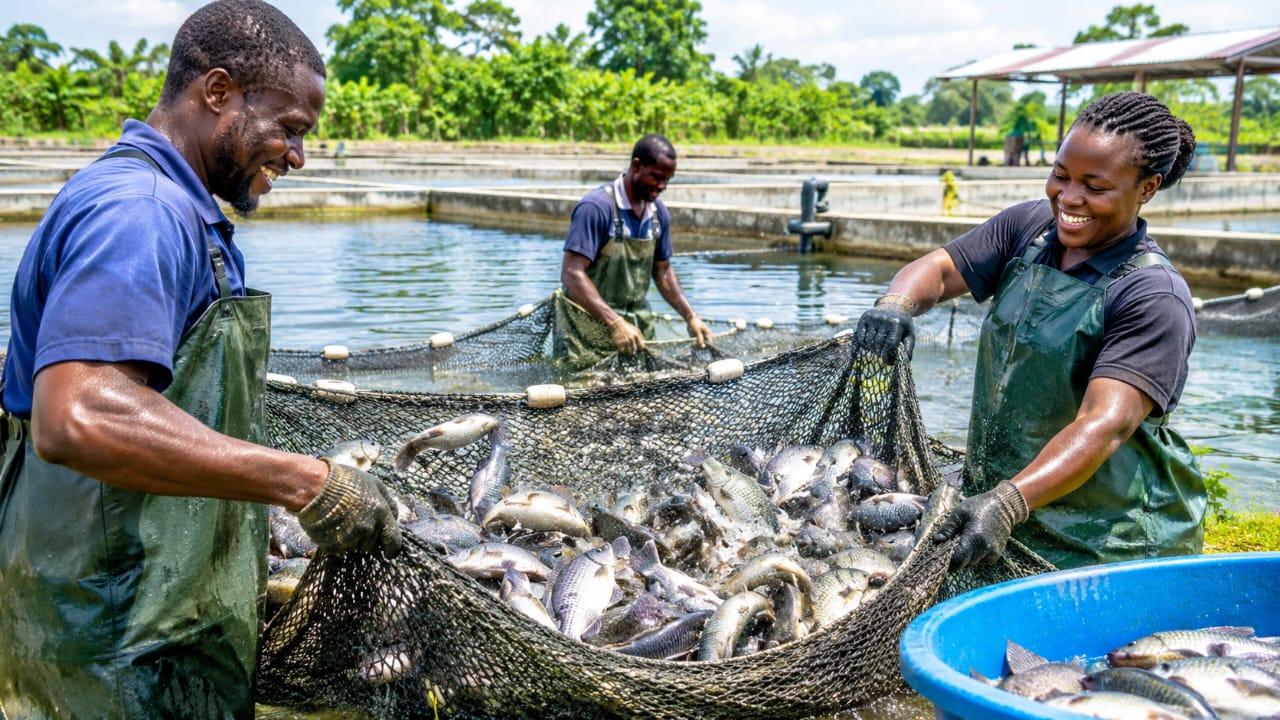
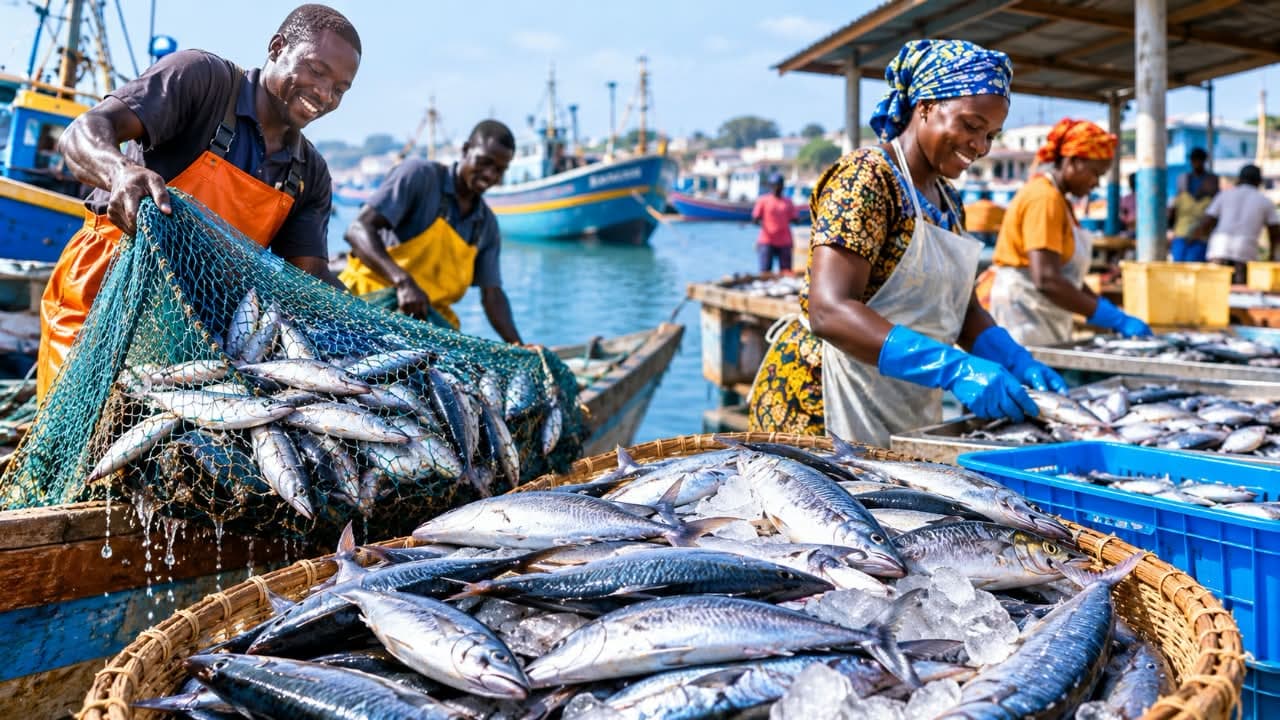
Africa’s fisheries sector is often discussed in terms of production, food security and the livelihoods it supports. But an important part of the economic equation receives far less attention: what happens after the fish is caught?
Across many African fishing communities, the journey from landing site to market is constrained by inadequate preservation facilities, unreliable electricity, limited cold storage, poor transportation and insufficient processing capacity. The result is not simply wasted fish. It is lost income, lower selling prices, reduced export competitiveness and economic opportunities that never materialise.
Africa may be harvesting a valuable natural resource without capturing the full value it can generate.
A 2024 review by researchers Alemu Lema Abelti and Tilahun A. Teka examined post harvest losses in eight sub Saharan African countries, including Nigeria, Ghana, Kenya, Tanzania, Ethiopia, Malawi, Zambia and Zimbabwe. It estimated that losses could account for about one third of total fish production in the countries reviewed, with associated financial losses of between $2 billion and $5 billion.
These are estimates drawn from the studies reviewed, not an audited account of losses across the continent. Nevertheless, they demonstrate the scale of a problem that extends beyond fishing grounds into the wider food and trade system.
THE VALUE LOST AFTER LANDING
Fish is highly perishable. Its commercial value depends on how quickly it is handled, cooled, stored and transported after capture.
Where ice is unavailable, fish may deteriorate before reaching buyers. Poor landing facilities can compromise handling, while the absence of refrigerated transport and reliable storage leaves fishers and traders with limited options: sell quickly at a lower price, process using traditional methods or risk losing part of the catch.
The consequences extend across the value chain. Fishers earn less, processors receive inconsistent quality and supply, traders absorb losses, and exporters face the risk of rejected consignments.
The African Union Inter African Bureau for Animal Resources (AU IBAR), in its 2025 policy brief on post harvest losses in small scale fisheries, identified inadequate infrastructure, policy and legal gaps, limited technical capacity and financing constraints as major causes.
This is not simply a problem of how individual fishers handle their catch. It reflects weaknesses in the systems connecting production to markets.
COLD CHAIN INFRASTRUCTURE IS ECONOMIC INFRASTRUCTURE
Improving the value of Africa’s fisheries requires more than providing refrigerators or ice plants.
An effective cold chain needs equipped landing sites, accessible ice production, cold rooms, dependable electricity, refrigerated transport, water and sanitation facilities, maintenance services and viable distribution networks.
Location and commercial viability matter. A cold storage facility without reliable power, sufficient fish volumes, maintenance or access to buyers may become an underused asset rather than a productive investment.
The questions are straightforward. Who will finance these facilities? Who will operate and maintain them? Can small scale fishers and processors afford to use them? Can the facilities connect fishing communities to domestic, regional and international markets?
Without answers, infrastructure investment may produce facilities without transforming the economics of the fisheries sector.
NIGERIA: FISHING BOATS ARE ONLY THE BEGINNING
Nigeria provides a practical example of both the opportunities and gaps in supporting small scale fisheries.
Women play important roles in the country's fisheries economy, particularly in processing, distribution and trade. They also participate in financing fishing activities and providing equipment to fishers.
Maritime women's organisations have demonstrated how targeted interventions can support these communities.
The Women's International Shipping and Trading Association (WISTA) Nigeria has supported women in fishing communities with boats and engines. In Lagos, the association donated fishing boats and engines to women in the Oshoroko and Sagbokoji communities, while also pursuing arrangements to support the bulk purchase and marketing of their seafood.
In August 2026, Women in Maritime Africa (WIMA) Nigeria donated two fishing boats and nets to members of the Tomoro community in Araromi Onisiwo, Lagos State. The intervention was intended to support the livelihoods of women and young people in the riverine community.
These initiatives are significant because access to boats and equipment can improve fishing capacity and create opportunities for income generation. But they also point to a larger question: what happens after the fish is caught?
Without ice, storage, processing facilities, reliable transportation and access to organised markets, increased fishing capacity does not automatically translate into higher earnings.
For Nigeria, the next step is to connect community empowerment initiatives with investment in the wider fisheries value chain.
Fishing cooperatives, women processors and seafood traders need access to equipment, finance, preservation facilities and buyers if they are to build sustainable businesses.
PROCESSING AND THE WOMEN BEHIND THE VALUE CHAIN
Preservation is only part of the opportunity. Processing can extend shelf life, improve product quality, create employment and increase the value retained within fishing communities.
Across Africa, women play significant roles in smoking, drying, processing, trading and distributing fish. Yet many operate with limited access to modern equipment, finance, suitable facilities, training and formal markets.
A Food and Agriculture Organization value chain analysis of the Lake Tanganyika sprat, sardine and perch fisheries in Tanzania illustrates what a more integrated approach could achieve. Small scale fishers supply the catch, while women play a major role in processing fish into dried dagaa and smoked perch for domestic and regional markets.
The analysis identifies post harvest losses, low processor profitability and gender inequality among the sector's constraints. Its upgrading strategy estimates an investment requirement of $9.7 million for improved processing and cold chain techniques, infrastructure, training and stronger market connections.
The lesson is that better fisheries outcomes require coordinated investment in equipment, skills, infrastructure and market access, not isolated interventions.
THE EXPORT COMPETITIVENESS QUESTION
Post harvest quality is also a trade issue.
International seafood markets impose requirements relating to hygiene, traceability, handling, processing and product safety.
Producers unable to maintain consistent quality face barriers to entry, lower prices or rejected consignments.
A 2026 WorldFish policy brief on Tanzania's octopus value chain found that losses continued at landing, aggregation, transportation and processing stages, despite investment in fisheries management, industrial processing and export access.
The study estimated annual post harvest and quality related losses of $295,000, alongside government revenue losses of $154,500. It further estimated that reducing these losses by half could recover approximately $148,000 annually for value chain participants and $77,000 in government revenue.
Although these figures relate specifically to Tanzania's octopus fishery, they demonstrate that economic value can be recovered without increasing fishing pressure. Better handling, processing and logistics can improve returns from fish already being harvested.
For Africa, this is an opportunity to strengthen domestic and regional trade, expand seafood exports and retain more economic value within fishing communities.
FROM CATCHING FISH TO CREATING VALUE
Africa's fisheries development agenda must give greater attention to what happens between the landing site and the final market.
Governments need to provide enabling infrastructure, clear standards, reliable power, accessible finance and policies that support investment. Financial institutions and private investors can develop viable models for cold storage, processing, transportation and distribution. Regional institutions can strengthen cooperation on standards and market access.
These interventions must also be connected. Landing facilities, cold chain operators, processors, transport providers and exporters cannot function as disconnected parts of the same value chain.
Investment must reflect actual production volumes, market demand, operating costs and the ability of fishing communities to use the facilities provided.
PRIMEAXIS INSIGHT
Africa's fisheries challenge is not simply how much fish the continent catches. It is how much value it preserves, processes, trades and retains.
Nigeria's experience shows that community organisations are already helping fishing families gain access to productive assets. But boats and nets must connect to preservation, processing, finance and markets if they are to deliver lasting economic benefits.
Across the continent, closing the gap between production and value creation will require more than increasing catches or announcing new infrastructure projects. It will require investment in the systems that protect quality, connect producers to markets and enable local enterprises to earn more from their work.
The real measure of progress is not just how much fish Africa catches, but how much of its value reaches the people and businesses that make the industry possible.