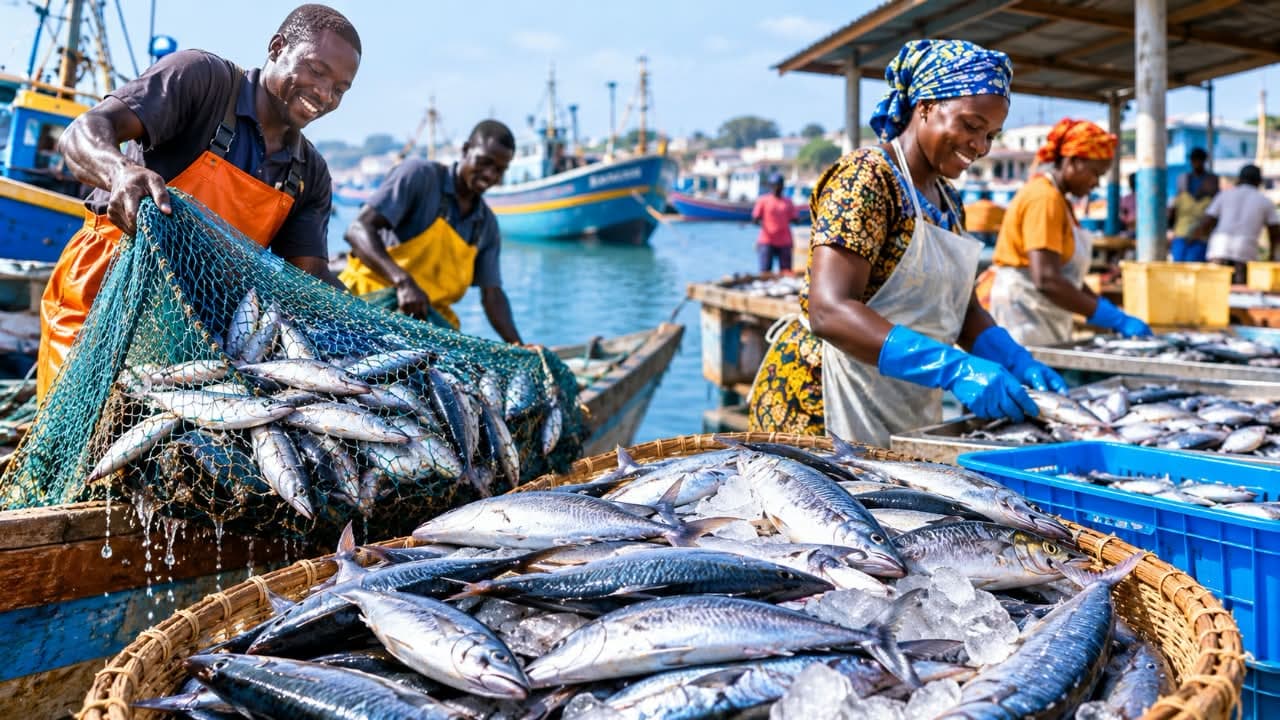
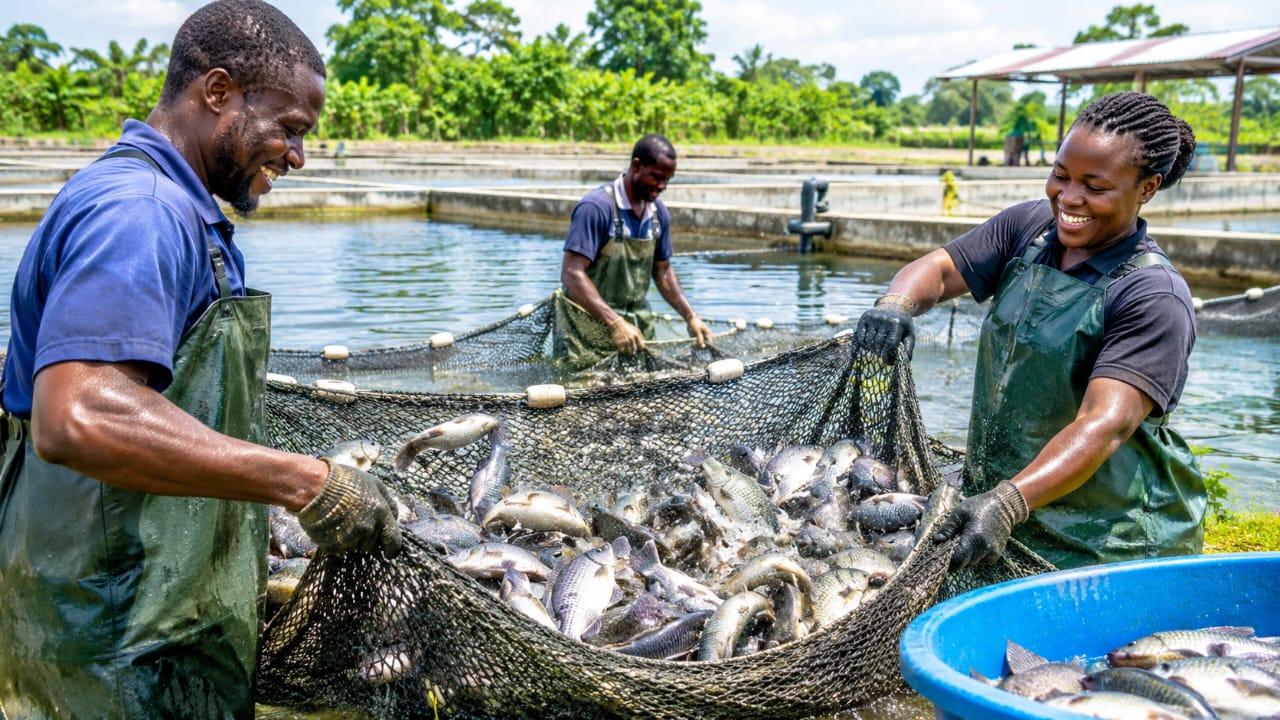
Nigeria’s ambition to reduce its dependence on imported fish has received a significant financial boost, with the World Bank Group committing $200 million to support domestic fisheries and aquaculture production. Yet the more important question is not how much financing has been secured, but whether state governments can convert it into productive investments capable of transforming the economics of the industry.
The resulting supply gap exceeds 2.2 million tonnes, much of which is met through imports costing the country close to $1 billion annually in foreign exchange, according to figures presented by the Federal Ministry of Marine and Blue Economy.
The Minister, Adegboyega Oyetola, announced the World Bank commitment through his representative, Professor Busayo Fakinlede, at an executive training programme on the Aquaculture Investment Guide organised by the Ministry in collaboration with the World Bank Group in Abuja.
The financing is expected to be made available to state governments through concessional loans to develop fisheries and aquaculture projects.
Under the proposed state driven framework, governments are expected to identify priority value chains, assess investment readiness, develop bankable projects and establish measurable production targets.
The approach recognises that expanding domestic fish production requires more than federal policy declarations. It requires investment decisions, infrastructure and implementation capacity at state level. However, the quality of that implementation will determine whether the commitment produces lasting economic value.
THE PRODUCTION CHALLENGE IS ALSO A COST PROBLEM
Expanding aquaculture is not simply a matter of constructing fish farms or providing equipment. It is an interconnected business whose profitability depends on affordable inputs, reliable production systems, technical expertise and access to markets.
A 2026 research paper by the International Food Policy Research Institute and CGIAR identifies high feed costs, fragmented fingerling supply, inadequate cold chain infrastructure and limited access to finance among the structural constraints affecting Nigeria’s fisheries and aquaculture sector.
Feed alone accounts for an estimated 60 to 70 per cent of aquaculture production costs. This means that financing more farms without addressing the cost and availability of feed could increase production capacity without making local fish commercially competitive.
The same challenge applies to fingerling quality, electricity, water management, disease control and technical services. These are not secondary considerations. They directly affect production costs, survival rates, output and profitability.
Consequently, the proposed financing must support complete production systems rather than isolated facilities. Investment plans should demonstrate how producers will access quality inputs, manage operating costs, maintain production standards and secure dependable markets.
Without this commercial assessment, projects may become dependent on continued public support rather than developing into sustainable businesses.
STATE READINESS MUST DETERMINE PROJECT SELECTION
The decision to involve state governments is significant. States have important responsibilities in land access, local infrastructure, investment facilitation, extension services and engagement with producers.
However, the ability to identify investment opportunities is different from the ability to prepare and execute bankable projects.
States differ in their water resources, existing aquaculture activity, technical capacity, market access and supporting infrastructure. Their investment proposals must reflect these differences rather than follow a uniform allocation model.
The proposed framework therefore needs transparent project selection criteria. States should demonstrate the commercial viability of their proposals, environmental suitability, infrastructure requirements, market demand and capacity to manage implementation.
A phased approach could help. States with credible feasibility studies and investment ready projects could proceed first, while others receive technical support to develop viable proposals.
The objective should not be to distribute financing equally for its own sake. It should be to direct investment towards projects capable of increasing production, attracting private capital and delivering measurable economic returns.
PRIVATE CAPITAL WILL TEST THE COMMERCIAL VALUE
The Ministry has identified public private partnerships as an important component of the proposed framework. This is necessary because public financing alone cannot meet the capital and operational requirements of a competitive aquaculture industry.
Private investors will need more than policy assurances. They will look for predictable operating conditions, reliable infrastructure, access to inputs, market opportunities and a clear understanding of project risks.
This is particularly relevant to the proposed Fish City and Fish Terminal investment portfolios being developed to attract private capital. Their commercial value will depend on the services they provide, the operators responsible for them, their revenue models and the level of business they can realistically attract.
Processing, storage, transportation and distribution must also be incorporated into the investment framework. Increasing fish production without improving the systems that move fish from farms and landing sites to consumers could create additional post harvest losses and weaken producers’ returns.
Nigeria’s recent achievement of certification for shrimp exports to the United States, following compliance with Turtle Excluder Device requirements, also demonstrates the potential of export markets. However, sustained export participation will require consistent quality, traceability, processing standards and dependable production volumes.
The wider investment opportunity therefore extends beyond fish farming. It includes the businesses and infrastructure that connect production to domestic and international markets.
THE ACCOUNTABILITY TEST BEGINS WITH IMPLEMENTATION
An important detail yet to be publicly established is the timetable for disbursement and project execution. The Ministry has announced the financing commitment and outlined the proposed state driven framework, but a clear public schedule for accessing and deploying the funds has not been provided.
Further information is needed on the financing conditions, state eligibility, project approval process, repayment arrangements and institutional responsibilities.
The distinction between a financing commitment and actual disbursement is important. Until the terms and implementation arrangements are established, the $200 million should be understood as a financing commitment, not money already released to states or projects.
The Federal Ministry of Marine and Blue Economy must also establish a transparent monitoring framework. Which states have met the investment readiness requirements? How many projects have been assessed and approved? How much financing has been disbursed? What production increases are expected, and how will actual results be independently verified?
These questions matter because concessional loans remain financial obligations. Their economic justification must be demonstrated through productive assets, viable businesses and measurable returns.
The Ministry’s proposed federal and state coordination platform could provide the institutional structure for monitoring progress. It should publish regular implementation updates, including project locations, financing allocations, production targets and verified outcomes.
PRIMEAXIS INSIGHT
Nigeria’s $200 million fisheries financing commitment presents an opportunity to address a persistent weakness in the country’s domestic food production system. But the success of the intervention will depend less on the size of the commitment than on the quality of the investments it supports.
The country needs an aquaculture industry in which producers can access affordable inputs, operate commercially viable farms, reach reliable markets and attract private investment. State governments must also demonstrate the institutional capacity to prepare projects, manage financing and account for results.
Nigeria must avoid measuring progress by the number of projects announced or facilities constructed. The more meaningful indicators are additional fish produced, reductions in production costs, commercially sustainable businesses, jobs created and foreign exchange saved through reduced import dependence.
The financing could provide an important foundation for this transition. But its real value will only become visible when the commitment moves beyond policy announcements into productive capacity.
The question is not simply how much money Nigeria has secured for fisheries. It is whether the country can turn that financing into an industry capable of producing more, competing effectively and sustaining its growth.