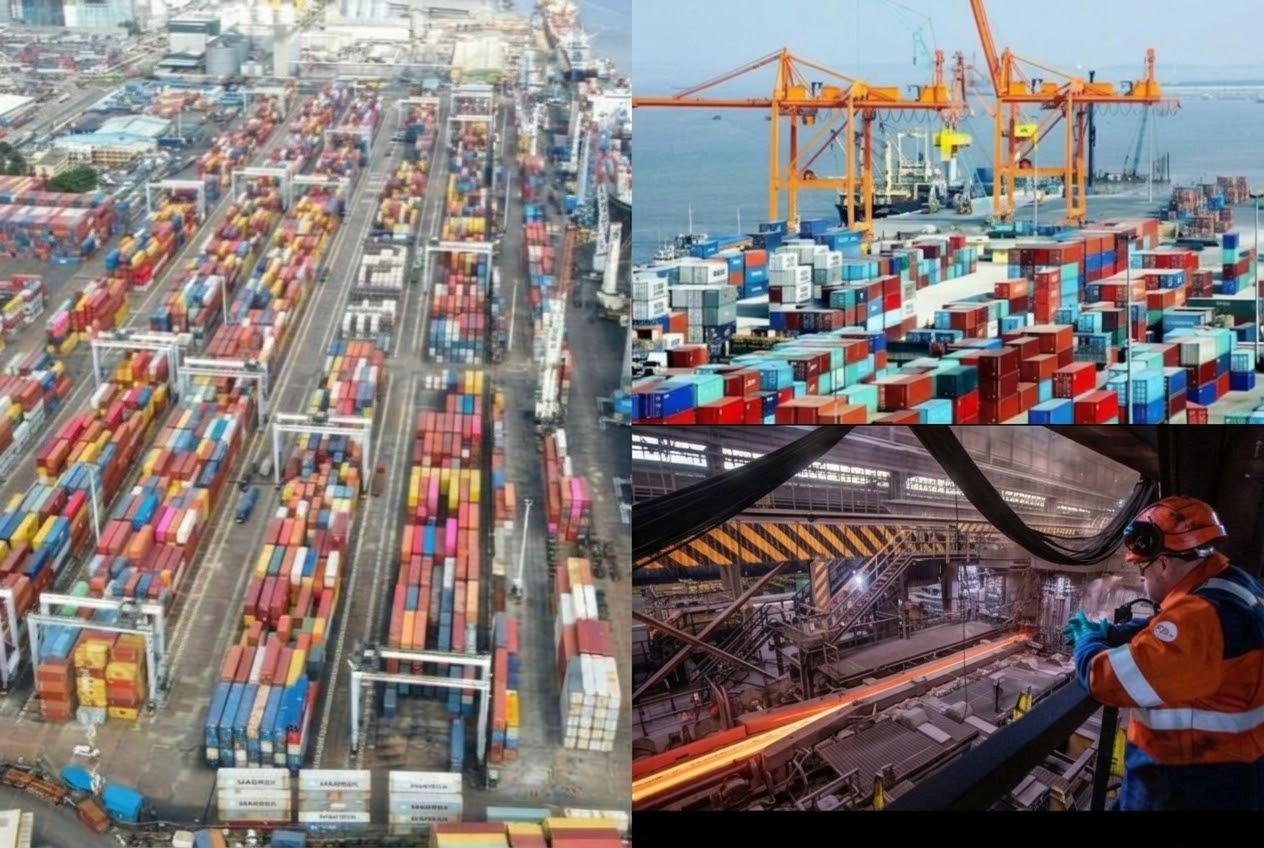
Africa's port expansion agenda is gathering momentum. Governments and private investors are committing billions of dollars to new terminals, deeper channels, modern cargo handling facilities and improved maritime connectivity.
The ambition is clear: increase capacity, attract investment and strengthen the continent's position in international trade.
But a critical question deserves equal attention: are these investments being designed to withstand the climate conditions they will face over their operational lifetimes?
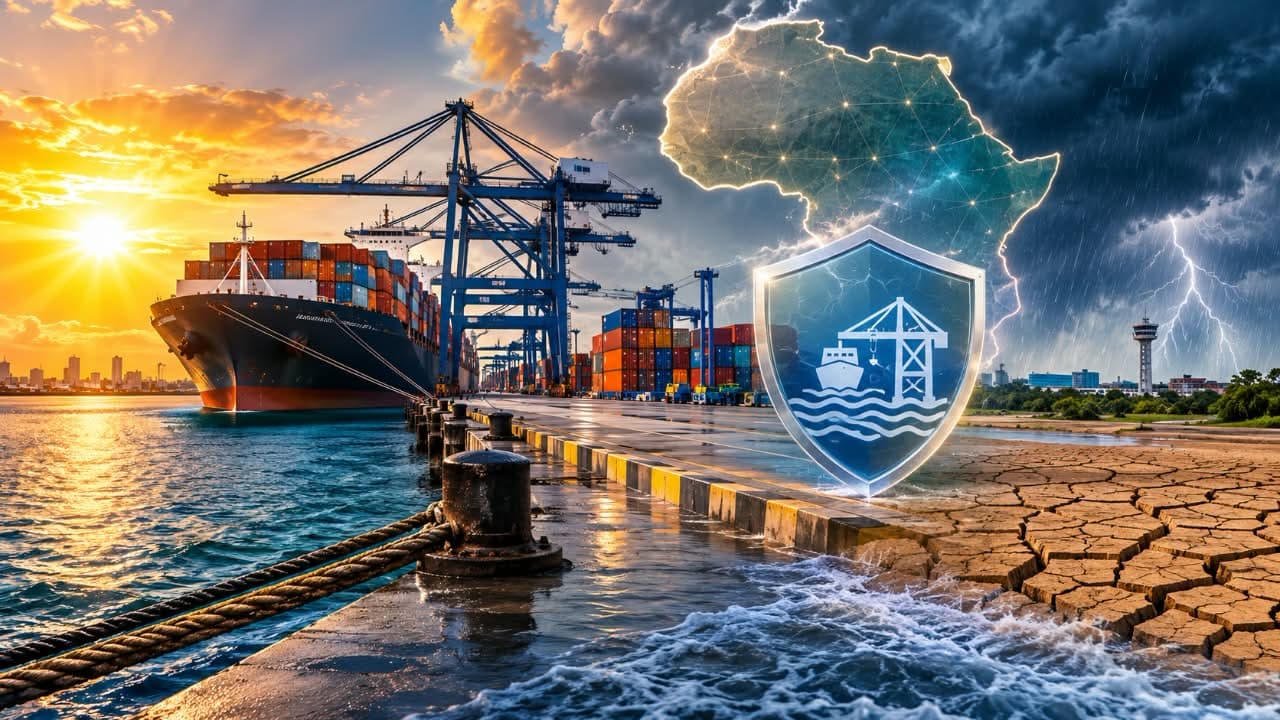
A port can expand its cargo handling capacity and remain vulnerable to flooding, extreme heat, coastal erosion and rising sea levels. When these risks are not adequately assessed and incorporated into infrastructure planning, the expected returns from expansion can be undermined by asset damage, operational disruption, higher insurance costs and repeated rehabilitation.
This is not simply an environmental concern. It is a question of infrastructure economics, investment protection and trade competitiveness.
THE ECONOMIC COST OF CLIMATE EXPOSURE
A September 2025 report by the Global Center on Adaptation, Climate Risks to African Ports: A Trade Corridor Approach for Resilience and Adaptation, estimates that $5.3 billion in annual African trade is already exposed to climate related disruption. Without adequate adaptation, annual damages and revenue losses could reach between $530 million and $680 million by 2050.
The report also projects that 43 African ports could experience more than 30 dangerously hot days annually by mid century.
These projections challenge the assumption that increasing port capacity automatically improves maritime competitiveness.
Extreme heat can affect workers, equipment performance and cargo handling productivity. Coastal flooding and storm surges can damage terminal infrastructure, electrical installations and access roads. Erosion and changing sea conditions can place additional pressure on breakwaters, quay structures and navigation infrastructure.
The consequences extend beyond the port.
Disruption at a major maritime gateway can affect shipping schedules, cargo availability, manufacturers, exporters and inland distribution networks.
For landlocked economies dependent on neighbouring coastal states, disruption at one port can affect trade across national borders.
Climate exposure must therefore be treated as a trade and logistics risk, not merely a facilities management issue.
NIGERIA'S PORT INVESTMENT UNDER SCRUTINY
Nigeria provides a timely example of why climate resilience must be part of the port investment conversation.
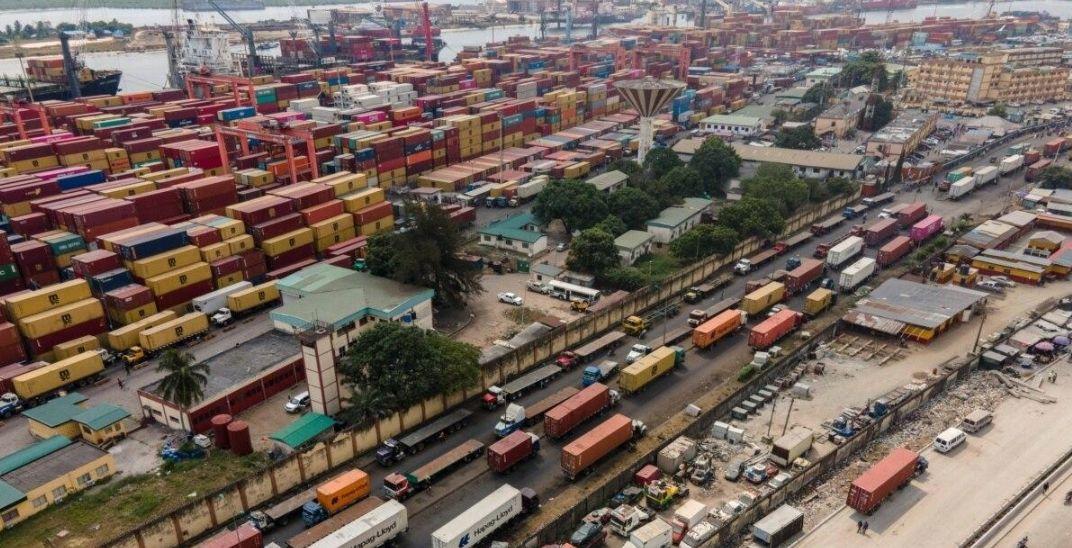
The Federal Government's modernisation programme for Apapa and Tin Can Island Ports includes the rehabilitation of 20 existing berths.
In a project disclosure published on 23 June 2026, the UK Government confirmed that UK Export Finance was supporting the Nigerian Ports Authority in relation to design and construction services for the works.
The programme covers quay wall rehabilitation, replacement of paved areas around the berths, and installation of new fenders and mooring beam structures. Its objective is to restore degraded infrastructure and improve port operating capacity.
The disclosure also confirms that physical climate impacts, including changes in rainfall and weather patterns, were considered in the project design assessment. The financing arrangement includes environmental and social monitoring and reporting commitments. UK Export Finance's maximum financial exposure is approximately £1.076 billion.
This is significant. It establishes that climate considerations formed part of the assessment of a major Nigerian port investment. It also raises a further question: how are those considerations translating into specific engineering measures and long term protection of the assets?
Nigeria's Hydrological Services Agency identified 80 mapped seaport locations as being at risk of flooding in its 2026 Annual Flood Outlook, including 21 in Lagos. This is an important national screening finding, although it does not mean that every mapped location is an operational port or faces the same degree of exposure.
For a country investing in the rehabilitation and expansion of its maritime infrastructure, the implications deserve serious attention. Flood risk assessments, drainage capacity, coastal protection and the resilience of supporting infrastructure must inform how port assets are designed, maintained and operated.
The issue is not whether Nigeria is investing in its ports. It is whether the investments adequately protect the infrastructure and trade activity they are intended to support.
FROM CLIMATE ASSESSMENT TO INVESTMENT DECISIONS
Port infrastructure is capital intensive and expected to serve for decades. Decisions taken during planning and construction can determine whether an asset remains commercially viable under changing climate conditions.
The World Bank's Climate Risk and Ports: A Practical Guide on Strengthening Resilience emphasises the need to assess exposure at individual port locations and across specific assets. A uniform approach cannot adequately address the different risks facing African coastal facilities.
Climate assessments must influence site selection, engineering specifications, procurement, construction, maintenance budgets and concession arrangements.
The financial case is straightforward: incorporating resilience during project development can reduce the cost of future repairs, reconstruction and operational downtime.
The Port of Cotonou in Benin offers an example of how this can work in practice. Through the Africa Adaptation Acceleration Program, developed by the Global Center on Adaptation and the African Development Bank, technical assessments examined heat stress, drought and extreme sea level impacts on port assets and operations.
The work also considered potential damage and revenue losses, helping establish an investment case for adaptation measures. According to the Global Center on Adaptation, it supported additional climate financing, including $18 million from the Canada African Development Bank Climate Facility for further resilience components.
The significance of Cotonou is not simply the financing secured. It demonstrates how climate risk assessment can be connected to engineering decisions, financial modelling and the protection of future port revenues.
The experience at the Port of Banjul in The Gambia offers another dimension. Its climate resilience assessment considered the vulnerability of the Bund access road and the relocation of the Banjul Ferry Terminal, alongside measures such as early warning systems. Without adaptation, projected operational downtime could reach 25 days annually by 2050.
Together, these examples demonstrate why resilience must extend beyond the terminal. A modern port cannot guarantee efficient trade if its connecting roads, railways, warehouses and inland distribution routes remain vulnerable to climate disruption.
For African ports serving regional markets and landlocked economies, the resilience of the wider trade corridor is as important as the condition of the waterfront.
PRIMEAXIS INSIGHT
Africa's maritime competitiveness will not be determined by how many ports it builds or how much additional cargo capacity it creates. It will also depend on whether those assets can remain operational, commercially viable and accessible under changing climate conditions.
Nigeria's Apapa and Tin Can modernisation programme provides an opportunity to examine how climate considerations translate into actual infrastructure decisions. Cotonou demonstrates how climate risk assessment can strengthen the financial case for adaptation, while Banjul illustrates why the resilience of access infrastructure matters to the wider trade corridor.
The challenge is to move beyond recognising climate risk towards demonstrating measurable resilience in infrastructure investment and operations.
Port authorities, governments, investors and development finance institutions must be able to show not only what is being built, but how those assets are being protected and who is accountable for their long term performance.
Africa is investing in the future of its ports. The question is whether it is investing adequately in their ability to withstand that future.