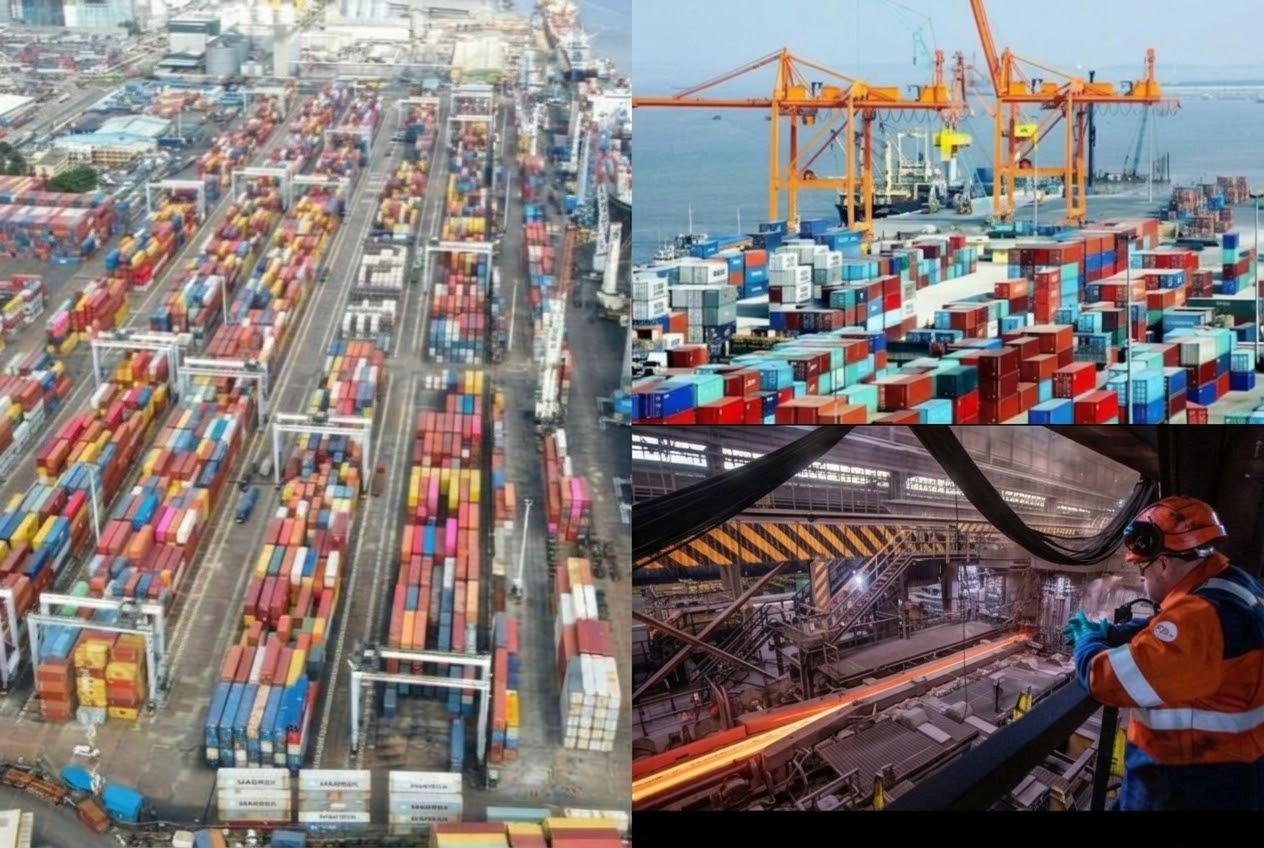
That distinction is central to understanding the state of Nigeria’s port operations. A port can record impressive revenue growth while exporters continue to face delays, shipping lines spend longer alongside berths and cargo evacuation remains unpredictable.
The real test of port efficiency is not simply how much cargo passes through the system. It is how effectively that cargo moves through the entire supply chain, from vessel arrival and discharge to clearance and final delivery.
REVENUE IS NOT THE SAME AS EFFICIENCY
The Nigerian Ports Authority’s 2025 Operational Performance Report recorded cargo throughput of more than 129.3 million metric tonnes, representing a 24.8 per cent increase from the 103.6 million metric tonnes recorded in 2024.
The growth continued in the first half of 2026.
Cargo throughput rose by 12.2 per cent to approximately 68.2 million metric tonnes, compared with 60.8 million tonnes in the corresponding period of 2025.
These figures demonstrate increased activity across Nigeria’s port system. However, the NPA’s half year performance review presented at the September 2026 Nigerian Ports Consultative Council meeting revealed a less encouraging development in vessel movement.
Average vessel turnaround time increased from 5.0 days in the first half of 2025 to 5.3 days in the corresponding period of 2026.
At Lagos Port Complex, which serves the Apapa port area, turnaround time rose from 5.9 to 6.1 days. Tin Can Island Port recorded an increase from 4.4 to 5.1 days.
The implication is significant. More cargo is moving through Nigerian ports, but vessels are spending longer completing their port calls.
Longer turnaround times can increase shipping costs, disrupt vessel schedules and contribute to higher costs for importers and exporters.
The figures do not diminish the progress recorded in cargo growth. They show why growth must be assessed alongside the operational conditions under which it is achieved.
THE OPERATIONAL FUNDING QUESTION
Port efficiency also depends on the financial capacity of the institution responsible for maintaining port infrastructure and delivering essential services.
In February 2026, Minister of Marine and Blue Economy Adegboyega Oyetola raised concerns about deductions at source from the revenues of self funding agencies, including the NPA. While defending the ministry’s 2026 budget proposal, he warned that the deductions were weakening the liquidity and operational flexibility of agencies expected to finance significant aspects of their responsibilities.
He linked the constraints to wider consequences for port congestion, cargo delays, logistics costs and revenue generation.
The NPA Managing Director, Dr Abubakar Dantsoho, subsequently raised the issue at the September 2026 Nigerian Ports Consultative Council meeting. He identified the automatic 50 per cent deduction from government owned enterprises as a constraint on the Authority’s ability to respond to operational emergencies and called for an 80:20 revenue sharing arrangement in favour of the NPA.
The debate raises an important question about the relationship between revenue generation and the resources available to sustain port operations. An authority may generate more revenue, but its capacity to maintain infrastructure, provide essential services and respond to operational disruptions depends partly on how much of that revenue it can retain and deploy.
A report published on 9 November raised concerns about the alleged non release of monthly Authority to Incur Expenses allocations to Port Managers for three consecutive months, with essential supplies, including diesel, reportedly running low.
Responding to the concerns, the NPA’s General Manager, Corporate and Strategic Communications, Ikechukwu Onyemekara, said he was not aware that Port Managers were being denied funding. He pointed to the Authority’s performance results, which he said were based on key performance indicators obtained from the ports, and reaffirmed its commitment to global best practices.
The competing accounts make operational transparency important. The question is not merely whether funds have been allocated, but whether port managers have the resources required to sustain services and address operational needs when they arise.
CARGO EVACUATION REMAINS THE REAL TEST
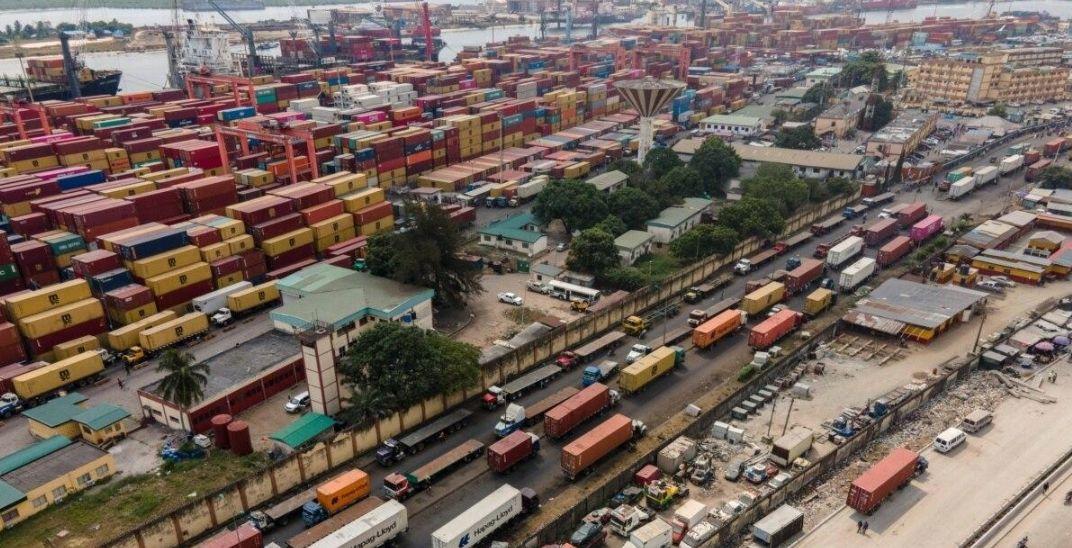
For businesses operating through Lagos ports, efficiency is experienced beyond the quay. It is reflected in how quickly cargo is cleared, how long trucks wait, whether export containers reach the port in time for scheduled vessels and how much additional cost is incurred before goods leave the port environment.
The electronic truck call up system, Eto, was introduced to regulate and coordinate truck movement around the ports. However, managing truck access does not automatically guarantee efficient cargo evacuation. The system must work alongside timely approvals, terminal coordination, documentation and predictable cargo handling processes.
Recent concerns raised by the Cocoa Processors Association of Nigeria illustrate the consequences when these processes encounter delays.
In a report published on 10 November, Tribune reported the association’s allegation that delays in obtaining NPA approvals for the offloading of export containers had disrupted exporters’ operations.
The association’s chairman, Chief Felix Oladunjoye, estimated that exporters had incurred between ₦10 billion and ₦12 billion in transactional costs, delays, rent and other expenses over six months. He also alleged that some trucks conveying documented export containers had been kept waiting for at least four working days for approval, compared with a previous processing period of approximately two hours.
These are allegations that require appropriate institutional attention. Their economic implications, however, are clear. Delays can disrupt shipping schedules, increase storage and truck detention costs, affect delivery commitments and weaken the competitiveness of Nigerian exports.
For a country seeking to expand non oil exports, the efficiency of its ports is directly connected to its ability to compete in international markets.
MEASURING WHAT THE PORTS DELIVER
Nigeria needs a more comprehensive approach to evaluating port performance. Revenue and cargo throughput remain important indicators, but they should be assessed alongside vessel turnaround time, cargo dwell time, truck turnaround, evacuation rates, export processing timelines and the cost of moving goods through the port system.
These measures reveal whether increased activity is translating into improved services and economic value or placing additional pressure on existing infrastructure and processes.
They also help distinguish growth in port activity from improvements in operational efficiency. A port system can handle more cargo and generate more revenue while businesses continue to experience delays, uncertainty and higher costs.
The responsibility therefore extends beyond the NPA. Port efficiency depends on effective coordination among terminal operators, shipping companies, customs authorities, freight forwarders, truck operators and other agencies involved in cargo movement.
The challenge is to ensure that improvements in one part of the system are not undermined by delays elsewhere.
PRIMEAXIS INSIGHT
Nigeria’s port performance should not be reduced to how much revenue is generated or how many tonnes of cargo are handled. The more consequential question is what businesses and the wider economy receive in return.
If vessels spend longer in port, exporters face approval delays and cargo evacuation remains unpredictable, higher throughput alone cannot establish that the system is becoming more efficient.
The next phase of port reform must focus on measurable improvements in the movement of goods, the reliability of services and the cost of doing business.
Nigeria needs ports that generate revenue and deliver efficiency. One without the other is an incomplete measure of maritime progress.