Nigeria’s port operations face a potential shutdown as the Dockworkers Branch of the Maritime Workers Union of Nigeria (MWUN) threatens industrial action over delays in negotiating revised conditions of service with terminal operators under the National Joint Industrial Council (NJIC).
The union has warned that workers could down tools next week if negotiations do not commence urgently, raising concerns about operational continuity across the nation’s seaports.
Speaking in Lagos on Wednesday, October 28, the branch president, Comrade Bolaji Agboola, said workers were increasingly frustrated by what he described as delaying tactics by terminal operators.
According to Agboola, the previous NJIC agreement expired at the end of May 2026, with revised rates expected to take effect from June 1. He said the branch leadership could no longer contain workers’ agitation over the failure to begin negotiations.
Agboola called on the Federal Government to intervene through the Nigerian Maritime Administration and Safety Agency (NIMASA), urging the Agency to ensure that terminal operators commence negotiations before the close of work this week.
The dispute raises a critical question for Nigeria’s port industry: how long can negotiations over workers’ conditions of service remain unresolved before the consequences extend to port operations and the wider trading economy?
THE OPERATIONAL COST OF DELAY
The immediate dispute concerns negotiations over revised rates and conditions of service. Its implications, however, extend beyond the relationship between dockworkers and their employers.
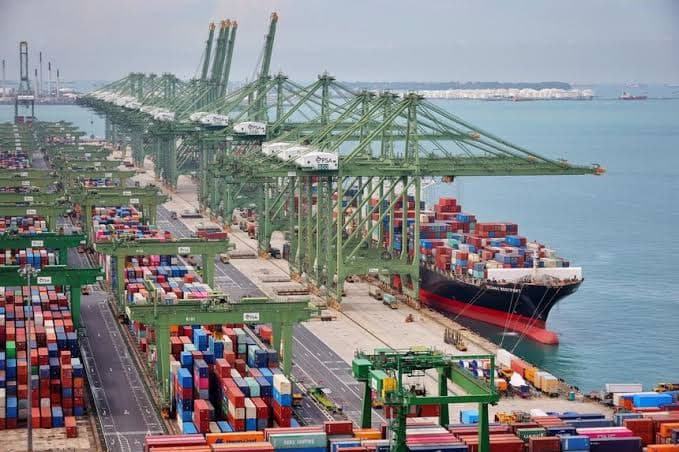
Dockworkers support essential cargo handling activities within the port system. Any industrial action affecting their availability could disrupt operations at affected terminals, with consequences for vessel schedules, cargo movement and logistics planning.
Importers could face delays in taking delivery of goods, while exporters could encounter difficulties meeting shipment deadlines. Shipping companies, freight forwarders, haulage operators and cargo owners could also face additional costs arising from interruptions to established schedules.
The extent of any disruption would depend on the terminals affected, the level of participation and the duration of the action. The union has threatened a shutdown, but the reported account does not indicate that industrial action has commenced.
The delay in negotiations is therefore significant. The previous agreement expired at the end of May, according to the union, yet discussions on revised terms have not commenced. An unresolved employment issue has consequently developed into a potential operational risk.
Collective bargaining provides a structured means of reviewing employment conditions, reconciling competing interests and reaching mutually acceptable terms. When engagement is delayed, uncertainty grows, grievances can deepen and the prospects for an orderly resolution may narrow.
For terminal operators, labour costs are part of the commercial equation. For workers, conditions of service and remuneration directly affect their livelihoods. Sustainable port operations require both interests to be addressed through meaningful negotiations.
The available account does not establish the operators’ reasons for the delay or the precise terms proposed by either side. Those details will be important to resolving the dispute. What the union’s position establishes is that the failure to commence negotiations has become a source of growing industrial tension.
THE TEST FOR INDUSTRY AND GOVERNMENT
Agboola’s call for Federal Government intervention through NIMASA places the immediate priority on securing meaningful negotiations before the union’s deadline.
The Agency’s involvement, as requested by the union, should support timely engagement within its applicable mandate. The objective should be to help prevent disruption while allowing employers and labour representatives to address outstanding conditions of service through the appropriate bargaining process.
A temporary suspension of industrial action, if achieved, would not by itself resolve the underlying problem. The parties need clarity on the proposed revised rates, the outstanding areas of disagreement and the process for reaching a new agreement.
The dispute also raises a longer-term question about collective bargaining in an industry where interruptions can affect businesses beyond the immediate parties.
Where agreements have defined review periods, negotiations should begin early enough to give employers and workers sufficient time to consider proposals and resolve differences before expiry. Early engagement cannot guarantee agreement, but it can reduce the risk of unresolved issues escalating into operational crises.
For a port economy supporting imports, exports and domestic distribution, continuity is a commercial requirement. That continuity depends not only on infrastructure and equipment, but also on the workforce and industrial relationships that keep cargo moving.
PRIMEAXIS INSIGHT
The threatened shutdown exposes a fundamental reality of port operations: industrial relations are part of operational risk management.
A dispute over conditions of service may begin at the negotiating table, but its consequences can spread through the supply chain when workers’ grievances remain unresolved.
The immediate responsibility lies with the parties to the negotiations. Terminal operators and MWUN must engage meaningfully to resolve the outstanding issues, while government intervention should support a timely and sustainable settlement.
The larger lesson is that collective bargaining cannot be treated as an administrative process to be addressed only when tensions become acute.
For Nigeria’s ports, predictable labour relations are essential to reliable cargo handling, commercial planning and trade facilitation. Delays in negotiating employment terms risk undermining that reliability and transferring the cost of unresolved disputes to businesses that depend on uninterrupted port services.
The immediate question is whether negotiations will begin before the union’s deadline. The more consequential question is whether the industry can establish a disciplined process for reviewing conditions of service before disagreements threaten operations.
Nigeria’s ports need both a workforce whose employment concerns receive timely attention and an operating environment in which cargo movement is dependable.
Achieving that balance begins with negotiations that start on time, address the issues directly and produce agreements that both parties can sustain.