
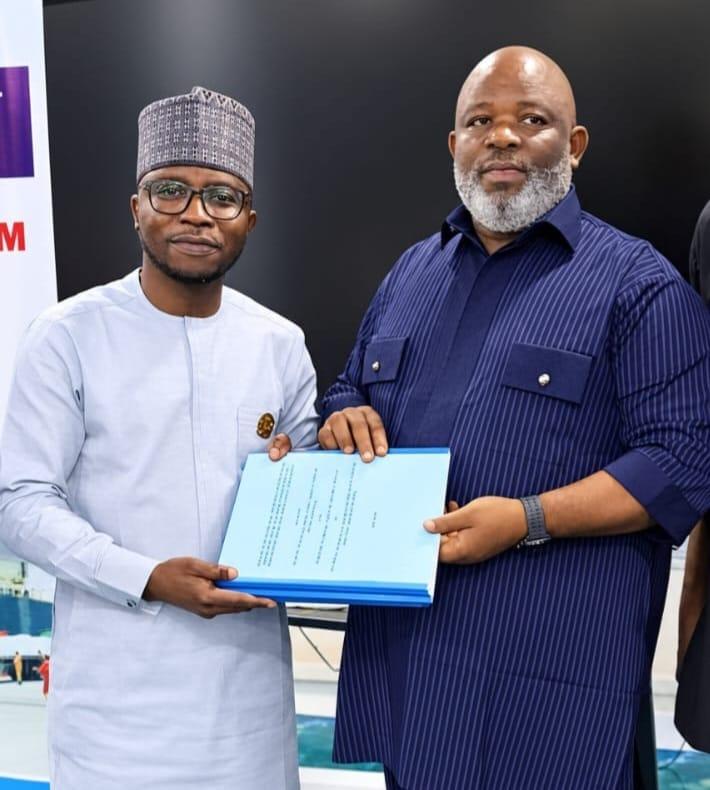
The welfare of dockworkers remains an important consideration in Nigeria's efforts to improve port efficiency, as the Nigerian Maritime Administration and Safety Agency (NIMASA) and the Maritime Workers Union of Nigeria (MWUN) commence a review of minimum standards and conditions of service for the 2026 - 2028 period.
The review, initiated at a reconvened meeting of the National Joint Industrial Council (NJIC), brings employers, labour unions and other industry stakeholders into negotiations covering wages, workers' welfare, occupational safety and health, pension provisions, working conditions, protective equipment and skills development.
The discussions provide an opportunity to reassess the employment standards governing dock labour and address disparities in remuneration and working conditions across the industry. They also raise a broader question about how Nigeria can sustain efficient port operations without neglecting the welfare and protection of the workforce responsible for essential cargo handling activities.
Speaking at the meeting, the NJIC Chairman and NIMASA's Executive Director, Maritime Labour and Cabotage Services, Mr Jibril Abba, described dockworkers as indispensable to the maritime value chain.
He stressed that fair remuneration, decent working conditions, adequate safety provisions and opportunities for professional development were fundamental not only to workers' welfare but also to the efficiency and sustainability of the country's ports.
Abba also noted that changing operational realities, driven partly by technology and evolving port activities, made the review necessary. His position reflects the need for employment standards to keep pace with developments in terminal operations and the growing technical demands of cargo handling.
BEYOND WAGES: THE WELFARE QUESTION
Although remuneration is expected to be a major issue in the negotiations, the scope of the review suggests that the outcome must address several dimensions of dockworkers' welfare.
Occupational safety and health, for instance, remain critical in an industry where workers operate around heavy machinery, cargo handling equipment and other potentially hazardous working environments. Adequate protective equipment, effective safety procedures and appropriate workplace protections are essential to reducing occupational risks.
Pension provisions and other employment benefits are equally important. Workers require confidence that their entitlements are properly administered and that their years of service are recognised through reliable retirement arrangements.
Skills development also deserves attention as ports increasingly adopt technology and modern equipment to improve cargo handling processes. A workforce that receives appropriate training is better positioned to adapt to operational changes, improve productivity and meet evolving industry requirements.
Consequently, the review should not be reduced to negotiating new wage rates. It presents an opportunity to establish a more comprehensive framework that connects fair employment conditions with professional development, workplace safety and operational efficiency.
EMPLOYERS AND THE RESPONSIBILITY FOR IMPLEMENTATION
The participation of employers is central to the success of the NJIC process. The Seaport Terminal Operators of Nigeria (STOAN), Oil Producers Trade Section (OPTS), Association of Bonded Terminals Operations of Nigeria (ABTON) and National Association of Stevedoring Operators (NASO) were among the industry groups represented at the meeting.
Their involvement is important because the eventual agreement must reflect the realities of different dock labour operations while establishing minimum standards that protect workers across the industry.
For employers, predictable labour conditions provide a basis for workforce planning, operational continuity and cost management. For workers, an effective agreement should provide clarity on remuneration, employment benefits, safety obligations and the standards they are entitled to expect.
The challenge is to ensure that these interests are balanced without weakening the minimum protections required for decent work.
NIMASA'S ROLE IN THE PROCESS
NIMASA's involvement is particularly significant given its responsibilities in maritime labour administration and the regulation of dock labour activities.
The Agency is expected to provide the institutional support necessary for negotiations while ensuring that established standards are respected across the industry.
At the meeting, NIMASA reaffirmed its commitment to reviewing the submissions and sustaining consultations with stakeholders towards a mutually acceptable framework.
However, the effectiveness of the process will ultimately depend on what happens after negotiations conclude. Agreed conditions must be communicated clearly, implemented by employers and supported by appropriate monitoring and compliance mechanisms.
MWUN President General, Comrade Francis Bunu, welcomed NIMASA's continued engagement with the maritime labour community but emphasised that the process must deliver tangible improvements in workers' welfare and working conditions.
His position highlights the distinction between reaching an agreement and achieving meaningful change in the workplace. The credibility of the new framework will depend on whether dockworkers experience measurable improvements rather than simply receive revised terms on paper.
PRIMEAXIS INSIGHT
Nigeria's port competitiveness is often assessed through infrastructure, cargo handling capacity, technology and operational efficiency. Yet the workforce behind these activities is just as important to the performance of the maritime logistics chain.
Dockworkers are part of the operational foundation of the ports. Their welfare, safety and professional capabilities have implications for productivity, industrial relations and the reliability of cargo handling operations.
The 2026 to 2028 review therefore presents an opportunity to strengthen the relationship between labour standards and port performance. But the real measure of progress will not be the number of proposals submitted or meetings convened.
It will be whether employers adopt fair and consistent employment practices, whether workers receive adequate protection and whether NIMASA can ensure compliance with the standards agreed upon.
As negotiations continue, the industry must look beyond the conclusion of another conditions of service review. The objective should be a dock labour framework that recognises workers as essential contributors to port productivity and makes their welfare an integral part of Nigeria's maritime competitiveness.