The proposed cadet placements are the subject of discussions with Maersk Shipping, which could provide Nigerian trainees with onboard experience and exposure to the operational demands of the seafaring profession.
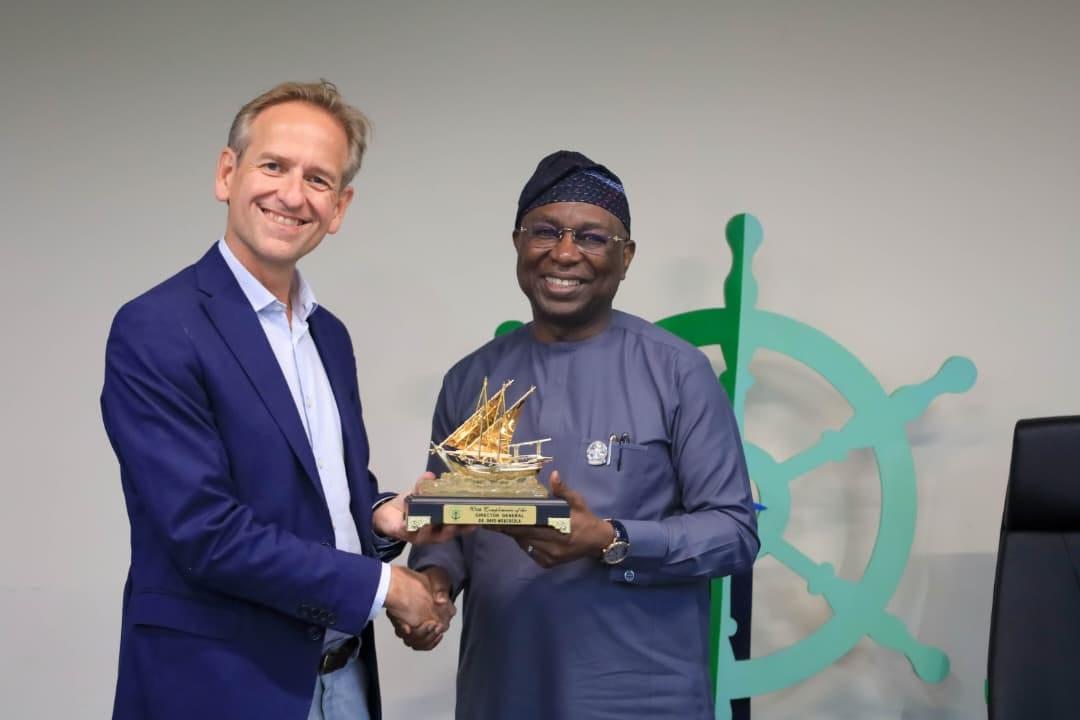
The Danish Ambassador to Nigeria, His Excellency Jens Ole Bach Hansen, disclosed this during a visit to NIMASA, where he led a delegation to explore areas of potential cooperation between both countries.
The Danish delegation also expressed interest in NIMASA’s Blue Economy Acceleration Programme (N BEAP) Hackathon, identifying it as a platform for developing technology driven solutions and unlocking opportunities within Nigeria’s blue economy.
Other areas discussed included maritime security, intelligence sharing, digitalisation, seafarer education, cadet training, institutional cooperation and maritime financing.
Receiving the delegation, NIMASA Director General, Dr. Dayo Mobereola, welcomed Denmark’s interest and described the engagement as an opportunity to strengthen the longstanding relationship between both countries.
He acknowledged Denmark’s hospitality during the Agency’s visit in September and its support for Nigeria’s successful election into the International Maritime Organization (IMO) Council.
Mobereola said NIMASA’s priority was to translate diplomatic goodwill into practical partnerships capable of delivering measurable benefits to both maritime industries.
He called for a clear follow up mechanism connecting NIMASA with relevant Danish government institutions, maritime organisations, training establishments and private sector operators. This, he said, would help identify areas of mutual interest, establish implementation arrangements and ensure that proposals translate into sustainable outcomes.
The proposed cadet placements address an important aspect of Nigeria’s maritime capacity development: access to practical sea experience.
Maritime education and professional certification provide the foundation for a seafaring career, but practical experience aboard working vessels is essential to developing operational competence. Exposure to shipboard routines, safety procedures and vessel operations helps prepare trainees for the responsibilities of working at sea.
However, the discussions with Maersk Shipping remain exploratory. No details have been announced on the number of cadets involved, the selection process, commencement date or terms of engagement.
There is also a distinction between employment as a rating and structured cadet sea training.
Both may provide onboard exposure, but they do not necessarily serve the same professional or certification requirements. Any eventual arrangement must therefore establish clear training objectives, eligibility criteria, supervision and recognised professional value.
For NIMASA, the priority should be to ensure that the proposed opportunity contributes meaningfully to seafarer development and provides a clear pathway for participating Nigerians.
Denmark’s interest in the N BEAP Hackathon presents a separate opportunity to strengthen Nigeria’s maritime innovation ecosystem.
International technical expertise, mentorship and industry partnerships could help connect Nigerian innovators with practical maritime challenges and potential users of their solutions.
However, a hackathon alone does not guarantee that promising ideas will become operational or commercially viable products. The real value lies in what follows: technical development, testing, financing, adoption and access to industry markets.
This will require defined problem statements, engagement with relevant maritime operators and institutions, and a pathway through which promising innovations can secure the support needed for implementation.
The broader areas of proposed cooperation also require specific arrangements. Maritime security and intelligence sharing depend on agreed protocols and institutional responsibilities, while financing requires viable projects and clarity on the institutions expected to participate.
Mobereola’s call for a follow up mechanism is therefore significant. Without designated institutional contacts, timelines and measurable objectives, discussions across multiple areas risk remaining diplomatic commitments without corresponding operational outcomes.
The next stage should establish which proposals are ready for implementation, which require further technical assessment and which institutions will be responsible for advancing them.
PRIMEAXIS INSIGHT
The proposed Nigeria Denmark engagement places two important priorities before the maritime industry: developing the skilled workforce required to sustain its growth and strengthening the innovation capacity needed to support its future.
The discussions on cadet placements could expand access to practical sea experience, while cooperation around the N BEAP Hackathon could connect Nigerian innovators with international expertise and industry networks.
Neither opportunity should be measured by diplomatic statements or the number of areas identified for collaboration. Their value will depend on implementation.
For NIMASA, the immediate responsibility is to establish clear arrangements, responsibilities and timelines with its Danish counterparts and relevant industry participants. For Denmark, the next step is to translate its stated interest into structured engagement with Nigerian institutions and operators.
The partnership will become meaningful when Nigerian cadets secure defined training opportunities, maritime innovations receive practical support and institutional cooperation produces measurable results.
Nigeria’s maritime development requires partnerships that move beyond diplomatic goodwill to build capacity, create opportunities and deliver outcomes across the industry.