
To most people watching a massive cargo ship move across the ocean, the vessel is a picture of industrial power. Towering containers, heavy machinery, a bridge high above the water and an enormous hull cutting through the waves.
But behind that impressive exterior is another world that rarely attracts attention.
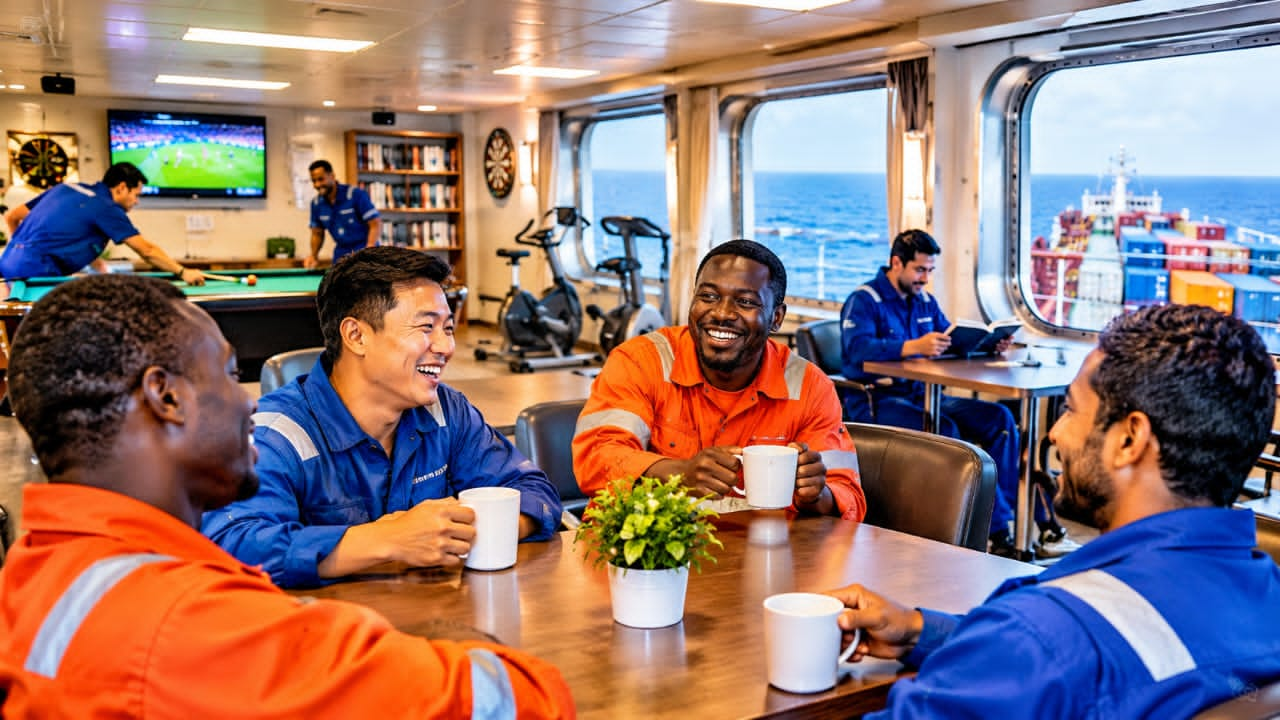
People are eating, sleeping, working, exercising, communicating with their families and going about their daily routines. There are kitchens, sleeping quarters, recreation spaces, workplaces and social relationships that develop thousands of miles away from the communities these crew members call home.
A cargo ship is not a city, but for the people living and working aboard one, it can feel like a small community moving across the world's oceans.
So, what actually happens when a cargo ship leaves port and spends weeks at sea?
A WORKPLACE THAT NEVER REALLY CLOSES
Unlike an office building or factory that shuts down at the end of the working day, a commercial vessel must continue operating around the clock.
Ships operate through organised watch systems, with different members of the crew responsible for navigation, engineering, cargo operations, maintenance and safety.
On the bridge, officers monitor the vessel's position, traffic, weather conditions and navigational equipment. In the engine room, engineers oversee machinery, power generation and other systems that keep the vessel operational.
Deck crew members carry out maintenance, inspections and safety duties, while catering personnel ensure that meals are prepared and living arrangements are maintained.
The captain has overall command, but the safe operation of the vessel depends on coordination across different departments.
Even when a ship is crossing apparently empty stretches of ocean, there is work to be done.
Equipment must be checked, machinery maintained, records updated and safety procedures observed.
A ship may be moving continuously, but its crew work according to scheduled duties and rest periods.
The International Labour Organization's Maritime Labour Convention, 2006, establishes minimum rest requirements for seafarers. These include at least 10 hours of rest in any 24 hour period and 77 hours in any seven day period.
Daily rest may generally be divided into no more than two periods, one of which must be at least six hours.
These provisions recognise that fatigue at sea is not simply a personal inconvenience. It can affect navigation, operational safety and the lives of everyone aboard.
WHAT DOES LIFE BELOW DECK LOOK LIKE?
The most interesting part of a cargo ship is not always what can be seen from the outside.
Below deck, the vessel contains accommodation spaces designed to support the people who live and work aboard.
Depending on the ship's size, design and operating arrangements, crew members may have individual or shared cabins, bathrooms, dining facilities, laundry areas and common rooms.
The galley, which is the ship's kitchen, is particularly important. Meals must be prepared for the crew throughout the voyage, taking account of different working schedules, dietary requirements and cultural backgrounds.
The dining room becomes more than somewhere to eat. It is one of the places where crew members meet, exchange stories, discuss the day's activities and take a break from their duties.
Some vessels also have recreation rooms, television facilities, exercise equipment and spaces for reading or other leisure activities.
These facilities are not simply luxuries. Living aboard a vessel for extended periods requires an environment that supports physical health, rest and social interaction.
The Maritime Labour Convention recognises this through provisions covering accommodation, recreational facilities, food, catering, health protection and seafarer welfare.
No, seafarers do not spend all their free time staring at the ocean
This may be one of the biggest misconceptions about life at sea.
While the ocean provides the constant backdrop, life aboard a modern cargo ship can include a surprising range of activities outside working hours.
Crew members may watch films, listen to music, read, exercise, play games, communicate with friends and family or simply relax.
On some vessels, crew members organise informal celebrations for birthdays, national holidays and other important occasions. The particular activities depend on the ship, available facilities, company arrangements and the interests of the crew.
Technology has also changed the experience of being away from home.
Internet connectivity, where available, allows seafarers to exchange messages, make calls and follow events happening in their home countries. However, access, speed, cost and data allowances can vary considerably between vessels.
The importance of this connection is recognised internationally. Amendments to the Maritime Labour Convention adopted in 2022 and which entered into force on December 23, 2024, introduced provisions addressing social connectivity and internet access for seafarers.
The changes reflect growing recognition that maintaining contact with family and friends is important to seafarer welfare, particularly for those who spend extended periods away from home.
For a seafarer whose child is celebrating a birthday thousands of miles away, being able to participate through a video call can mean considerably more than simply having access to the internet.
But life at sea is not always an adventure
There is another side to the experience that deserves attention.
Seafarers spend extended periods away from their families, often working within a relatively confined environment with the same people and routines.
Weather conditions can change quickly. Rough seas can affect movement, rest and daily activities. Emergencies require immediate responses, while machinery problems and other operational challenges can place additional pressure on the crew.
There is also the psychological dimension of isolation.
A person may be surrounded by colleagues throughout the day and still miss home, family celebrations and ordinary social experiences that people ashore often take for granted.
Port calls can offer opportunities to go ashore, but the time available depends on the vessel's schedule, operational requirements, security arrangements and individual duties.
For many seafarers, the next opportunity to spend meaningful time with family may still be weeks or months away.
This is why seafarer welfare cannot be reduced to providing a comfortable cabin and regular meals. Access to medical care, adequate rest, recreational facilities, communication and decent working conditions all contribute to life aboard.
A WORLD THAT KEEPS GLOBAL TRADE MOVING
The next time a container ship passes along the coastline or enters a Nigerian port, it is worth remembering that the vessel carries more than cargo.
It carries a workforce whose daily lives are organised around keeping international trade moving.
Behind the containers arriving with electronics, machinery, food products, industrial materials and consumer goods are people navigating the demands of a profession that requires technical competence, discipline, teamwork and considerable time away from home.
The ship may be heading towards another port, but for its crew, it is also home, workplace and community until the voyage ends.
PRIMEAXIS INSIGHT
The global shipping industry is often discussed through freight rates, cargo volumes, port performance, vessel capacity and trade statistics. Yet the people who operate these vessels are just as important to the system.
Understanding life aboard a cargo ship offers a different perspective on maritime transportation. It reminds us that behind every vessel moving international trade is a human workforce whose welfare, working conditions and professional contribution deserve attention.
Perhaps the most interesting thing about a cargo ship is not simply how much it can carry, but how an entire working community lives and functions while carrying it across the world's oceans.
Welcome to Beyond the Headlines. The maritime world has more stories than the headlines tell.