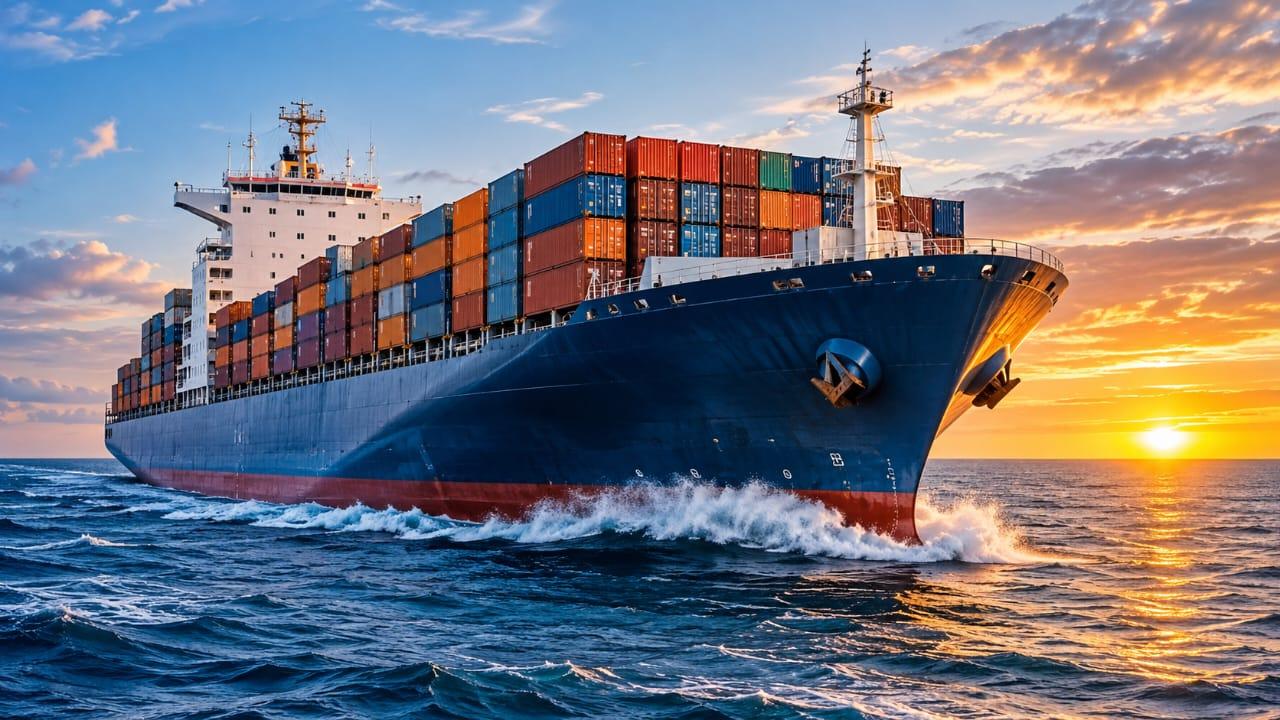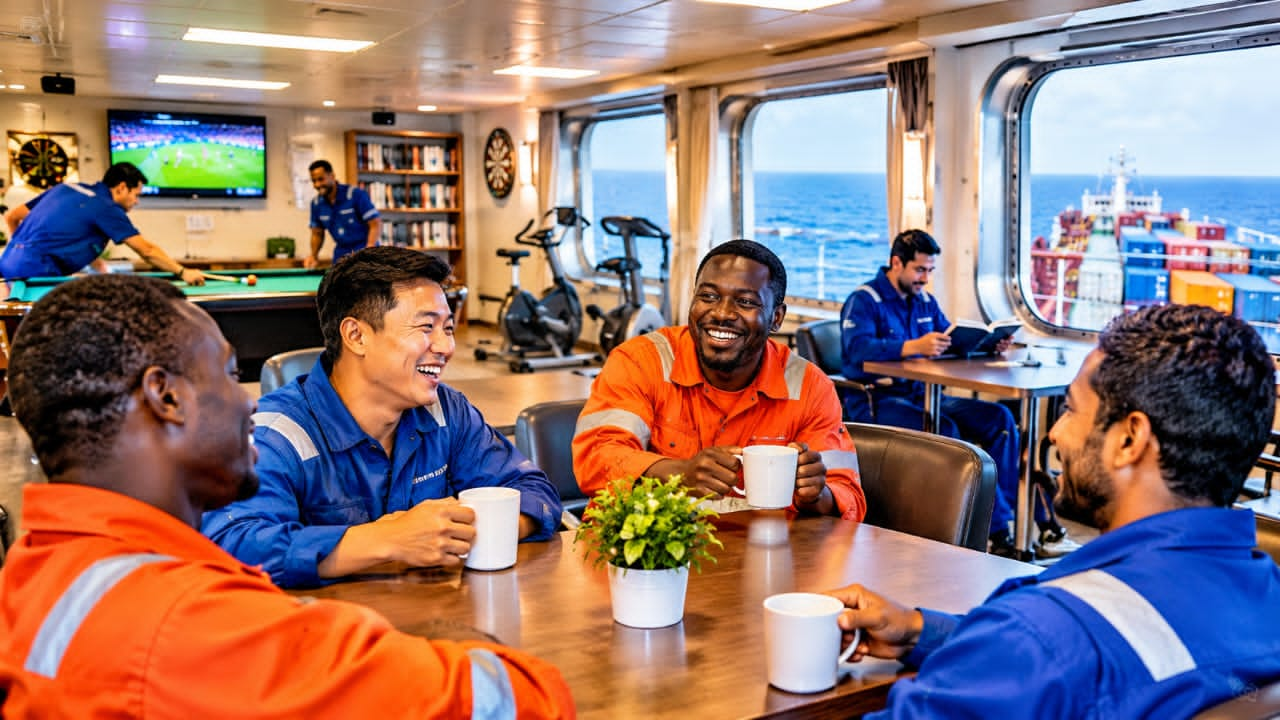
Before engines transformed shipping, before automated equipment reduced the physical demands of shipboard operations, sailors had a way of making heavy work more manageable. They sang.
Across the world's maritime routes, songs accompanied the raising of sails, the hauling of ropes, the lifting of anchors and the movement of cargo. These were not simply songs to pass the time during long voyages. They served a practical purpose, helping sailors coordinate physical effort, maintain working rhythm and endure some of the most demanding tasks aboard sailing vessels.
Known as sea shanties, or chanties, these working songs became an important part of maritime culture. Their rhythms were connected to the movements of the crew, while their lyrics reflected the realities of life at sea. Their history also reveals a less recognised contribution to maritime culture: the role of African American waterfront workers in shaping the songs that became associated with international sailing.
Long before maritime operations acquired their modern technological sophistication, the sea had a soundtrack.
WHEN MUSIC MOVED SHIPS
During the age of sail, operating a commercial vessel required considerable human effort. Raising heavy sails, adjusting rigging, weighing anchor and pumping water demanded the coordinated strength of several sailors.
A crew pulling ropes independently could struggle to maintain consistent movement. A shared rhythm made the task more manageable.
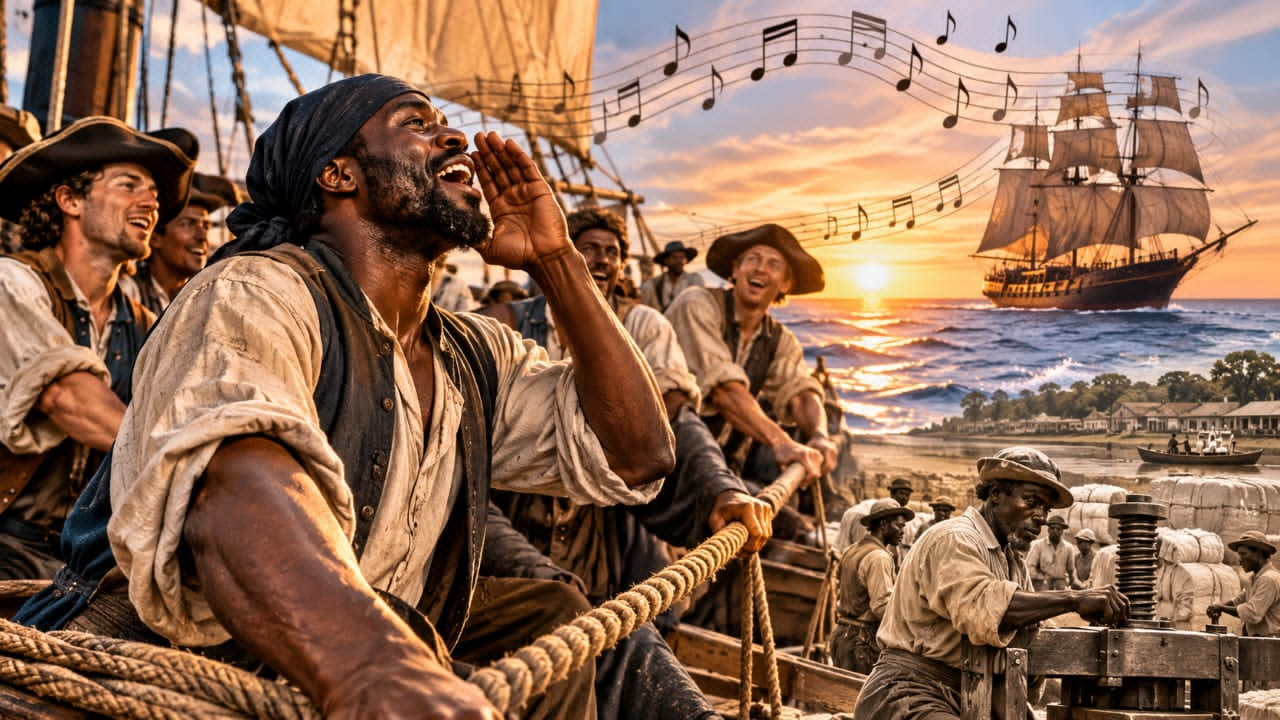
This was the function of the shantyman, the sailor who led the singing. He would call out a verse, and the rest of the crew would respond with a chorus. Their movements followed the rhythm, allowing sailors to pull together at the right moment.
The Songs Were Adapted To The Nature Of The Work.
Short hauling shanties accompanied tasks requiring brief, forceful pulls. Longer songs supported sustained activities such as operating capstans, turning windlasses and pumping water. The rhythm helped determine when and how the crew applied its strength.
Smithsonian Folkways documents several categories of maritime work songs, including capstan, long haul, short haul and windlass chanteys. Each was suited to particular working conditions and movements.
In this environment, music became a working instrument. It helped organise labour, encouraged cooperation and gave sailors a shared rhythm during repetitive operations.
THE AFRICAN AMERICAN CONTRIBUTION TO SEA SHANTIES
The history of sea shanties is more culturally complex than popular accounts often suggest.
For generations, the tradition was frequently presented through the experiences of European and American sailors, with less attention given to the communities whose musical practices helped shape it.
A significant contribution to correcting this historical imbalance came from music scholar Gibb Schreffler in a 2023 research paper published in the Journal of the Society for American Music, titled Remembering the Cotton Screwmen: Inter-racial Waterfront Labor and the Development of Sailors' Chanties.
His research examined the work of cotton screwmen in nineteenth century American ports, particularly along the Gulf Coast.
Cotton was one of the most important exports of the American economy. Before it could be transported across the Atlantic, enormous bales had to be packed tightly into the holds of ships. This was accomplished using specialised mechanical jackscrews and considerable physical effort.
The work was demanding and required close coordination among groups of labourers.
During the formative years of the occupation, cotton screwmen were Black men. They developed a practice of singing to coordinate their movements and sustain the effort required to compress and stow the cotton.
Schreffler's research argues that these African American waterfront work songs provided the foundation for the development of sailors' chanties.
His explanation centres on the movement of white sailors who worked seasonally as cotton screwmen in American ports. By entering an established Black working environment, they encountered and adopted its existing singing practices. They subsequently carried elements of that musical tradition into shipboard labour.
This is a particularly important distinction. Rather than simply describing African American music as one influence among many, Schreffler identifies the cotton screwmen's working environment as a formative setting in the development of the chanty tradition.
The research challenges the familiar assumption that these songs developed exclusively within European seafaring communities.
It also brings attention to a group of waterfront workers whose contribution to maritime history has received considerably less recognition than that of shipowners, captains and explorers.
The story places maritime music within a wider history of international trade, racial relations, labour and cultural exchange.
The soundtrack of maritime trade was shaped not only by those who commanded vessels, but also by the workers whose labour made the movement of cargo possible.
NOT EVERY SAILOR'S SONG WAS A SHANTY
The popularity of sea shanties has also created some confusion about what actually qualifies as one.
Sailors sang for several reasons. They entertained themselves during leisure hours, remembered distant homes, celebrated victories, complained about difficult conditions and shared stories about people and places encountered during their voyages.
However, there is an important distinction between a working shanty and a general sea song.
A shanty was specifically associated with the performance of physical work. Its structure helped coordinate movement, while other maritime songs could be performed without any connection to a particular task.
This distinction became particularly relevant when The Wellerman, a nineteenth century New Zealand whaling song, attracted international attention through social media in 2021.
The song tells the story of a supply vessel bringing provisions to whalers. Its renewed popularity introduced a new generation to maritime music, but it should not automatically be treated as evidence of a traditional working shanty. Its historical use as a coordinated labour song has not been established.
The distinction matters because maritime music was broader than one musical tradition. Work songs, recreational songs, rowing songs and fishing songs all formed part of the cultural life of people who depended on the water.
WHEN TECHNOLOGY CHANGED THE MUSIC
The arrival of steam powered vessels gradually transformed the working environment aboard ships.
During the age of sail, many operations depended on sailors physically handling ropes, sails, anchors and other equipment. Steam propulsion and mechanical systems reduced the need for some of these labour intensive activities.
As mechanical power became more widely adopted, the practical importance of traditional shanties declined in operations where machinery replaced coordinated manual effort.
However, the transition was gradual. Traditional sailing vessels continued to operate, and shanties remained part of maritime working culture into the age of steam.
The songs also survived beyond their original working environments.
Folklorists, historians and music collectors began documenting performances and preserving lyrics and melodies. Smithsonian Folkways has helped preserve maritime music through historical recordings and collections documenting the working and recreational songs of sailors and fishermen.
The Library of Congress also holds historical materials relating to sea songs and maritime musical traditions.
These collections are important resources for understanding how maritime workers lived, communicated and organised their activities before modern shipping technology.
Today, sea shanties are performed at maritime festivals, folk music events and cultural gatherings. Their renewed popularity, particularly through social media, has brought the tradition to audiences who may never have encountered the history behind the songs.
Yet hearing a shanty in a concert hall is different from hearing it aboard a sailing vessel, where the rhythm was directly connected to the physical demands of the job.
AFRICA'S OWN MARITIME SOUNDSCAPE
For Africa, this history raises an important cultural question: how much of the continent's own maritime musical heritage has been documented and preserved?
Across coastal communities and inland waterways, fishing, boat transportation and other water based activities have long depended on collective labour. Songs, chants and rhythmic calls form part of the wider traditions through which working communities organise activities, communicate and preserve shared experiences.
Nigeria provides an important context for this conversation.
From the fishing settlements of the Niger Delta to communities along the Niger and Benue waterways, the country's relationship with water extends beyond commercial shipping. Fishing, traditional boat operations and inland water transportation have sustained livelihoods and connected communities for generations.
However, these traditions should not automatically be classified as sea shanties. They belong to a wider body of African maritime and waterway heritage that deserves its own historical documentation.
There is an opportunity for maritime museums, cultural institutions, universities, researchers and industry organisations to investigate and document the songs, oral histories and working traditions of African fishing communities, boat operators and waterfront workers.
Such documentation would help preserve cultural knowledge that could otherwise disappear as traditional working practices change.
It would also broaden the understanding of Africa's maritime identity beyond ports, vessels, shipping statistics and infrastructure development.
The history of the cotton screwmen demonstrates why this matters. Cultural contributions can become obscured when the history of an industry is told primarily through its institutions, technology and prominent figures rather than the people who performed the work.
Africa should not have to fit its maritime history into categories developed elsewhere before its own cultural contributions receive recognition.
THE HUMAN VOICE BEHIND MARITIME PROGRESS
Modern shipping operates through sophisticated navigation systems, digital communications, automated equipment and increasingly specialised technology. The physical demands of operating a commercial vessel have changed considerably.
But the history of maritime music offers a reminder that shipping has always depended on more than vessels and machinery.
It has depended on people working together, adapting to difficult conditions and developing practical ways to make demanding operations possible.
The old shanties captured that human dimension of maritime activity. They carried the voices of sailors, dockworkers and other maritime labourers whose contributions helped sustain international trade.
Their disappearance from everyday shipboard operations did not diminish their historical significance.
For Africa, preserving the musical and cultural traditions of its maritime communities should be part of a wider effort to document the continent's relationship with the water.
Because the history of maritime development is not written only in shipping records, trade agreements and port infrastructure.
Sometimes, it is preserved in the songs of the people who moved the ships.
PRIMEAXIS INSIGHT
The history of sea shanties reveals a dimension of maritime heritage that deserves greater attention. Behind the expansion of global shipping were working communities whose knowledge, physical labour and cultural traditions helped make maritime trade possible.
The research into African American cotton screwmen also demonstrates how easily the contributions of waterfront workers can disappear from mainstream accounts of maritime history.
As Africa advances its maritime economy, preserving the history of its coastal and inland waterway communities should not be treated as an afterthought.
Maritime heritage is not simply about remembering the ships that sailed. It is about remembering the people who made them move.