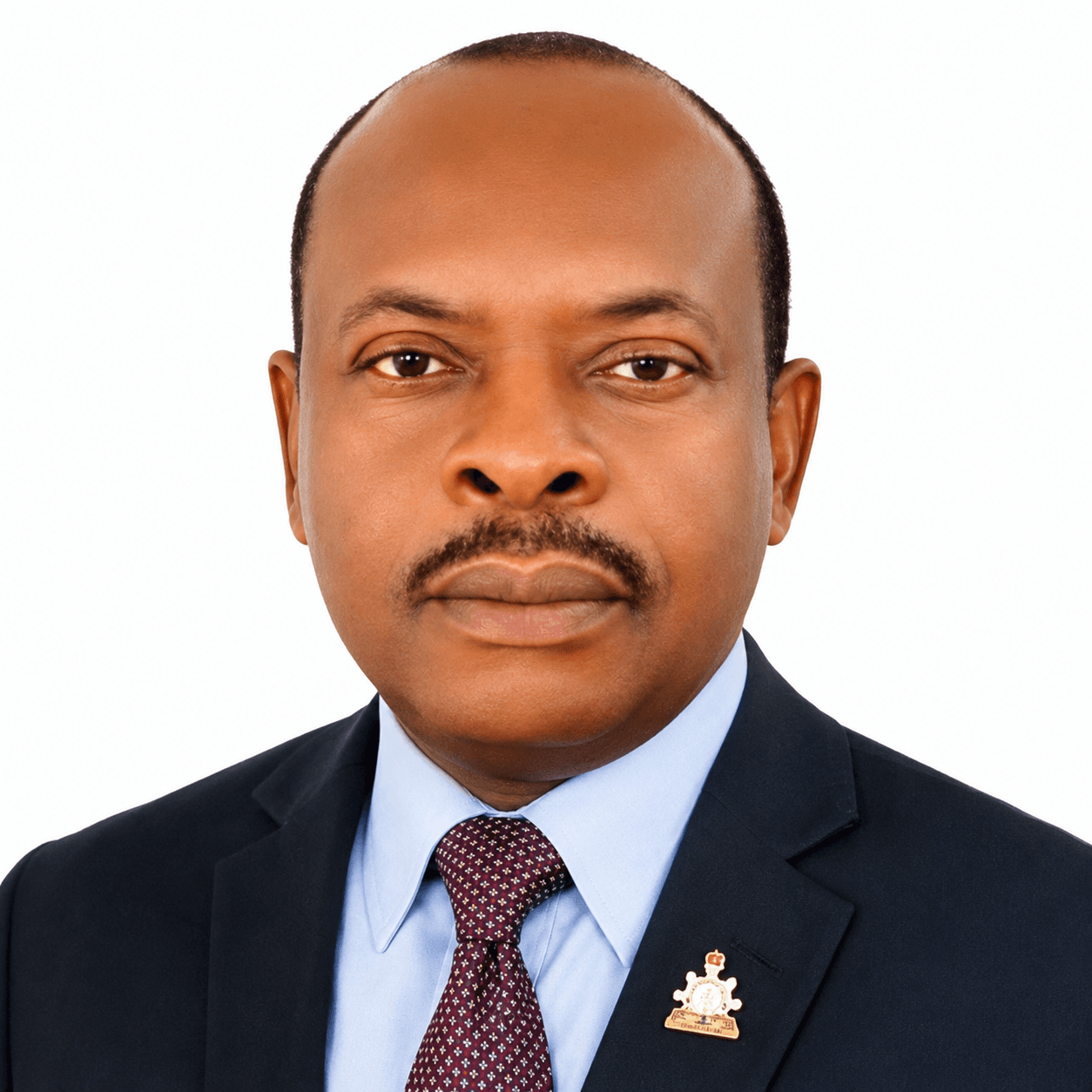
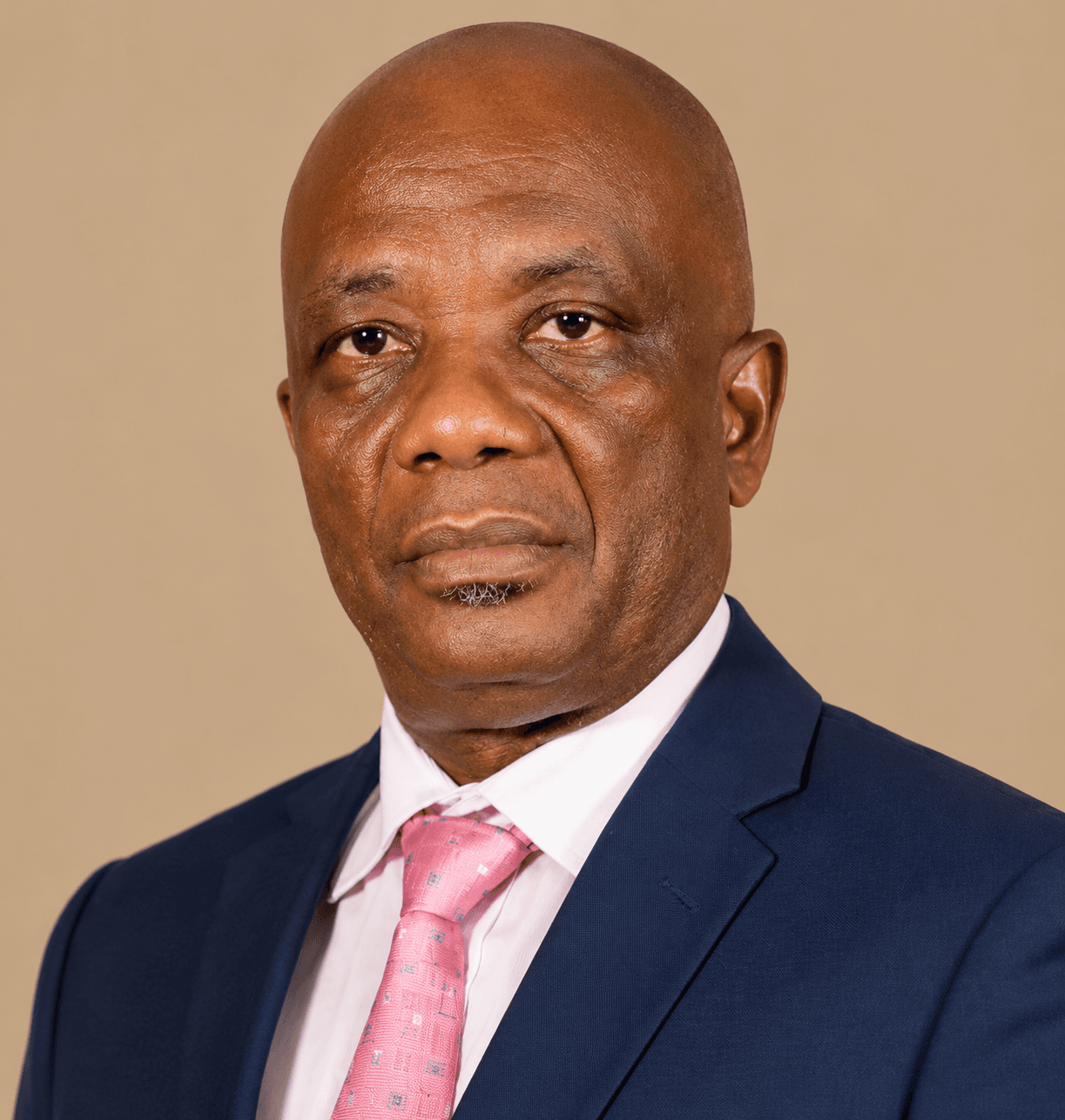
Dr. Kevin Okonna
Acting Rector, Maritime Academy of Nigeria (MAN)
Maritime Academy of Nigeria (MAN), Oron
“Building World-Class Maritime Professionals: How Maritime Academy of Nigeria is Transforming Seafarer Training”
One of our key achievements has been strengthening academic and operational stability while improving training delivery systems. We have recruited 11 maritime professional lecturers, including three Master Mariners and two marine engineers. One of them is an internationally recognised simulator training expert.
In an era where global maritime standards are non-negotiable, Nigeria must equip its workforce to compete effectively in international shipping and logistics.
The Maritime Academy of Nigeria (MAN) is strategically positioned to deliver on this mandate by blending technology, international collaboration and institutional reform to produce world-class maritime professionals.
At the heart of this transformation is a clear national objective: developing a skilled maritime workforce is not just an educational priority, but a key pillar in unlocking Nigeria's economic potential and strengthening its leadership in the Blue Economy.
In this Executive Conversation, Dr. Kevin Okonna, Acting
Rector of MAN, discusses institutional reforms, simulator-based training,
international partnerships, quality management systems and the long-term
sustainability of maritime manpower development in Nigeria.
"We are producing globally competitive maritime professionals through quality education, practical training and international collaboration."
TRANSCRIPT REF: EC-2026-001 · RECORDED: 22 June 2026 · STATUS: ON RECORD
What are the key achievements and challenges in recent institutional reforms at the Maritime Academy of Nigeria?
We have made significant progress in institutional stability, training quality and standards enhancement.
One of our key achievements has been strengthening academic and operational stability while improving training delivery systems. We have recruited 11 maritime professional lecturers, including three Master Mariners and two marine engineers. One of them is an internationally recognised simulator training expert.
We have also improved infrastructure maintenance systems and strengthened quality assurance frameworks. In addition, 75 staff members have received training across different aspects of quality management systems.
We have implemented ISO 9001:2015 awareness programmes, including training staff as internal auditors and lead auditors.
Furthermore, 12 staff members have been trained to certification level in educational and organisational management systems.
These efforts form part of our broader objective of securing
international certification for the Academy's quality management systems.
Modern maritime training now relies heavily on simulation and advanced technology. How are these innovations transforming hands-on learning at MAN?
The modern shipping industry requires competent personnel with strong practical experience. This is the foundation of our training philosophy.
We begin with smart classrooms equipped with digital boards and internet connectivity, giving cadets access to global learning resources.
From there, students progress to laboratories and advanced simulators. These simulators provide the first layer of hands-on experience, allowing cadets to safely experience scenarios that would be too risky to replicate at sea.
As part of the Federal Government's Renewed Hope Agenda, the
Academy has invested in a comprehensive suite of maritime training simulators.
We currently operate eight categories of simulators integrated into full
mission bridge and full mission engine room systems.
Cadets progress from basic simulation exercises to fully integrated bridge and engine room environments where they replicate real vessel operations.
We have also introduced immersive virtual reality simulation platforms, allowing cadets to interact with virtual engine rooms in full-scale environments.
In addition, we are acquiring advanced standalone high-voltage simulators to further strengthen our training capacity.
Beyond simulation, our marine engineering workshops remain central to practical training.
These include welding workshops, refrigeration and air-conditioning
laboratories, electrical and electronics workshops, and a fully functional
marine engineering workshop.
In fact, no cadet graduates from the Marine Engineering
programme—whether at National Diploma or Higher National Diploma level—without
dismantling, assembling and operating a complete marine engine. This practical
approach is central to our training philosophy.
How is the Academy strengthening collaboration with international maritime bodies, shipowners and training institutions to improve cadet exposure and global employability?
We recognise that maritime training must be globally relevant. Our goal is to ensure cadets are not only trained locally but are also integrated into international professional networks.
To achieve this, we encourage cadets to register with
internationally recognised professional bodies, including:
- The Nautical Institute (Nautical Science)
- IMarEST (Marine Engineering)
- The Chartered Institute of Logistics and Transport (CILT) (Maritime Transport and Business Management)
The Nautical Institute has also granted recognition to the Maritime Academy of Nigeria, reflecting the strength of our training standards.
By combining hands-on training, quality management systems and international professional integration, we are producing graduates who are globally competitive.
As a result, shipowners increasingly seek out our cadets
because of their practical competence and industry readiness.
What role does international collaboration play in strengthening training standards and improving sea-time exposure for cadets?
Collaboration is central to our strategy.
A major challenge in maritime training is ensuring adequate sea-time experience in line with the requirements of the STCW Convention.
Without sufficient sea-time, cadets cannot progress to full certification and professional employment.
To address this challenge, we have engaged shipowners, including the Ship Owners Association of Nigeria, to support cadet sea-time placement and bridge the gap between academic training and professional certification.
We have also engaged Nigeria LNG Shipping and Marine Services (NSML) to strengthen onboard training opportunities.
Internationally, we are working with the Regional Maritime University (RMU) to facilitate lecturer exchanges, student exchange programmes and joint quality assurance initiatives.
We are also collaborating with:
The Nautical Institute (UK) on simulator accreditation and
Dynamic Positioning (DP) training
- IMarEST on course accreditation
- Chartered Institute of Logistics and Transport (CILT) Nigeria on cadet development
- Abuja MoU on the development and delivery of accredited Port State Control training courses in collaboration with NIMASA
These partnerships are designed to align our training with
international standards while expanding cadet exposure to global maritime best
practices.
What strategies are being implemented to ensure long-term sustainability and funding stability for the Academy?
Sustainability is central to our institutional planning.
We have strong government support under the leadership of President Bola Ahmed Tinubu, alongside effective collaboration with the National Assembly, particularly regarding Nigeria's obligations under the International Maritime Organization framework.
We have developed a structured five-year strategic development plan based on a comprehensive SWOT analysis. The plan establishes clear short-, medium- and long-term institutional goals and is currently awaiting ministerial approval.
One of our most significant achievements has been developing a dedicated Condition of Service for staff—something the Academy had never previously established. It has been processed through the Office of the Head of the Civil Service of the Federation and approved, significantly strengthening staff welfare, motivation and retention.
We are also reinforcing maintenance systems across the campus to ensure the long-term sustainability of our infrastructure and training facilities.
Ultimately, our sustainability framework is built on three
pillars:
- Strategic planning
- Human resource development and retention
- Infrastructure maintenance and operational efficiency
Together, these pillars position the Academy to continue
delivering world-class maritime education for Nigeria and the wider West and
Central African region.
The Maritime Academy of Nigeria (MAN) continues to play a
central role in developing Nigeria's maritime human capital pipeline.
Through curriculum reform, infrastructure investment and
international collaboration, the Academy is positioning itself as a leading
maritime training institution in West and Central Africa.
About Executive Conversations
Executive Conversations is PrimeAxis's flagship interview series, engaging the leaders, regulators, and institution builders shaping Africa's maritime and blue economy future.
Editorial Note: This interview has been edited for clarity, length, and flow while preserving the substance of the conversation.
More Conversations

SEYI OLUYEDE
General Manager
Maritime Shipping & Ocean International Resources Ltd. (MSOIR)
Nigeria generates substantial demand for maritime and shipping services, yet indigenous participation in international shipping remains a major industry concern. Developing a stronger Nigerian fleet requires more than acquiring vessels. It requires competent operators, access to finance, reliable cargo, effective ship management and the capacity to maintain and eventually build vessels locally.

Alhaji Aminu Umar
President, Managing Director, Board Member.
Nigerian Chamber of Shipping, International Chamber of Shipping, Sea Transport Services Nigeria Limited
Nigeria has one of Africa’s largest maritime markets, a significant cargo base and an economy that depends heavily on shipping. Yet the ability to own, finance, operate and manage the vessels that serve this market remains a major challenge for indigenous operators.

Abdullazeez Babatunde Mukaila
Managing Director/CEO
Mickey Excellency Nig. Ltd
Nigeria’s port and cargo clearance environment is at an important point of transition.

Oluwadamilola Emmanuel
General Manager & Special Adviser to the Lagos State Governor on Blue Economy
Lagos State Waterways Authority (LASWA)
With the Blue Economy becoming a more defined part of Lagos State development agenda, the opportunity extends beyond water transportation to maritime infrastructure, investment, tourism, fisheries, technology, skills, environmental sustainability and the creation of new economic value around the state extensive aquatic resources.

Jama Onwubuariri
Managing Director
TTP Ltd
Africa’s trade ambitions increasingly depend not only on physical ports, roads and border infrastructure, but on the digital systems that connect cargo, vehicles, terminals, regulators and trade corridors.

Abdulkadir Ahmed
Managing Director/Chief Executive Officer
NLNG Shipping and Marine Services Limited (NSML)
As the global shipping industry becomes increasingly shaped by stringent safety requirements, technological change, environmental standards and increasingly sophisticated marine operations, the quality of Nigeria’s maritime workforce will determine how effectively the country can participate in and compete within the global maritime economy.
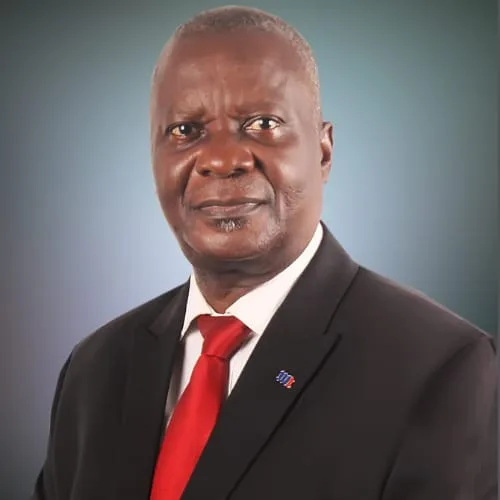
Dr. Obiora Madu
Chairman, Multimix Group
Trade, Logistics & Supply Chain Expert
Trade corridors remain fragmented. Logistics costs remain high. Supply chains are vulnerable to disruption. Digital systems do not always communicate with one another, while the skills required to manage increasingly complex supply chains remain uneven.

Prince Olusegun Oduntan
Managing Director & CEO, Settle Systems Nigeria Limited
National Vice President, Association of Nigerian Licensed Customs Agents (ANLCA)
In this Executive Conversation, Prince Olusegun Oduntan, National Vice President of ANLCA, examines the challenges affecting Nigeria’s trade and freight-forwarding ecosystem, from policy unpredictability and port delays to fragmented clearance processes. He emphasises that transparency, coordination and predictability are essential if Nigeria is to reduce trade costs and compete effectively under AfCFTA. “You cannot determine anything when the process is not predictable.”
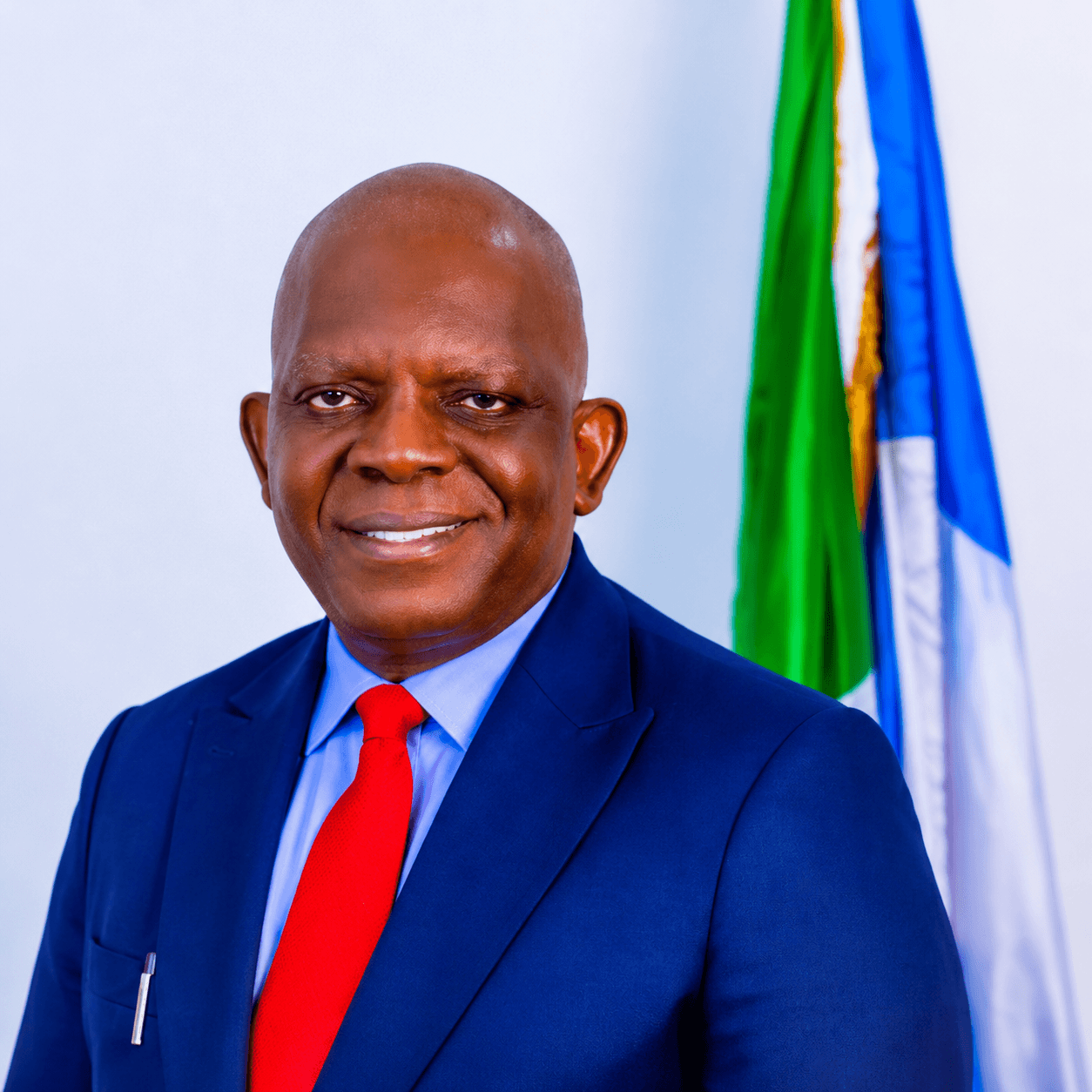
Dr. Pius Akutah, MON
Executive Secretary & CEO
Nigerian Shippers' Council
Africa’s maritime future is increasingly tied to the efficiency of its ports, logistics systems, and trade corridors. As Nigeria deepens its focus on the Marine and Blue Economy, the Nigerian Shippers' Council (NSC) is undergoing a major institutional transformation—from a traditional shipper protection agency into a broader economic regulator for the port and logistics sector.
Capt. Sunday M. Umoren
Secretary-General, Abuja Memorandum of Understanding (Abuja MoU) on Port State Control for West and Central Africa
Port State Control for West and Central Africa
The eradication of substandard ships remains the primary mandate of the Abuja MoU regime. Every activity we undertake—capacity building, inspector training, technical cooperation, and harmonisation of inspection procedures—is directed toward this objective.
Stay Ahead of Africa's Maritime Story
Strategic intelligence, policy analysis, and industry perspectives — direct to your inbox, free.