

SEYI OLUYEDE
General Manager
Maritime Shipping & Ocean International Resources Ltd. (MSOIR)
“BUILDING NIGERIA’S INDIGENOUS SHIPPING CAPACITY: INVESTMENT, GOVERNMENT POLICY AND THE FUTURE OF MARITIME COMPETITIVENESS”
Nigeria generates substantial demand for maritime and shipping services, yet indigenous participation in international shipping remains a major industry concern. Developing a stronger Nigerian fleet requires more than acquiring vessels. It requires competent operators, access to finance, reliable cargo, effective ship management and the capacity to maintain and eventually build vessels locally.
In this Executive Conversation, Seyi Oluyede, General Manager of Maritime Shipping & Ocean International Resources Ltd. (MSOIR), discusses the barriers to indigenous shipping, the responsibilities of government and private investors, opportunities in ship repair and shipbuilding, and the practical steps needed to strengthen Nigeria’s participation in global shipping.
Capacity is not just about the number of vessels or putting ships on the water. It is the ability to win a charter, operate a ship safely, repay loans on time and repeat the process.
TRANSCRIPT REF: EC-2026-011 · RECORDED: 14 October 2026 · STATUS: ON RECORD
Nigeria generates substantial demand for maritime transportation, yet indigenous participation in international shipping remains a major industry concern. From your perspective, what are the fundamental barriers preventing Nigerian companies from acquiring, financing and operating vessels at competitive scale, and what would it take to move the country from dependence on external shipping capacity towards a stronger indigenous fleet?
We need to move from just being a bucket of shipping services to becoming a provider of those services. We need to progressively become ship maintainers and shipbuilders.
Capacity is not just about the number of vessels or putting ships on the water. It is the ability to win a charter, operate a ship safely, repay loans on time and repeat the process. If you own a vessel but cannot run it commercially, there is no value in that ownership.
Competence matters more than tonnage. We need competent people in chartering, ship management, voyage estimation and protection and indemnity insurance. These are areas where the industry needs more capacity. We have to build our people, our ships and our management capabilities together.
We should start where Nigeria has opportunities, such as coastal tankers, offshore support vessels, barges, short sea shipping and bulk shipping close to the cargo. We can use the Cabotage regime and progressively build the capacity to operate in international waters.
We need to build a track record and evaluate our initiatives. A contract performed successfully and on time becomes the basis for securing another contract and financing another vessel.
When freight and insurance payments go abroad, we lose foreign exchange. Nigerian owned tonnage carrying Nigerian cargo is a form of import substitution for services. We must build the capacity to retain more of that value within the country.
Building a national shipping fleet requires substantial capital, long term investment decisions and a commercially supportive environment. What specific responsibilities should government assume in areas such as policy consistency, access to maritime finance, fiscal incentives and regulation, and what must private investors and shipping companies do differently to build commercially viable businesses rather than depend on government intervention?
Government, as regulator and policymaker,
should help reduce risk. The private operator must carry the risks it can
assess and manage. We must not bite more than we can chew.
We need policy consistency. Policies should
not change with every administration. Where there is funding through the
Cabotage Vessel Financing Fund (CVFF) or other maritime financing mechanisms,
there should be a transparent process, clear conditions and proper monitoring
of repayment.
Government should also reduce port and clearance costs, turnaround times, cargo dwell time, demurrage and illegal charges. These costs affect the competitiveness of Nigerian shipping companies.
We need access to foreign exchange and long tenure funding. Government can also use cargo under its control as an anchor for Nigerian tonnage. If government has cargo to move, qualified Nigerian operators should have an opportunity to compete for it.
The private sector also has
responsibilities.
Investors must be willing to commit their own money and develop sound business plans. It should not be about rushing to apply for the CVFF. Operators must understand commercial scale, chartering, cost control, safety requirements and the need to secure bankable contracts and reliable cargo relationships.
Shipping is an international business. We
must be competitive.
Government should not own and operate ships. We should learn from the experience of the Nigerian National Shipping Line, which operated from 1959 to 1995. Government should be an enabler, not the owner of the business.
Any support should have a defined period and measurable conditions. Waivers, guarantees and cargo preferences should be tied to performance, with clear timelines for ending the support.
We also need an accountable structure that brings the relevant institutions together, including NIMASA, the Nigerian Ports Authority, the Federal Ministry of Marine and Blue Economy, Customs and the Nigerian Content Development and Monitoring Board, among others. We need to monitor the process from beginning to end and publish performance data.
There should be no blame game. Government should de risk the environment, while the private sector must perform and contribute to the economy.
Expanding indigenous tonnage is only one part of the challenge. Vessels must also be maintained, repaired and operated efficiently, while local shipbuilding and marine engineering capabilities can create opportunities for wider industrial development. Where should Nigeria prioritise investment across vessel financing, shipbuilding, ship repair and marine services, and which of these areas offers the most realistic opportunities for private sector participation in the near to medium term?
Ship repair is where money and skills can be developed, while shipbuilding shows whether the wider ecosystem is working. We should prioritise ship repair first and then build towards shipbuilding.
Vessels need to be dry docked and
maintained. When we do not have adequate local facilities, Nigerian vessels go
to places such as Takoradi in Ghana and Namibia for repairs. The money we spend
abroad could support local businesses and create jobs for marine engineers,
welders, electricians and other skilled workers.
I recall that NIMASA issued a marine notice
around 2019 relating to local construction under the Cabotage regime, covering
certain types of vessels such as tugboats, barges, anchor handling tugs and
crew boats. We need to examine such initiatives and understand how they can
support local capacity.
We can learn from countries such as Indonesia, Japan, South Korea and China. Building a ship repair and shipbuilding industry requires more than a yard. It requires steel suppliers, certified welders, marine electricians, engine dealers, surveyors, classification services and reliable spare parts logistics.
We can start small with tugboats, barges
and crew boats. We should develop capacity in phases and support local yards
where they can deliver the required standards.
We can also learn from local content development in the oil and gas industry, particularly the work of the Nigerian Content Development and Monitoring Board. There may be opportunities to extend similar thinking to selected vessel types and repair services.
We must also consider the cost of energy and operations. These are important factors in the competitiveness of shipyards.
The objective is to build an ecosystem for repair, construction and eventually shipbuilding. When vessels are repaired abroad, we lose opportunities to develop local technical skills, retain spending and create industrial jobs. We should deliberately build these capabilities in Nigeria.
Nigeria has pursued initiatives intended to strengthen indigenous shipping, including maritime financing mechanisms and policies designed to support local participation. However, the ultimate test is whether these interventions produce vessels in operation, sustainable shipping businesses and greater Nigerian participation in cargo movement. What practical changes would make the greatest difference in translating policy ambition into operational tonnage, and how should government and industry measure progress beyond announcements, allocations and programmes?
The sequence should be cargo assurance,
then contracts, ship repair and shipbuilding.
A ship is only operational when it is employed, has a contract, is insured, has a crew, is classed and earns more than its debt service. This applies whether the vessel was financed through the CVFF or another maritime loan.
The pipeline against which our policies should be measured is important. Does a vessel have a contract? How does the operator intend to repay the loan? What opportunities are in the pipeline? We also need to match the vessel to the type of funding. Do we have the right vessel for the trade? What is its age and size? Is it suitable for the market it intends to serve?
While efforts are being made to provide funding and acquire vessels, we must also examine the financing structure. What equity has been invested? How much debt has been approved? How much has actually been disbursed? We must move beyond approvals to track disbursement and results.
How is the vessel employed? What is its utilisation rate? What is the debt service ratio for the quarter, or the debt service coverage ratio? How is this being reported?
Failures often occur at financial close or
when cargo has not been secured. Many policies focus on vessel registration but
do not continue to examine how the vessel earns revenue. It is not enough to
say we have registered a certain number of ships. We need to know how many are
employed in gainful service, the duration of their contracts and their capacity
to repay their loans.
For a new operator, I would say that many Nigerian indigenous participants may not have the financial capacity to buy new vessels. Why not acquire good second hand vessels that are classed and surveyed, prove that you can deliver on contracts, and then expand over time? We should not become overly ambitious before demonstrating that we can perform.
We should publish statistics on Nigerian registered vessels that are idle or not classed. This will help us measure what is happening in the industry.
Another important issue is currency. If you earn in naira but take a loan in dollars, that is not viable without a way to manage the exchange rate risk. You can end up in a currency trap.
Contracts and financing must match in currency, or the operator must have a credible way to manage the risk. We need to examine this practically.
I read about Brazil’s Merchant Marine Fund, the Fundo da Marinha Mercante. We should study how its financing arrangements work and what lessons Nigeria can draw from them. I have also heard that Bangladesh increased its ocean going fleet from 36 vessels in 2018 to more than 100 within about five years, with tax incentives for imported ships. These are examples worth examining to understand how tax treatment can support indigenous shipping capacity.
Maritime Shipping & Ocean International Resources Ltd. (MSOIR), could you take us through the company's core business, the services it provides and the markets or segments of the maritime industry it serves? What are MSOIR’s current strategic priorities, what opportunities is it pursuing, and how does the company intend to contribute to the growth of indigenous shipping capacity and Nigeria’s wider maritime economy?
Maritime Shipping & Ocean International
Resources Limited is proudly a Nigerian indigenous shipping and logistics
company with a bold vision to participate in the global maritime space. We are
rooted in national pride and believe that we must be driven by excellence.
We want to engage Nigerian seafarers. There is a gap, and we want to provide support wherever it is necessary. Nigeria has a pipeline of seafarers who can be deployed. I am sure you are familiar with the concern that our cadets do not have enough opportunities to obtain sea time. We want to contribute to addressing that problem.
Our model is not to buy ships and then hope to find cargo. It is to secure cargo and build tonnage around proven demand.
One of the services we intend to provide is the carriage of dry bulk, breakbulk, containers and project cargo. We have a vision, but we do not want to be overly ambitious. As I said earlier, we weigh the risks and consider how best to manage them.
We want to start asset light and crew our vessels with Nigerian cadets. In that way, we can contribute to solving a national problem while building our business.
We will separate commercial management from independent governance. One of the problems with the Nigerian National Shipping Line was the absence of a clear governance structure. From day one, we intend to build a commercially viable global shipping company with clear governance, so that people can see a model that works and is sustainable.
We believe there are market opportunities. Many Nigerian exporters complain about their cargo at our ports, including Apapa and Tin Can Island.
They
face delays and demurrage, and their cargo can be deprioritised. Foreign liners
may favour other, more lucrative routes.
We see this as an opportunity to solve a national problem. A Nigerian exporter who needs to move cargo to Europe should not be left entirely at the mercy of foreign shipping companies.
Agricultural produce, for example, is time sensitive. When it is delayed and reaches the end user in poor condition, its quality may have deteriorated.
We want to help fill that gap by working with cargo owners, commercial banks and technical managers to build a formidable and reliable global carrier. That is the model we are working towards.
Nigeria’s participation in global shipping requires more than well intentioned policies and financing initiatives. It demands deliberate steps to translate policy into operational capacity, attract sustained private investment, expand indigenous fleet ownership and enable Nigerian shipping companies to compete in international markets. From your perspective, what practical actions must government and the private sector take, individually and collectively, to move Nigeria from policy ambition to measurable participation in global shipping, and what priorities should guide this effort over the next five to ten years?
To move from policy to practice, we must
take deliberate steps and be open with ourselves.
Data is very important. Let us publish baseline data on Nigerian controlled ships that are actually trading. If companies have applied for maritime funding, we should publish the figures.
If
there have been disbursements, let us make them known. If there are impediments
to disbursement, those should also be made public.
Freight paid abroad represents a leakage from the Nigerian economy. Dry docking vessels abroad is another leakage. We need to identify the cargo available for international shipping in Nigeria, the major cargo owners, the routes and volumes, and who makes the freight decisions.
We should then link these cargoes to Nigerian operators.
Government should be an anchor for government cargo. We should identify state owned and government linked trade where Nigeria can nominate the carrier.
Most of our exports are sold on a Free on Board (FOB) basis, whereas other countries may use Cost, Insurance and Freight (CIF) arrangements.
The terms determine who arranges and pays for shipping. We need to examine where changes are commercially appropriate and how they could help develop Nigerian tonnage and retain more freight revenue in the country.
We should open up suitable government cargo opportunities to qualified Nigerian operators, whether public or private. Let us publish baseline data showing how many Nigerian controlled ships are trading. If the CVFF window has been opened, let us publish whether there have been disbursements and explain the process. I heard that 99 people had applied for the CVFF. Has there been any disbursement? What are the impediments? What are the grey areas that need to be addressed? We need transparency so that we can measure and scale what works.
Nigeria’s election to Category C of the International Maritime Organization (IMO) Council was an achievement. But that achievement must be backed by action. The IMO will eventually ask what Nigeria has achieved.
Where are the ships? What capacity have we built?
We must build tonnage by linking it to cargo. Government should work with cargo owners and open opportunities to qualified Nigerian operators. We can discuss national carrier status, but we must not put the cart before the horse.
We should not say, “Find a vessel first, and then we will find cargo for you.” It does not work that way. Let us identify the cargo first, then identify the Nigerian operators capable of providing vessels for it.
We should also make domestic ship repair
the default where the necessary capacity and standards exist. When you have the
ship and the cargo, you must have a place to repair the vessel.
As I have said, it is an ecosystem. We must build it and create momentum. We must address port delays, inconsistencies and other gaps that affect operations.
Indigenous capacity should help retain
freight revenue in Nigeria. Ship repair should build technical strength, while
shipbuilding should extend into manufacturing, engineering and industrial jobs.
Government’s role is to grow the cargo pipeline, help build credibility around financing and establish a well run pilot programme. The private sector must perform when given the opportunity and demonstrate a business model that deserves to be scaled.
Let us move from importing ships to owning them, to maintaining them, and to building them. Each step depends on the others.
EDITOR’S NOTE
Nigeria’s indigenous shipping challenge
extends beyond acquiring vessels. It requires commercially viable operators,
reliable cargo opportunities, sustainable financing, consistent government
policy and the technical capacity to maintain and eventually build ships
locally.
In this conversation, Seyi Oluyede emphasises the need to connect vessel acquisition to cargo demand, ensure financing supports commercially sustainable operations, and measure the performance of policies beyond announcements and registrations. He also highlights the role of ship repair, marine engineering, seafarer development and stronger governance in building a competitive shipping industry.
Her central message is that Nigeria must
approach indigenous shipping as an interconnected industry, building capacity
progressively through investment, competence, accountability and measurable
results.
ABOUT EXECUTIVE CONVERSATION
Executive Conversation is a PrimeAxis
platform for substantive conversations with the leaders, policymakers,
investors and industry professionals shaping Africa’s maritime, logistics,
trade and Blue Economy ecosystem.
The platform creates space for dialogue
with leaders defining Africa’s Blue Economy, examining the decisions,
investments, policies and industry developments shaping the continent’s
maritime future.
EDITORIAL NOTE
This conversation has been edited for
clarity, grammar, transcription errors and flow. The substance, examples,
arguments and distinctive perspectives of the speaker have been retained.
About Executive Conversations
Executive Conversations is PrimeAxis's flagship interview series, engaging the leaders, regulators, and institution builders shaping Africa's maritime and blue economy future.
Editorial Note: This interview has been edited for clarity, length, and flow while preserving the substance of the conversation.
More Conversations

Alhaji Aminu Umar
President, Managing Director, Board Member.
Nigerian Chamber of Shipping, International Chamber of Shipping, Sea Transport Services Nigeria Limited
Nigeria has one of Africa’s largest maritime markets, a significant cargo base and an economy that depends heavily on shipping. Yet the ability to own, finance, operate and manage the vessels that serve this market remains a major challenge for indigenous operators.

Abdullazeez Babatunde Mukaila
Managing Director/CEO
Mickey Excellency Nig. Ltd
Nigeria’s port and cargo clearance environment is at an important point of transition.

Oluwadamilola Emmanuel
General Manager & Special Adviser to the Lagos State Governor on Blue Economy
Lagos State Waterways Authority (LASWA)
With the Blue Economy becoming a more defined part of Lagos State development agenda, the opportunity extends beyond water transportation to maritime infrastructure, investment, tourism, fisheries, technology, skills, environmental sustainability and the creation of new economic value around the state extensive aquatic resources.

Jama Onwubuariri
Managing Director
TTP Ltd
Africa’s trade ambitions increasingly depend not only on physical ports, roads and border infrastructure, but on the digital systems that connect cargo, vehicles, terminals, regulators and trade corridors.

Abdulkadir Ahmed
Managing Director/Chief Executive Officer
NLNG Shipping and Marine Services Limited (NSML)
As the global shipping industry becomes increasingly shaped by stringent safety requirements, technological change, environmental standards and increasingly sophisticated marine operations, the quality of Nigeria’s maritime workforce will determine how effectively the country can participate in and compete within the global maritime economy.
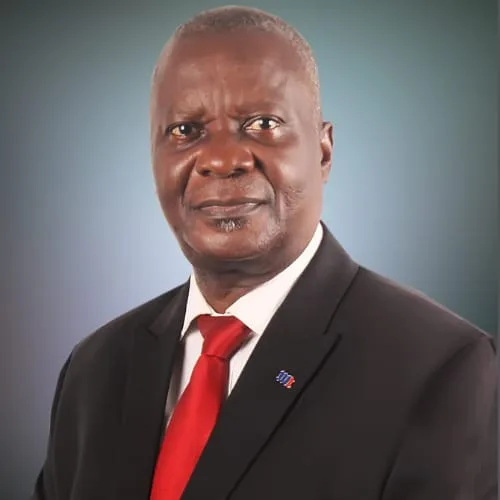
Dr. Obiora Madu
Chairman, Multimix Group
Trade, Logistics & Supply Chain Expert
Trade corridors remain fragmented. Logistics costs remain high. Supply chains are vulnerable to disruption. Digital systems do not always communicate with one another, while the skills required to manage increasingly complex supply chains remain uneven.
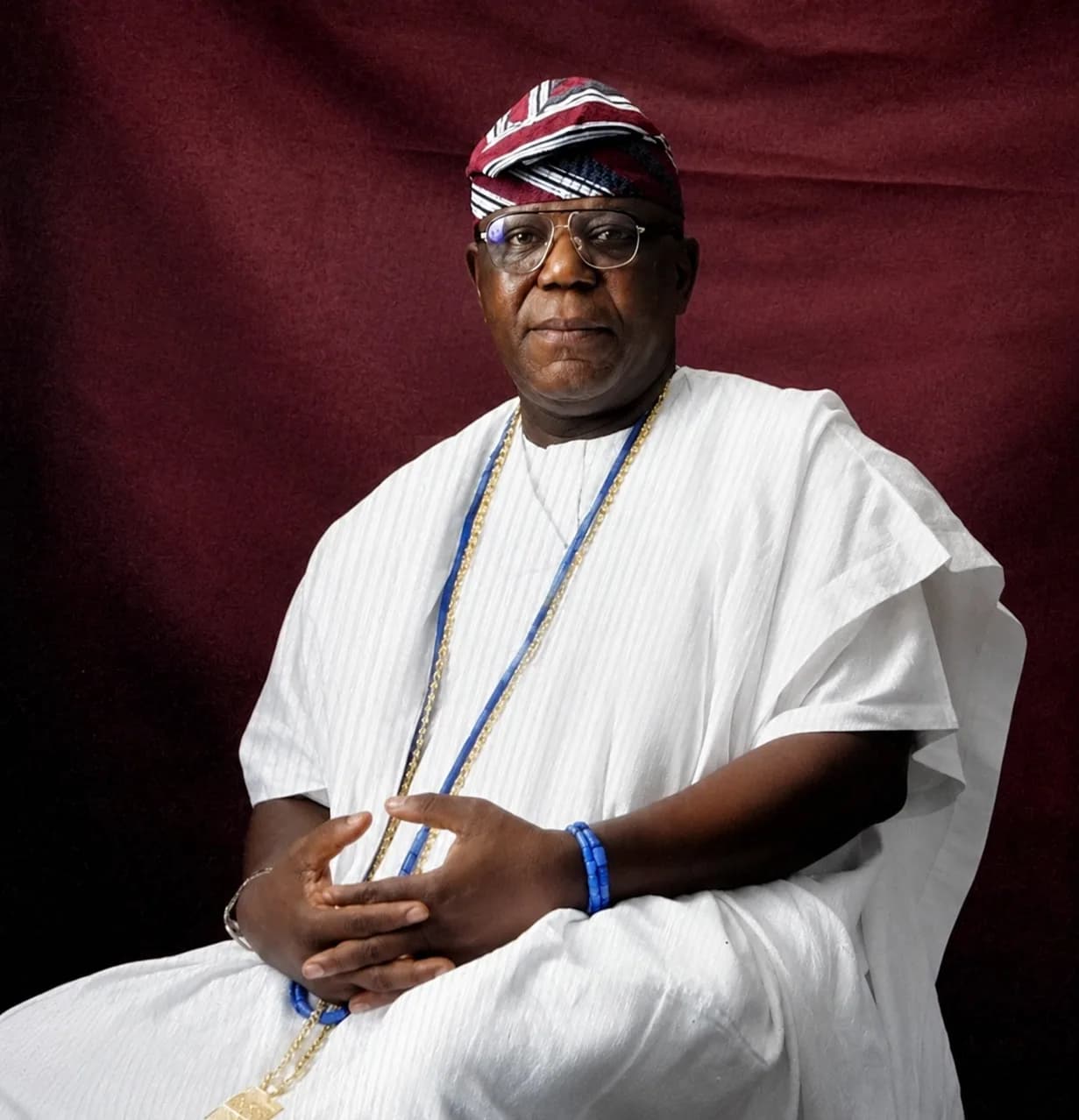
Prince Olusegun Oduntan
Managing Director & CEO, Settle Systems Nigeria Limited
National Vice President, Association of Nigerian Licensed Customs Agents (ANLCA)
In this Executive Conversation, Prince Olusegun Oduntan, National Vice President of ANLCA, examines the challenges affecting Nigeria’s trade and freight-forwarding ecosystem, from policy unpredictability and port delays to fragmented clearance processes. He emphasises that transparency, coordination and predictability are essential if Nigeria is to reduce trade costs and compete effectively under AfCFTA. “You cannot determine anything when the process is not predictable.”
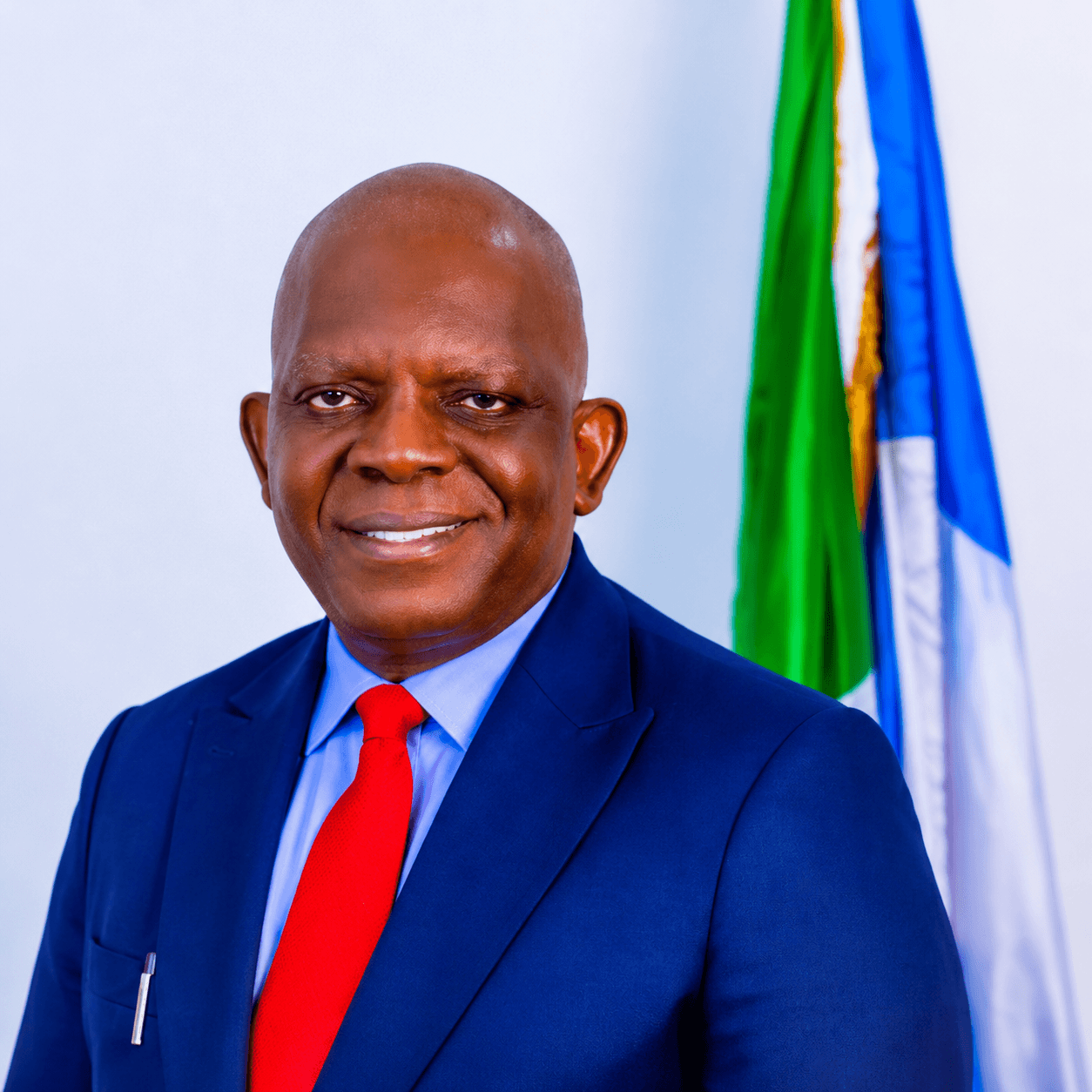
Dr. Pius Akutah, MON
Executive Secretary & CEO
Nigerian Shippers' Council
Africa’s maritime future is increasingly tied to the efficiency of its ports, logistics systems, and trade corridors. As Nigeria deepens its focus on the Marine and Blue Economy, the Nigerian Shippers' Council (NSC) is undergoing a major institutional transformation—from a traditional shipper protection agency into a broader economic regulator for the port and logistics sector.
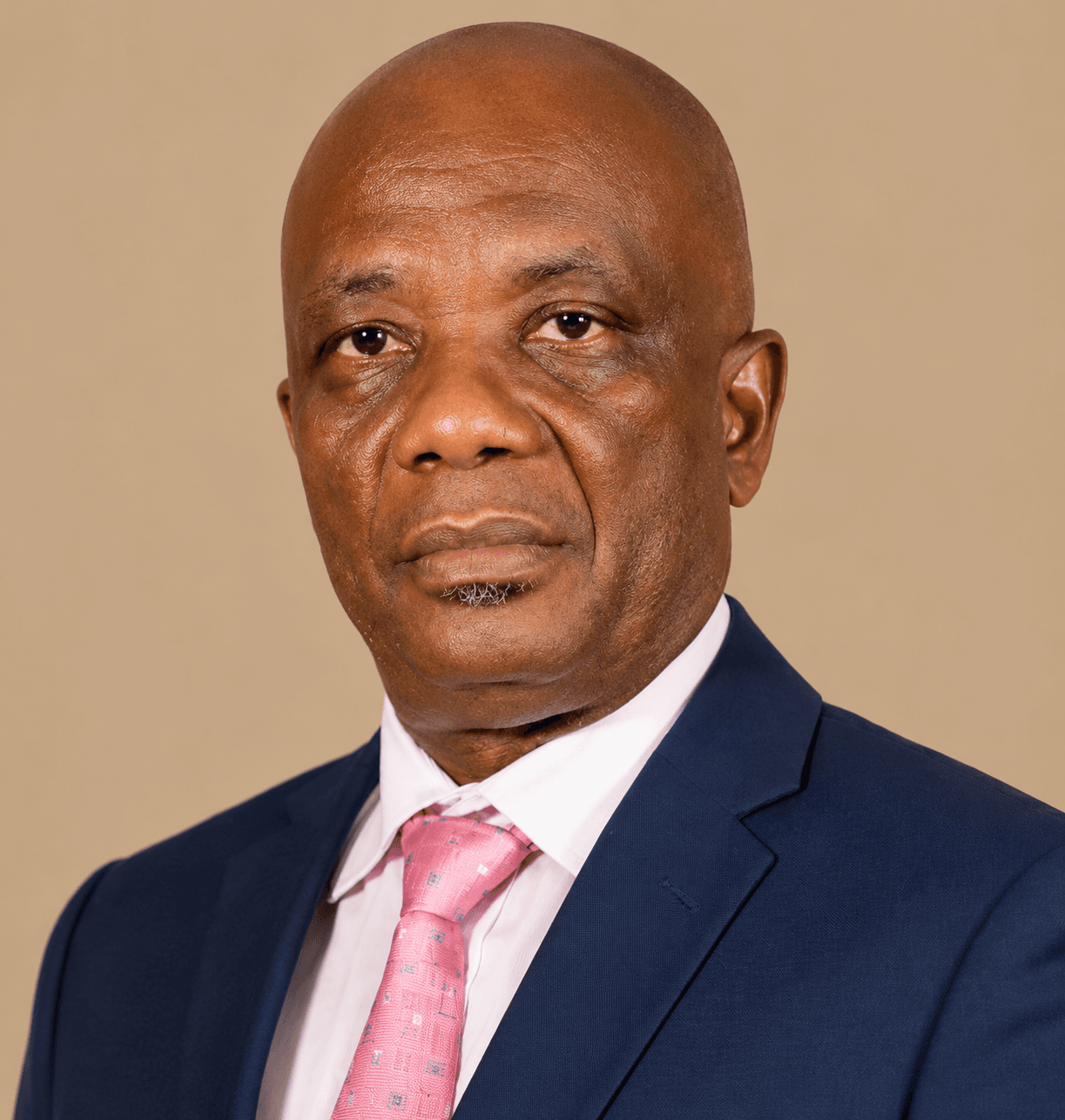
Capt. Sunday M. Umoren
Secretary-General, Abuja Memorandum of Understanding (Abuja MoU) on Port State Control for West and Central Africa
Port State Control for West and Central Africa
The eradication of substandard ships remains the primary mandate of the Abuja MoU regime. Every activity we undertake—capacity building, inspector training, technical cooperation, and harmonisation of inspection procedures—is directed toward this objective.

Dr. Kevin Okonna
Acting Rector, Maritime Academy of Nigeria (MAN)
Maritime Academy of Nigeria (MAN), Oron
One of our key achievements has been strengthening academic and operational stability while improving training delivery systems. We have recruited 11 maritime professional lecturers, including three Master Mariners and two marine engineers. One of them is an internationally recognised simulator training expert.
Stay Ahead of Africa's Maritime Story
Strategic intelligence, policy analysis, and industry perspectives — direct to your inbox, free.