
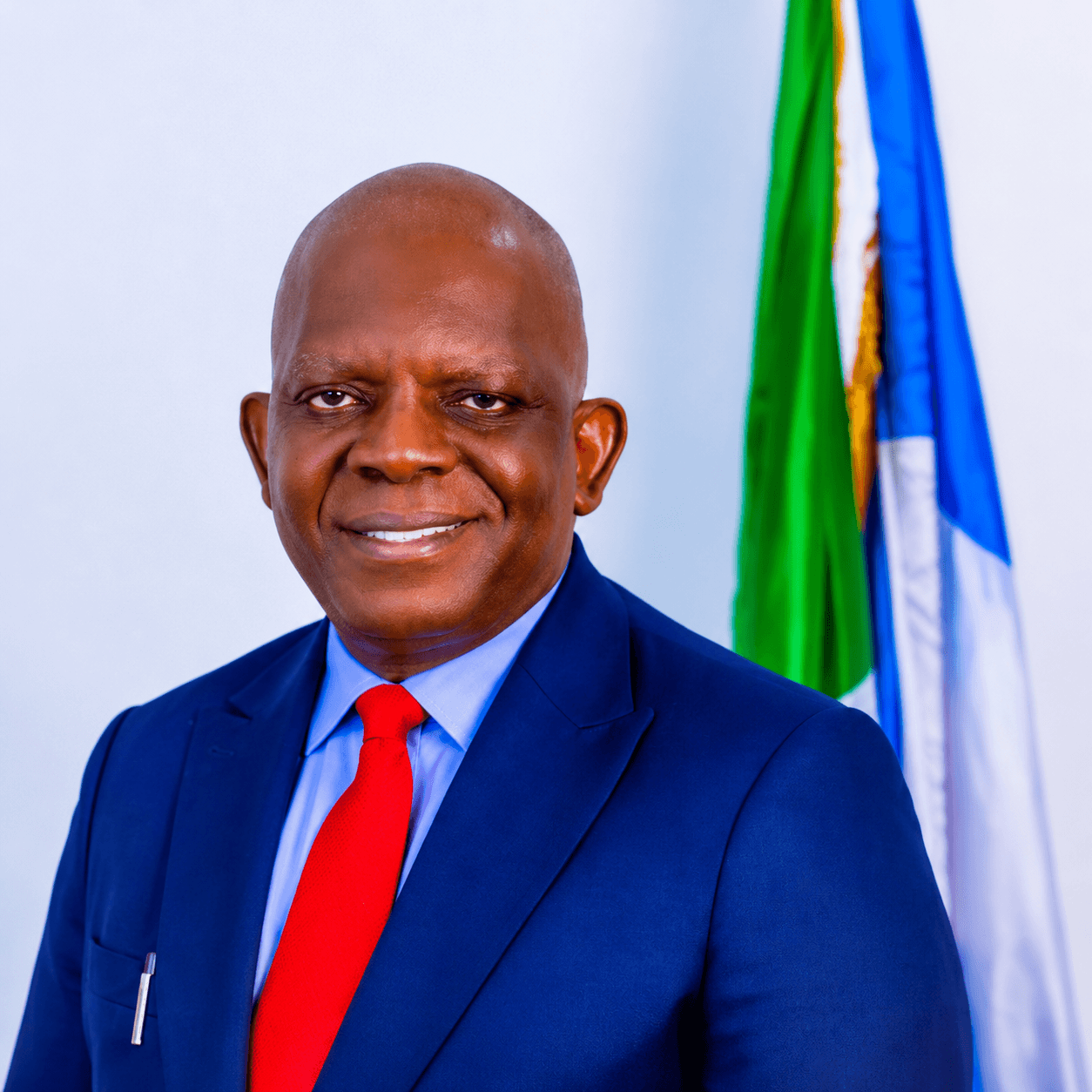
Dr. Pius Akutah, MON
Executive Secretary & CEO
Nigerian Shippers' Council
“Preparing the Nigerian Shippers' Council for a New Regulatory Era”
Africa’s maritime future is increasingly tied to the efficiency of its ports, logistics systems, and trade corridors. As Nigeria deepens its focus on the Marine and Blue Economy, the Nigerian Shippers' Council (NSC) is undergoing a major institutional transformation—from a traditional shipper protection agency into a broader economic regulator for the port and logistics sector.
Africa’s maritime future is increasingly tied to the
efficiency of its ports, logistics systems, and trade corridors. As Nigeria
deepens its focus on the Marine and Blue Economy, the Nigerian Shippers'
Council (NSC) is undergoing a major institutional transformation—from a
traditional shipper protection agency into a broader economic regulator for the
port and logistics sector.
This shift is central to improving port efficiency, reducing trade costs, strengthening infrastructure, and positioning Nigeria to fully benefit from the African Continental Free Trade Area (AfCFTA).
In this Executive Conversation, Barrister Pius Ukeyima
Akutah, Executive Secretary and CEO of the Nigerian Shippers' Council,
discusses ongoing reforms, Inland Dry Ports, multimodal transport development,
regulatory modernization, and Nigeria’s path toward becoming a more competitive
regional trade hub.
"We are building a modern regulatory framework that promotes efficiency, transparency, fair competition, and sustainable growth across Nigeria’s port and logistics ecosystem."
TRANSCRIPT REF: EC-2026-003 · RECORDED: 29 June 2026 · STATUS: ON RECORD
The Nigerian Shippers' Council is evolving beyond its traditional role as the protector of shippers' interests into a broader economic regulator. What vision is driving this transformation?
The maritime and logistics landscape has evolved significantly, and our regulatory framework must evolve with it. The Nigerian Shippers' Council, established in 1978, has played an important role in protecting the interests of shippers. However, today’s trade environment requires a stronger and more comprehensive regulatory institution.
Our vision is to build a modern regulator that promotes
efficiency, transparency, fair competition, and sustainable growth across
Nigeria’s port and logistics ecosystem. The proposed Nigerian Shipping and Port
Economic Regulatory Agency (NPERA) Bill represents a key step in this
direction. Once it receives Presidential Assent, it will strengthen the Council’s
capacity to regulate economic activities within the port sector, promote fair
competition, monitor compliance, protect stakeholders, and support national
economic objectives under the Marine and Blue Economy agenda.
One of your major priorities has been the development of Inland Dry Ports across Nigeria. Why are they so important to the country’s trade and logistics system?
Inland Dry Ports are essential to building an efficient and
integrated national logistics system. They enable cargo to be cleared closer to
importers and exporters in the hinterland, reducing the need for businesses to
travel to seaports for cargo processing. This improves efficiency across the
entire supply chain.
Beyond efficiency, Inland Dry Ports stimulate economic
activity in inland regions, create jobs, reduce congestion at seaports, lower
logistics costs, and support industrial development across the country. As
Nigeria seeks to expand non-oil exports, Inland Dry Ports will play a critical
role in connecting local producers to global markets.
The proposed Nigerian Shipping and Port Economic Regulatory Agency (NPERA) Bill has generated significant interest within the maritime industry. What impact do you expect it to have once it becomes law?
The existing Nigerian Shippers' Council Act was enacted decades ago, and while it has served its purpose, the industry has evolved significantly since then. The proposed legislation is designed to modernise the regulatory framework and align it with current realities in global trade and logistics.
Once enacted, it will strengthen the Council’s mandate by enhancing market oversight, promoting fair competition, improving regulatory compliance, and creating a more transparent and predictable operating environment within the port sector.
This is particularly important as Africa moves toward deeper
economic integration under the African Continental Free Trade Area. AfCFTA
represents a market of over 1.4 billion people with a combined GDP exceeding
US$3 trillion, creating significant opportunities for trade expansion and
investment across the continent.
Nigeria must position itself to fully benefit from these
opportunities through stronger institutions and efficient trade facilitation
systems.
The Council has consistently advocated for greater use of rail in cargo evacuation from the ports. Why is this so important?
Rail remains one of the most efficient, safe, and cost-effective modes of transporting cargo over long distances. Currently, a large proportion of cargo from Nigerian seaports is moved by road. This places significant pressure on road infrastructure, increases congestion, raises logistics costs, and contributes to accidents and insecurity.
A modern logistics system must be multimodal, integrating seaports, rail, roads, and Inland Dry Ports into a seamless national network.
As the port economic regulator, our responsibility now
extends beyond protecting shippers. It includes ensuring that cargo moves
efficiently, safely, and competitively from ports to businesses, industries,
and final consumers.
Strengthening rail infrastructure and connectivity is
therefore critical to reducing the cost of doing business and improving
national competitiveness.
As implementation of the African Continental Free Trade Area gathers momentum, what reforms should Nigeria prioritise to maximise its benefits?
AfCFTA presents one of the most significant economic opportunities for Africa in decades. To fully benefit, African countries must continue harmonising trade laws, customs procedures, and regulatory frameworks.
There is also a need to strengthen intellectual property
protection to encourage innovation and safeguard investments across the
continent. Investment frameworks must be further improved to attract foreign
direct investment and create a competitive environment for businesses operating
across African markets.
However, trade liberalisation alone is not enough. It must
be supported by strong institutions, efficient processes, and predictable
regulatory systems that make cross-border trade faster and more transparent.
Nigeria continues to lose cargo to neighbouring ports. What reforms are needed to improve competitiveness?
Port competitiveness depends on efficient infrastructure, effective regulation, and seamless logistics.
First, continuous investment in modern port infrastructure is essential, including road and rail connectivity, cargo handling systems, and logistics technology. Second, a strong and predictable regulatory framework is required to ensure transparency, attract investment, and maintain fair competition. Third, digitalisation and cybersecurity are becoming increasingly important as global trade systems become more technology-driven.
Regional cooperation also plays a critical role. Under
AfCFTA, African countries must collaborate more closely on trade facilitation,
enforcement, and logistics integration.
Ultimately, Nigeria’s competitiveness will depend on how
efficiently cargo moves through its ports and how predictable the overall
business environment becomes.
What reforms are required to strengthen the logistics chain from seaports to final destinations?
An efficient logistics system requires clear legal and operational frameworks governing the entire transport chain. Whether cargo moves by road or rail, there must be a well-defined liability regime covering the movement of goods from seaports to Inland Dry Ports and final destinations. This ensures clarity for shipping companies, logistics providers, and cargo owners, while improving accountability across the value chain.
There is also a need to harmonise existing legal frameworks governing the carriage of goods to remove uncertainty and improve efficiency. Stakeholder engagement remains central to this process, as sustainable reforms require collaboration between government, regulators, and private sector actors.
Ultimately, the objective of the Nigerian Shippers' Council
is to strengthen trade efficiency, support economic growth, and improve
Nigeria’s position within regional and global supply chains.
“Our objective is to create a more efficient, transparent and competitive trade environment that strengthens Nigeria’s position as West Africa’s preferred maritime and logistics gateway.”
The Nigerian Shipping and Port Economic Regulatory Agency
(NPERA) Bill, which seeks to repeal the Nigerian Shippers' Council Act and
establish a stronger regulatory framework for Nigeria’s port economy, has been
passed by the National Assembly and is currently awaiting Presidential Assent.
Until it becomes law, the Nigerian Shippers' Council continues to operate under
its existing legal framework while preparing for the transition.
About Executive Conversations
Executive Conversations is PrimeAxis's flagship interview series, engaging the leaders, regulators, and institution builders shaping Africa's maritime and blue economy future.
Editorial Note: This interview has been edited for clarity, length, and flow while preserving the substance of the conversation.
More Conversations

SEYI OLUYEDE
General Manager
Maritime Shipping & Ocean International Resources Ltd. (MSOIR)
Nigeria generates substantial demand for maritime and shipping services, yet indigenous participation in international shipping remains a major industry concern. Developing a stronger Nigerian fleet requires more than acquiring vessels. It requires competent operators, access to finance, reliable cargo, effective ship management and the capacity to maintain and eventually build vessels locally.

Alhaji Aminu Umar
President, Managing Director, Board Member.
Nigerian Chamber of Shipping, International Chamber of Shipping, Sea Transport Services Nigeria Limited
Nigeria has one of Africa’s largest maritime markets, a significant cargo base and an economy that depends heavily on shipping. Yet the ability to own, finance, operate and manage the vessels that serve this market remains a major challenge for indigenous operators.

Abdullazeez Babatunde Mukaila
Managing Director/CEO
Mickey Excellency Nig. Ltd
Nigeria’s port and cargo clearance environment is at an important point of transition.

Oluwadamilola Emmanuel
General Manager & Special Adviser to the Lagos State Governor on Blue Economy
Lagos State Waterways Authority (LASWA)
With the Blue Economy becoming a more defined part of Lagos State development agenda, the opportunity extends beyond water transportation to maritime infrastructure, investment, tourism, fisheries, technology, skills, environmental sustainability and the creation of new economic value around the state extensive aquatic resources.

Jama Onwubuariri
Managing Director
TTP Ltd
Africa’s trade ambitions increasingly depend not only on physical ports, roads and border infrastructure, but on the digital systems that connect cargo, vehicles, terminals, regulators and trade corridors.

Abdulkadir Ahmed
Managing Director/Chief Executive Officer
NLNG Shipping and Marine Services Limited (NSML)
As the global shipping industry becomes increasingly shaped by stringent safety requirements, technological change, environmental standards and increasingly sophisticated marine operations, the quality of Nigeria’s maritime workforce will determine how effectively the country can participate in and compete within the global maritime economy.

Dr. Obiora Madu
Chairman, Multimix Group
Trade, Logistics & Supply Chain Expert
Trade corridors remain fragmented. Logistics costs remain high. Supply chains are vulnerable to disruption. Digital systems do not always communicate with one another, while the skills required to manage increasingly complex supply chains remain uneven.

Prince Olusegun Oduntan
Managing Director & CEO, Settle Systems Nigeria Limited
National Vice President, Association of Nigerian Licensed Customs Agents (ANLCA)
In this Executive Conversation, Prince Olusegun Oduntan, National Vice President of ANLCA, examines the challenges affecting Nigeria’s trade and freight-forwarding ecosystem, from policy unpredictability and port delays to fragmented clearance processes. He emphasises that transparency, coordination and predictability are essential if Nigeria is to reduce trade costs and compete effectively under AfCFTA. “You cannot determine anything when the process is not predictable.”

Capt. Sunday M. Umoren
Secretary-General, Abuja Memorandum of Understanding (Abuja MoU) on Port State Control for West and Central Africa
Port State Control for West and Central Africa
The eradication of substandard ships remains the primary mandate of the Abuja MoU regime. Every activity we undertake—capacity building, inspector training, technical cooperation, and harmonisation of inspection procedures—is directed toward this objective.

Dr. Kevin Okonna
Acting Rector, Maritime Academy of Nigeria (MAN)
Maritime Academy of Nigeria (MAN), Oron
One of our key achievements has been strengthening academic and operational stability while improving training delivery systems. We have recruited 11 maritime professional lecturers, including three Master Mariners and two marine engineers. One of them is an internationally recognised simulator training expert.
Stay Ahead of Africa's Maritime Story
Strategic intelligence, policy analysis, and industry perspectives — direct to your inbox, free.